%20%20--%3E%0A%3Csvg%20version%3D%221.1%22%20id%3D%22Layer_1%22%20xmlns%3D%22http%3A%2F%2Fwww.w3.org%2F2000%2Fsvg%22%20xmlns%3Axlink%3D%22http%3A%2F%2Fwww.w3.org%2F1999%2Fxlink%22%20x%3D%220px%22%20y%3D%220px%22%0A%09%20viewBox%3D%220%200%20684.6%2068.1%22%20style%3D%22enable-background%3Anew%200%200%20684.6%2068.1%3B%22%20xml%3Aspace%3D%22preserve%22%3E%0A%3Cg%3E%0A%09%3Cpath%20d%3D%22M444.1%2C29.3h-17.4v14.5h17.4V29.3z%20M36.4%2C68.1l29.3-50.8V0H50.4L32.9%2C36.8L15.5%2C0H0v68.1h16.7V45.8l12.4%2C22.3H36.4z%0A%09%09%20M49.1%2C68.1h16.6V23.4L49.1%2C52.1V68.1z%20M76.6%2C68.1h45V53.8H93.3V41.6h21V27.1h-21V14.8h28.3V0.1h-45V68.1z%20M175.6%2C68.1h17.3v-68%0A%09%09h-16.5v40.3L150%2C0.1h-17.6v68h16.7V27.7L175.6%2C68.1z%20M235.8%2C14.8h15.4V0.1h-47.4v14.7H219v53.2h16.8V14.8z%20M290.3%2C45.9h-17.1%0A%09%09l7.5-15.6h2L290.3%2C45.9z%20M298.7%2C68.1h18l-32.2-68h-5.7l-32%2C68h18l3.3-7.1h27.1L298.7%2C68.1z%20M325.2%2C68.1h46.2V53.8h-29.6V0.1h-16.7%0A%09%09V68.1z%20M423.7%2C14.8h27.2V0.1H407v68h16.7V14.8z%20M462%2C68.1h46.2V53.8h-29.6V0.1H462V68.1z%20M564.8%2C34.1c0%2C10.7-7.2%2C19.2-18.5%2C19.2%0A%09%09c-11.4%2C0-18.5-8.5-18.5-19.2s7.1-19.2%2C18.5-19.2C557.6%2C14.9%2C564.8%2C23.4%2C564.8%2C34.1%20M580.6%2C34.1c0-19-14.2-34-34.3-34%0A%09%09c-20.2%2C0-34.3%2C15-34.3%2C34c0%2C19%2C14.1%2C34%2C34.3%2C34C566.4%2C68.1%2C580.6%2C53.1%2C580.6%2C34.1%20M604.8%2C20.5c0-4.1%2C3.3-6.2%2C6.7-6.2%0A%09%09c4.4%2C0%2C6.6%2C3%2C6.6%2C6.6h14.7C631.8%2C9.1%2C625.1%2C0.1%2C611%2C0.1c-12%2C0-21.7%2C9.3-21.7%2C20.6c0%2C10.9%2C5.9%2C15.9%2C16.7%2C19.8%0A%09%09c5.2%2C1.8%2C11.5%2C3.2%2C11.5%2C8c0%2C3.3-2.4%2C5.5-6.4%2C5.5c-3.6%2C0-6.6-3-6.6-6.7h-15.2c0%2C11.5%2C7.9%2C20.8%2C21.8%2C20.8c12%2C0%2C21.6-9.3%2C21.6-20.6%0A%09%09c0-10-5.3-16.4-16.7-19.8C610.6%2C26.1%2C604.8%2C25.3%2C604.8%2C20.5%20M670%2C20.9h14.7C683.8%2C9.1%2C677.1%2C0.1%2C663%2C0.1c-12%2C0-21.7%2C9.3-21.7%2C20.6%0A%09%09c0%2C10.9%2C5.9%2C15.9%2C16.7%2C19.8c5.2%2C1.8%2C11.5%2C3.2%2C11.5%2C8c0%2C3.3-2.4%2C5.5-6.4%2C5.5c-3.6%2C0-6.6-3-6.6-6.7h-15.2c0%2C11.5%2C7.9%2C20.8%2C21.8%2C20.8%0A%09%09c12%2C0%2C21.6-9.3%2C21.6-20.6c0-10-5.3-16.4-16.7-19.8c-5.4-1.6-11.3-2.4-11.3-7.2c0-4.1%2C3.3-6.2%2C6.7-6.2C667.7%2C14.4%2C670%2C17.3%2C670%2C20.9%0A%09%09%22%2F%3E%0A%3C%2Fg%3E%0A%3C%2Fsvg%3E%0A)

Rain or shine, we humans seem to have a quirky saying for everything under the sun. But while more common weather-related idioms like "it’s raining cats and dogs" tend to be cutesier ways of describing a downpour, not every saying carries that same light tone.
For example, a sunshower is called something much more sinister in parts of the U.S.: "the devil is beating his wife." But where did this peculiar—and somewhat unsettling—phrase come from in the first place, and why is it still popping up in pop culture conversations today?
What Does "The Devil Is Beating His Wife" Mean?

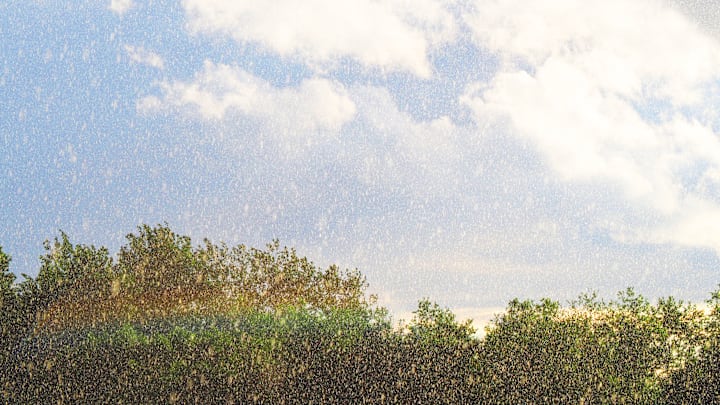
A sudden burst of rain while the sun is still shining might seem like the doing of the devil, but that still isn’t exactly what the phrase means. "The devil is beating his wife" is used to describe a sunshower: a weather phenomenon where rain falls while the sun is still shining. In simple terms, it refers to those unusual moments when it’s raining and sunny at the same time.
One interpretation imagines the sun as the devil’s fire and the rain as his wife’s tears, offering a dramatic (and dark) way to picture the phenomenon. The expression appears in regional folklore and colloquial speech in parts of the U.S., particularly the South, though the phenomenon itself is recognized in many cultures under numerous names.
The real question is where this oddly ominous saying actually came from.
The Strange Origins of a Sunshower Saying
Like many folk sayings, the exact origins of "the devil is beating his wife" aren’t entirely clear. The phrase is most commonly associated with the American South, where it’s long been used to describe the strange mix of sunshine and rain known as a sunshower. But it’s far from the only explanation: people around the world have come up with their own ways to make sense of this unusual weather.
Some sources trace versions of the phrase back to early modern Europe. A similar line appears in a 1703 French play, describing the devil beating his wife "in rainy weather when the sun shines," and Jonathan Swift later used a variation of the expression in 1738, noting, "The devil was beating his wife behind the door with a shoulder of mutton." Still, these early references are difficult to verify definitively, and the phrase likely evolved over time rather than emerging from a single, clear origin.
In Japan, for example, a sunshower is sometimes called kitsune no yomeiri, or the "fox’s wedding," and similarly in South Africa, it’s called a "monkey’s wedding" when the sun and rain coincide. Elsewhere, the imagery gets even more specific: while some versions in the U.S. and Hungary describe the devil beating his wife, French variations add that he’s marrying off his daughter at the same time.
Across these interpretations, the phenomenon is often treated as something a little uncanny—a moment when two opposing forces collide. The image of the devil and his battered betrothed may be one way of explaining that contradiction, turning an ordinary weather event into something more evocative, if slightly eerie.
The Afterlife of a Phrase

From increasingly unpredictable weather patterns linked to climate change to rumored titles of upcoming pop albums—at one point even circulating as a supposed title for Ariana Grande's eighth studio album—"the devil is beating his wife" continues to hold its place in the cultural lexicon.
Even if the idiom's origins are still a bit cloudy, its staying power shows how language evolves, shaped just as much by colloquialisms as by pop culture. What began as a colorful way to describe a sunshower has outlived its original context, popping up in places far removed from its earliest uses.
So the next time a sunshower rolls through, you may not think about folklore or forgotten phrases, but you’ll probably still know exactly what to call it.