%20%20--%3E%0A%3Csvg%20version%3D%221.1%22%20id%3D%22Layer_1%22%20xmlns%3D%22http%3A%2F%2Fwww.w3.org%2F2000%2Fsvg%22%20xmlns%3Axlink%3D%22http%3A%2F%2Fwww.w3.org%2F1999%2Fxlink%22%20x%3D%220px%22%20y%3D%220px%22%0A%09%20viewBox%3D%220%200%20684.6%2068.1%22%20style%3D%22enable-background%3Anew%200%200%20684.6%2068.1%3B%22%20xml%3Aspace%3D%22preserve%22%3E%0A%3Cg%3E%0A%09%3Cpath%20d%3D%22M444.1%2C29.3h-17.4v14.5h17.4V29.3z%20M36.4%2C68.1l29.3-50.8V0H50.4L32.9%2C36.8L15.5%2C0H0v68.1h16.7V45.8l12.4%2C22.3H36.4z%0A%09%09%20M49.1%2C68.1h16.6V23.4L49.1%2C52.1V68.1z%20M76.6%2C68.1h45V53.8H93.3V41.6h21V27.1h-21V14.8h28.3V0.1h-45V68.1z%20M175.6%2C68.1h17.3v-68%0A%09%09h-16.5v40.3L150%2C0.1h-17.6v68h16.7V27.7L175.6%2C68.1z%20M235.8%2C14.8h15.4V0.1h-47.4v14.7H219v53.2h16.8V14.8z%20M290.3%2C45.9h-17.1%0A%09%09l7.5-15.6h2L290.3%2C45.9z%20M298.7%2C68.1h18l-32.2-68h-5.7l-32%2C68h18l3.3-7.1h27.1L298.7%2C68.1z%20M325.2%2C68.1h46.2V53.8h-29.6V0.1h-16.7%0A%09%09V68.1z%20M423.7%2C14.8h27.2V0.1H407v68h16.7V14.8z%20M462%2C68.1h46.2V53.8h-29.6V0.1H462V68.1z%20M564.8%2C34.1c0%2C10.7-7.2%2C19.2-18.5%2C19.2%0A%09%09c-11.4%2C0-18.5-8.5-18.5-19.2s7.1-19.2%2C18.5-19.2C557.6%2C14.9%2C564.8%2C23.4%2C564.8%2C34.1%20M580.6%2C34.1c0-19-14.2-34-34.3-34%0A%09%09c-20.2%2C0-34.3%2C15-34.3%2C34c0%2C19%2C14.1%2C34%2C34.3%2C34C566.4%2C68.1%2C580.6%2C53.1%2C580.6%2C34.1%20M604.8%2C20.5c0-4.1%2C3.3-6.2%2C6.7-6.2%0A%09%09c4.4%2C0%2C6.6%2C3%2C6.6%2C6.6h14.7C631.8%2C9.1%2C625.1%2C0.1%2C611%2C0.1c-12%2C0-21.7%2C9.3-21.7%2C20.6c0%2C10.9%2C5.9%2C15.9%2C16.7%2C19.8%0A%09%09c5.2%2C1.8%2C11.5%2C3.2%2C11.5%2C8c0%2C3.3-2.4%2C5.5-6.4%2C5.5c-3.6%2C0-6.6-3-6.6-6.7h-15.2c0%2C11.5%2C7.9%2C20.8%2C21.8%2C20.8c12%2C0%2C21.6-9.3%2C21.6-20.6%0A%09%09c0-10-5.3-16.4-16.7-19.8C610.6%2C26.1%2C604.8%2C25.3%2C604.8%2C20.5%20M670%2C20.9h14.7C683.8%2C9.1%2C677.1%2C0.1%2C663%2C0.1c-12%2C0-21.7%2C9.3-21.7%2C20.6%0A%09%09c0%2C10.9%2C5.9%2C15.9%2C16.7%2C19.8c5.2%2C1.8%2C11.5%2C3.2%2C11.5%2C8c0%2C3.3-2.4%2C5.5-6.4%2C5.5c-3.6%2C0-6.6-3-6.6-6.7h-15.2c0%2C11.5%2C7.9%2C20.8%2C21.8%2C20.8%0A%09%09c12%2C0%2C21.6-9.3%2C21.6-20.6c0-10-5.3-16.4-16.7-19.8c-5.4-1.6-11.3-2.4-11.3-7.2c0-4.1%2C3.3-6.2%2C6.7-6.2C667.7%2C14.4%2C670%2C17.3%2C670%2C20.9%0A%09%09%22%2F%3E%0A%3C%2Fg%3E%0A%3C%2Fsvg%3E%0A)

Bottomless brunch.
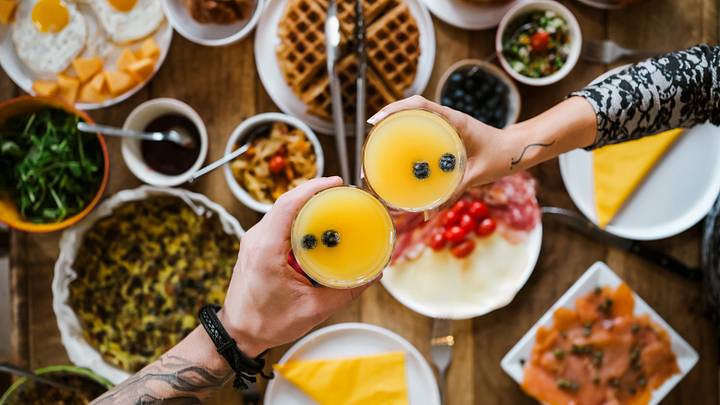
It’s an offer you’ll see in practically every downtown bar or restaurant these days—unlimited drinks or snacks at a “bottomless brunch.” But where does this phrase come from?
Let’s deal with it one word at a time.
A LITERAL AND FIGURATIVE BOTTOMLESS BRUNCH

The adjective bottomless dates back around 600 years in English, with its earliest known records emerging around the turn of the 14th-15th centuries. Originally used only in a literal sense—to refer to something that appears to have no bottom, like a profoundly deep sea or canyon—it didn’t take long for the word to pick up a handful of more figurative senses. In medieval English, for instance, bottomless could be used in the same way as baseless or groundless to mean something without a solid or reliable foundation; a definition that, however, has fallen by the wayside since the 1800s.
One figurative meaning of bottomless in particular, though, has survived. Around the mid 1400s, bottomless began to be used to mean inexhaustible or without limit. This is precisely the same meaning that you’ll still hear today when someone talks about a “bottomless demand” for something, or a “bottomless supply” of something—just like the drinks or servings at a quiet downtown mid-to-late morning brunch, for instance. In fact, the earliest use of bottomless to refer specifically to an unlimited serving of food or drink dates back to 1934, according to the Oxford English Dictionary (originally in reference to a “bottomless cup of coffee” offered as part of a 10-cent breakfast in Chicago).
BRUNCH, AND HOLD THE BOTTOMLESS

If the “bottomless” part of a bottomless brunch dates back to medieval times—while the concept of bottomless serving at a restaurant dates back just under a century—what about the “brunch” part?
Etymologically, brunch is a fine example of a blended or so-called portmanteau word—that is, one formed by smushing together two pre-existing words. As a meal taken in the mid-morning, between breakfast and lunch, ultimately, brunch combines the “br–” from the front of breakfast and the “–unch” from the end of lunch, and meets them quite literally in the middle (sometime around 10 or 11 o’clock in the morning, usually).
Although it might sound like a somewhat contemporary coinage, the portmanteau-ing of brunch actually occurred in the late 19th century, with both the Oxford English Dictionary and Merriam-Webster dating their earliest known records of the word to 1895. These early citations seem to suggest the word was originally coined in the preppy slang of Oxford University: an article in the British Independent newspaper dated August 22, 1895, explained that “Breakfast is ‘brekker’ in the Oxford tongue; when a man makes lunch his first meal of the day it becomes ‘brunch’; and a tea-dinner at the Union Club is a ‘smug’.”
Unfortunately, “smug” hasn’t had quite the same lasting impact as brunch. In fact, it didn’t take long at all for brunch to catch on in our language—nor for the meal itself to become something of a popular and modish way of hanging out. Just a year after it was first introduced in the slangy chatter of the Oxford Union, the term was more broadly popularized in an article in Britain’s famous satirical magazine Punch that explained back in 1896 that “to be fashionable nowadays we must ‘brunch.’”
THE ART OF BOTTOMLESS BRUNCHING

From there, as brunch has continued to prove more popular over time, restaurants have understandably sought to concoct means of attracting more customers—and hence brunching has now been combined with the concept of a bottomless mid-morning serving.