%20%20--%3E%0A%3Csvg%20version%3D%221.1%22%20id%3D%22Layer_1%22%20xmlns%3D%22http%3A%2F%2Fwww.w3.org%2F2000%2Fsvg%22%20xmlns%3Axlink%3D%22http%3A%2F%2Fwww.w3.org%2F1999%2Fxlink%22%20x%3D%220px%22%20y%3D%220px%22%0A%09%20viewBox%3D%220%200%20684.6%2068.1%22%20style%3D%22enable-background%3Anew%200%200%20684.6%2068.1%3B%22%20xml%3Aspace%3D%22preserve%22%3E%0A%3Cg%3E%0A%09%3Cpath%20d%3D%22M444.1%2C29.3h-17.4v14.5h17.4V29.3z%20M36.4%2C68.1l29.3-50.8V0H50.4L32.9%2C36.8L15.5%2C0H0v68.1h16.7V45.8l12.4%2C22.3H36.4z%0A%09%09%20M49.1%2C68.1h16.6V23.4L49.1%2C52.1V68.1z%20M76.6%2C68.1h45V53.8H93.3V41.6h21V27.1h-21V14.8h28.3V0.1h-45V68.1z%20M175.6%2C68.1h17.3v-68%0A%09%09h-16.5v40.3L150%2C0.1h-17.6v68h16.7V27.7L175.6%2C68.1z%20M235.8%2C14.8h15.4V0.1h-47.4v14.7H219v53.2h16.8V14.8z%20M290.3%2C45.9h-17.1%0A%09%09l7.5-15.6h2L290.3%2C45.9z%20M298.7%2C68.1h18l-32.2-68h-5.7l-32%2C68h18l3.3-7.1h27.1L298.7%2C68.1z%20M325.2%2C68.1h46.2V53.8h-29.6V0.1h-16.7%0A%09%09V68.1z%20M423.7%2C14.8h27.2V0.1H407v68h16.7V14.8z%20M462%2C68.1h46.2V53.8h-29.6V0.1H462V68.1z%20M564.8%2C34.1c0%2C10.7-7.2%2C19.2-18.5%2C19.2%0A%09%09c-11.4%2C0-18.5-8.5-18.5-19.2s7.1-19.2%2C18.5-19.2C557.6%2C14.9%2C564.8%2C23.4%2C564.8%2C34.1%20M580.6%2C34.1c0-19-14.2-34-34.3-34%0A%09%09c-20.2%2C0-34.3%2C15-34.3%2C34c0%2C19%2C14.1%2C34%2C34.3%2C34C566.4%2C68.1%2C580.6%2C53.1%2C580.6%2C34.1%20M604.8%2C20.5c0-4.1%2C3.3-6.2%2C6.7-6.2%0A%09%09c4.4%2C0%2C6.6%2C3%2C6.6%2C6.6h14.7C631.8%2C9.1%2C625.1%2C0.1%2C611%2C0.1c-12%2C0-21.7%2C9.3-21.7%2C20.6c0%2C10.9%2C5.9%2C15.9%2C16.7%2C19.8%0A%09%09c5.2%2C1.8%2C11.5%2C3.2%2C11.5%2C8c0%2C3.3-2.4%2C5.5-6.4%2C5.5c-3.6%2C0-6.6-3-6.6-6.7h-15.2c0%2C11.5%2C7.9%2C20.8%2C21.8%2C20.8c12%2C0%2C21.6-9.3%2C21.6-20.6%0A%09%09c0-10-5.3-16.4-16.7-19.8C610.6%2C26.1%2C604.8%2C25.3%2C604.8%2C20.5%20M670%2C20.9h14.7C683.8%2C9.1%2C677.1%2C0.1%2C663%2C0.1c-12%2C0-21.7%2C9.3-21.7%2C20.6%0A%09%09c0%2C10.9%2C5.9%2C15.9%2C16.7%2C19.8c5.2%2C1.8%2C11.5%2C3.2%2C11.5%2C8c0%2C3.3-2.4%2C5.5-6.4%2C5.5c-3.6%2C0-6.6-3-6.6-6.7h-15.2c0%2C11.5%2C7.9%2C20.8%2C21.8%2C20.8%0A%09%09c12%2C0%2C21.6-9.3%2C21.6-20.6c0-10-5.3-16.4-16.7-19.8c-5.4-1.6-11.3-2.4-11.3-7.2c0-4.1%2C3.3-6.2%2C6.7-6.2C667.7%2C14.4%2C670%2C17.3%2C670%2C20.9%0A%09%09%22%2F%3E%0A%3C%2Fg%3E%0A%3C%2Fsvg%3E%0A)

Whenever you talk about a “wild goose chase” or say something is taking “forever and a day,” you’re quoting Shakespeare. But The Bard is so unendingly influential that his work has not only infiltrated our language, but has also established many of the long-lasting tropes, clichés, and gestures that underpin many modern movies, stories, and even our everyday lives. In the world of love and romance, his work has formed the blueprint of everything from the plots and stock characters of your favorite rom-coms to popular ideas of the ideal couple.
THE LOVER ON THE BALCONY

It’s an image that’s now so set in stone in romantic stories that it’s been parodied and referenced in everything from Disney’s Snow White to The Simpsons. But there would be no romantic balcony cliché without Shakespeare’s Romeo and Juliet—or at least, without early productions of Romeo and Juliet.
That’s because as familiar as the balcony scene (“But soft, what light through yonder window breaks?”) might be to theatregoers today, Shakespeare’s original text doesn’t actually specify that Juliet enters on a balcony while her beau Romeo waits below; instead, the stage direction reads simply, “Enter Juliet above.”
Later productions positioned Juliet on a raised balcony, presumably because that staging understandably suits both her appearance at a height above Romeo and the interaction that follows. This staging was then further popularized decades after Shakespeare’s death by the writer Thomas Otway’s 1679 play The History and Fall of Caius Marius, which borrowed heavily from Romeo and Juliet and specifically placed its lovers on a balcony in the script.
“STAR-CROSSED LOVERS”

From Dido and Aeneas to Tristan and Isolde, tales of lovers who seem doomed from the very start have been a major part of romantic and tragic myth and storytelling for centuries. So when Shakespeare concocted Romeo and Juliet around 1594, he certainly wasn’t breaking new literary ground in bringing two ill-fated lovers together.
In fact, he even lifted the tragic ending of the play—in which Romeo wrongly believes Juliet to be dead and so kills himself, only for her to find him dead and kill herself too—from the ancient tale of Pyramus and Thisbe (which Shakespeare then also went on to work into the play-within-a-play in A Midsummer Night’s Dream).
Shakespeare did, however, coin the term star-crossed to refer to such doomed relationships, and used the term for the first time in the prologue to Romeo and Juliet: “From forth the fatal loins of these two foes, / A pair of star-crossed lovers take their life.” The term implies that the fates of his tragic lovers are astrologically predestined to be doomed or unhappy, due to the malign influence of the stars above them.
LOVE POEMS

Shakespeare didn’t invent love poetry, of course. And nor did he invent the 14-line romantic sonnet for which he is well known (despite writing several dozen of them). Even though the specific form of sonnet that Shakespeare tended to use—that is, a trio of four-line ABAB-rhyming stanzas followed by a concluding couplet—has since come to be known as the “Shakespearean sonnet,” in truth, poems of that structure had actually been written in England for almost half a century before Shakespeare was even born.
What Shakespeare’s 154 love sonnets did do, though (besides explore the human heart in perhaps more detail than any collection of poetry in English literature) was establish the sonnet as perhaps the quintessential form of love poetry in Elizabethan English—an association that would go on to influence later sonneteers like Wordsworth, Rossetti, and Coleridge, and which still holds today.
ENEMIES-TO-LOVERS

People have been telling love stories for millennia, of course, but Shakespeare put more than a few new twists on the age-old structures and storylines of the past, expertly mixing romance with elements of other genres, namely tragedy and comedy. (It’s for good reason that several of Shakespeare’s comedies are considered so difficult to categorize appropriately.)
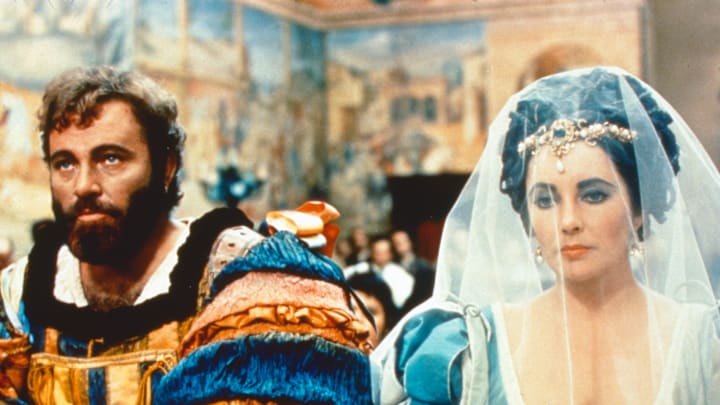
One of Shakespeare’s most iconic romantic tropes, though, was the shift from squabbling, verbally jousting enemies to locked-in lovers by the end of the story. This enemies-to-lovers shift was another trope Shakespeare picked up elements of from classical stories and myths, but in the likes of The Taming of the Shrew and, even more influentially, Much Ado About Nothing, he elevated this literary device to new heights. Romantic literature—and now, more recently, romantic movies—would never be the same again.
THE PERFECT COUPLE

Shakespeare’s writing is so intricate, and his insight into human nature so acute, that even his most overtly romantic plays find space to deeply explore his characters’ personalities and psyches. As a result, his romantic leads were not simple stock characters, but immensely real and human creations, riddled with flaws, insecurities, issues, and darkness. (It is for good reason that noted Shakespeare fan Samuel Johnson later wrote that Shakespeare “taught us to understand human nature.”)
As flawed and complex as his characters are, though, Shakespeare was still aware of his audience’s and the Elizabethan theatre world’s love of a nice, tidy, optimistic ending to his romantic stories—which meant showing these characters transformed by finding true love. As a result, from Beatrice and Benedick to Katherine and Petruchio, Shakespeare’s uneasy will-they-won't-they pairings often ended up as ideal couples, setting in place a tradition of romantic idealism that would influence literature for centuries.