%20%20--%3E%0A%3Csvg%20version%3D%221.1%22%20id%3D%22Layer_1%22%20xmlns%3D%22http%3A%2F%2Fwww.w3.org%2F2000%2Fsvg%22%20xmlns%3Axlink%3D%22http%3A%2F%2Fwww.w3.org%2F1999%2Fxlink%22%20x%3D%220px%22%20y%3D%220px%22%0A%09%20viewBox%3D%220%200%20684.6%2068.1%22%20style%3D%22enable-background%3Anew%200%200%20684.6%2068.1%3B%22%20xml%3Aspace%3D%22preserve%22%3E%0A%3Cg%3E%0A%09%3Cpath%20d%3D%22M444.1%2C29.3h-17.4v14.5h17.4V29.3z%20M36.4%2C68.1l29.3-50.8V0H50.4L32.9%2C36.8L15.5%2C0H0v68.1h16.7V45.8l12.4%2C22.3H36.4z%0A%09%09%20M49.1%2C68.1h16.6V23.4L49.1%2C52.1V68.1z%20M76.6%2C68.1h45V53.8H93.3V41.6h21V27.1h-21V14.8h28.3V0.1h-45V68.1z%20M175.6%2C68.1h17.3v-68%0A%09%09h-16.5v40.3L150%2C0.1h-17.6v68h16.7V27.7L175.6%2C68.1z%20M235.8%2C14.8h15.4V0.1h-47.4v14.7H219v53.2h16.8V14.8z%20M290.3%2C45.9h-17.1%0A%09%09l7.5-15.6h2L290.3%2C45.9z%20M298.7%2C68.1h18l-32.2-68h-5.7l-32%2C68h18l3.3-7.1h27.1L298.7%2C68.1z%20M325.2%2C68.1h46.2V53.8h-29.6V0.1h-16.7%0A%09%09V68.1z%20M423.7%2C14.8h27.2V0.1H407v68h16.7V14.8z%20M462%2C68.1h46.2V53.8h-29.6V0.1H462V68.1z%20M564.8%2C34.1c0%2C10.7-7.2%2C19.2-18.5%2C19.2%0A%09%09c-11.4%2C0-18.5-8.5-18.5-19.2s7.1-19.2%2C18.5-19.2C557.6%2C14.9%2C564.8%2C23.4%2C564.8%2C34.1%20M580.6%2C34.1c0-19-14.2-34-34.3-34%0A%09%09c-20.2%2C0-34.3%2C15-34.3%2C34c0%2C19%2C14.1%2C34%2C34.3%2C34C566.4%2C68.1%2C580.6%2C53.1%2C580.6%2C34.1%20M604.8%2C20.5c0-4.1%2C3.3-6.2%2C6.7-6.2%0A%09%09c4.4%2C0%2C6.6%2C3%2C6.6%2C6.6h14.7C631.8%2C9.1%2C625.1%2C0.1%2C611%2C0.1c-12%2C0-21.7%2C9.3-21.7%2C20.6c0%2C10.9%2C5.9%2C15.9%2C16.7%2C19.8%0A%09%09c5.2%2C1.8%2C11.5%2C3.2%2C11.5%2C8c0%2C3.3-2.4%2C5.5-6.4%2C5.5c-3.6%2C0-6.6-3-6.6-6.7h-15.2c0%2C11.5%2C7.9%2C20.8%2C21.8%2C20.8c12%2C0%2C21.6-9.3%2C21.6-20.6%0A%09%09c0-10-5.3-16.4-16.7-19.8C610.6%2C26.1%2C604.8%2C25.3%2C604.8%2C20.5%20M670%2C20.9h14.7C683.8%2C9.1%2C677.1%2C0.1%2C663%2C0.1c-12%2C0-21.7%2C9.3-21.7%2C20.6%0A%09%09c0%2C10.9%2C5.9%2C15.9%2C16.7%2C19.8c5.2%2C1.8%2C11.5%2C3.2%2C11.5%2C8c0%2C3.3-2.4%2C5.5-6.4%2C5.5c-3.6%2C0-6.6-3-6.6-6.7h-15.2c0%2C11.5%2C7.9%2C20.8%2C21.8%2C20.8%0A%09%09c12%2C0%2C21.6-9.3%2C21.6-20.6c0-10-5.3-16.4-16.7-19.8c-5.4-1.6-11.3-2.4-11.3-7.2c0-4.1%2C3.3-6.2%2C6.7-6.2C667.7%2C14.4%2C670%2C17.3%2C670%2C20.9%0A%09%09%22%2F%3E%0A%3C%2Fg%3E%0A%3C%2Fsvg%3E%0A)

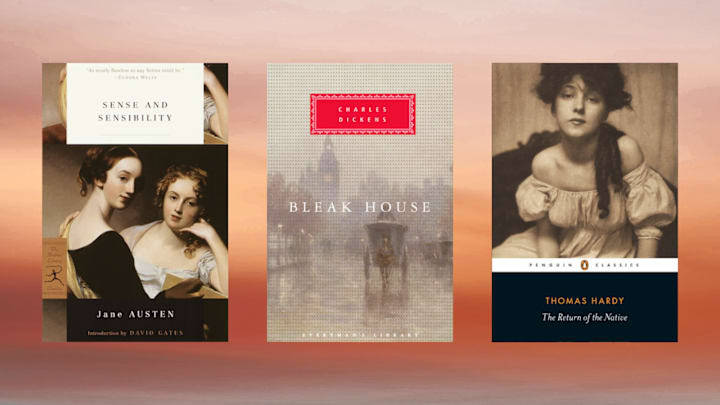
From Jane Austen to Thomas Hardy, the classic novelists of English literature have concocted some rollercoaster plots over the centuries, putting their characters through all manner of romantic ups and downs, and trials and tribulations, before ending up with their intended (or, occasionally, not). The seven classic stories here each contain moments when the plot—either from the readers’ perspective or that of the characters themselves—is suddenly turned upside down, a twist you or they could not have seen coming. (No spoilers here, though …)
- Bleak House by Charles Dickens
- Ethan Frome by Edith Wharton
- Far From the Madding Crowd by Thomas Hardy
- Jane Eyre by Charlotte Brontë
- Sense and Sensibility by Jane Austen
- The Return of the Native by Thomas Hardy
- Twelfth Night by William Shakespeare
Bleak House by Charles Dickens

Some Dickens stories seem more like soap operas than classic novels, with an immense cast of characters all of whose lives somehow interconnect with practically everyone else. One of Dickens’ grandest and most intricately drawn novels, Bleak House, contains more than its fair share of stop-you-in-your-tracks plot twists and unexpected moments (not least the outcome of the court case Jarndyce v. Jarndyce, which forms the backbone of the entire story). But when it comes to romance, one of the book’s most heart-stopping moments concerns the full reveal of the beautiful and stoic Lady Dedlock’s relationship with the once-dashing Captain Hawdon.
Ethan Frome by Edith Wharton

Edith Wharton’s breathtaking 1911 novella Ethan Frome tells the story of an uneasy love triangle among its title character, his domineering wife Zeena, and her open-hearted, tempestuous young cousin Mattie. Ethan slowly falls for Mattie throughout the story, until he is eventually faced with the dilemma of staying in his unhappy, loveless marriage or, after Zeena arranges for Mattie to be sent away, walking out on his wife to start a new life with her. There comes a point where it seems the story might be destined for a happy (if somewhat bittersweet) ending; instead, Ethan and Mattie decide to go sledging…
Far From the Madding Crowd by Thomas Hardy

Thomas Hardy’s stories are often chock full of melodramatic plot twists, coincidences, betrayals, and fatal misunderstandings, and his classic 1874 novel Far from the Madding Crowd is no different. The book follows the life of Bathsheba Everdene, and her ever-evolving relationships with her three potential suitors—William Boldwood, Gabriel Oak, and Frank Troy. The machinations of the plot (as in many of Hardy’s stories) are often shocking and upsetting. Still, perhaps the story’s most extraordinary twist is one that we, the readers, are actually privy to that—no spoilers!—takes place at a party on Christmas Eve. We might know what the other characters do not at this point in the story, of course, but what happens after that is just as shocking for us as for everyone else…
Jane Eyre by Charlotte Brontë

Charlotte Brontë’s breathtaking classic Jane Eyre sets the stage and then, well before the story is two-thirds over, pulls the rug out from under you. All seems to be going well so far: Jane, a naïve but fiercely intelligent young woman, has escaped her domineering aunt to work as the live-in governess at the grand mansion of the dashing Mr. Rochester, with whom she quickly falls in love. Before long, the couple is betrothed, and with Volume II of the story fast coming to an end, there’s at long last a wedding on the horizon. Let’s just hope no one at the wedding is harboring a terrible secret that could derail the rest of the book, then…
Sense and Sensibility by Jane Austen

Few classic authors managed to combine humor and romance quite so expertly as Jane Austen, and few of her books contain such an unexpected romantic twist as her 1811 debut, Sense and Sensibility. The book follows the lives of the impoverished Dashwood family, particularly the elder sisters, Elinor and Marianne. As with many of Austen’s stories, potential suitors (of varying quality and standing) come and go, but it is the dashing Edward Ferrars who steals the quiet and reserved Elinor’s heart—only for him to reveal that he has been secretly yet unhappily engaged to another woman since they were young. When Elinor later hears that Mr. Ferrars has married, she realizes the romance could never be realized. Or, so it would seem.
The Return of the Native by Thomas Hardy

Thomas Hardy wasn’t afraid to challenge the sensibilities of late Victorian England, and overtly (yet controversially) dealt with the likes of infidelity, immorality, and several other scandalous topics in his novels. In his sixth novel, 1878’s The Return of the Native, he created an uneasy situation in which the passionate young Eustacia Vye weds the eponymous “native” of the village of Egdon Heath, local schoolmaster Clym Yeobright, only for her ex-lover Damon Wildvere to reappear too, with a fortune to his name. The scene is set for perhaps one of Hardy’s most extraordinary endings, in which all the fates of the characters you have been following throughout are suddenly and unexpectedly thrown into the balance.
Twelfth Night by William Shakespeare

Another twist that we, as the audience, are fully aware of (while the characters themselves remain blissfully in the dark) lies at the center of William Shakespeare’s enduringly popular and decidedly dark romantic comedy, Twelfth Night. Watching the story unfold on stage, we know that Cesario, the besotted young page of Duke Orsino—who is in turn being romantically pursued by the wealthy countess Olivia—is actually a young woman, Viola, in disguise. We also know that Viola’s brother, Sebastian, although feared lost in the same shipwreck that left her stranded in an unfamiliar land, is still alive. All told, the pieces are in place for a raucous finale in which Viola’s ruse is finally revealed.