%20%20--%3E%0A%3Csvg%20version%3D%221.1%22%20id%3D%22Layer_1%22%20xmlns%3D%22http%3A%2F%2Fwww.w3.org%2F2000%2Fsvg%22%20xmlns%3Axlink%3D%22http%3A%2F%2Fwww.w3.org%2F1999%2Fxlink%22%20x%3D%220px%22%20y%3D%220px%22%0A%09%20viewBox%3D%220%200%20684.6%2068.1%22%20style%3D%22enable-background%3Anew%200%200%20684.6%2068.1%3B%22%20xml%3Aspace%3D%22preserve%22%3E%0A%3Cg%3E%0A%09%3Cpath%20d%3D%22M444.1%2C29.3h-17.4v14.5h17.4V29.3z%20M36.4%2C68.1l29.3-50.8V0H50.4L32.9%2C36.8L15.5%2C0H0v68.1h16.7V45.8l12.4%2C22.3H36.4z%0A%09%09%20M49.1%2C68.1h16.6V23.4L49.1%2C52.1V68.1z%20M76.6%2C68.1h45V53.8H93.3V41.6h21V27.1h-21V14.8h28.3V0.1h-45V68.1z%20M175.6%2C68.1h17.3v-68%0A%09%09h-16.5v40.3L150%2C0.1h-17.6v68h16.7V27.7L175.6%2C68.1z%20M235.8%2C14.8h15.4V0.1h-47.4v14.7H219v53.2h16.8V14.8z%20M290.3%2C45.9h-17.1%0A%09%09l7.5-15.6h2L290.3%2C45.9z%20M298.7%2C68.1h18l-32.2-68h-5.7l-32%2C68h18l3.3-7.1h27.1L298.7%2C68.1z%20M325.2%2C68.1h46.2V53.8h-29.6V0.1h-16.7%0A%09%09V68.1z%20M423.7%2C14.8h27.2V0.1H407v68h16.7V14.8z%20M462%2C68.1h46.2V53.8h-29.6V0.1H462V68.1z%20M564.8%2C34.1c0%2C10.7-7.2%2C19.2-18.5%2C19.2%0A%09%09c-11.4%2C0-18.5-8.5-18.5-19.2s7.1-19.2%2C18.5-19.2C557.6%2C14.9%2C564.8%2C23.4%2C564.8%2C34.1%20M580.6%2C34.1c0-19-14.2-34-34.3-34%0A%09%09c-20.2%2C0-34.3%2C15-34.3%2C34c0%2C19%2C14.1%2C34%2C34.3%2C34C566.4%2C68.1%2C580.6%2C53.1%2C580.6%2C34.1%20M604.8%2C20.5c0-4.1%2C3.3-6.2%2C6.7-6.2%0A%09%09c4.4%2C0%2C6.6%2C3%2C6.6%2C6.6h14.7C631.8%2C9.1%2C625.1%2C0.1%2C611%2C0.1c-12%2C0-21.7%2C9.3-21.7%2C20.6c0%2C10.9%2C5.9%2C15.9%2C16.7%2C19.8%0A%09%09c5.2%2C1.8%2C11.5%2C3.2%2C11.5%2C8c0%2C3.3-2.4%2C5.5-6.4%2C5.5c-3.6%2C0-6.6-3-6.6-6.7h-15.2c0%2C11.5%2C7.9%2C20.8%2C21.8%2C20.8c12%2C0%2C21.6-9.3%2C21.6-20.6%0A%09%09c0-10-5.3-16.4-16.7-19.8C610.6%2C26.1%2C604.8%2C25.3%2C604.8%2C20.5%20M670%2C20.9h14.7C683.8%2C9.1%2C677.1%2C0.1%2C663%2C0.1c-12%2C0-21.7%2C9.3-21.7%2C20.6%0A%09%09c0%2C10.9%2C5.9%2C15.9%2C16.7%2C19.8c5.2%2C1.8%2C11.5%2C3.2%2C11.5%2C8c0%2C3.3-2.4%2C5.5-6.4%2C5.5c-3.6%2C0-6.6-3-6.6-6.7h-15.2c0%2C11.5%2C7.9%2C20.8%2C21.8%2C20.8%0A%09%09c12%2C0%2C21.6-9.3%2C21.6-20.6c0-10-5.3-16.4-16.7-19.8c-5.4-1.6-11.3-2.4-11.3-7.2c0-4.1%2C3.3-6.2%2C6.7-6.2C667.7%2C14.4%2C670%2C17.3%2C670%2C20.9%0A%09%09%22%2F%3E%0A%3C%2Fg%3E%0A%3C%2Fsvg%3E%0A)

The internet is full of wild facts that seem way too good to be true. We’re highlighting some of our favorites, as adapted from the below episode of The List Show on YouTube.
- Until recently, John Tyler had two living grandsons.
- Letters are called “uppercase” and “lowercase” because of where they were stored.
- The U.S. Nuclear launch system used floppy disks until 2019.
- Ladders kill more people than sharks.
- Sharks are older than trees.
- Sharks are also older than the North Star.
- Bananas are naturally radioactive.
- The U.S. Capitol Building is radioactive.
- Jimmy Carter once peed radioactive urine.
- Butt is a real unit of measurement.
- Farts can leak out of your mouth if you hold them in.
- The last time all of humanity was on Earth was October 31, 2000.
- Oxford University is older than the Aztec civilization.
- Presidential assassin Charles Guiteau was in a utopian community.
- You’re covered in stripes.
- The song “Baby Got Back” is older than an important medical policy.
Until recently, John Tyler had two living grandsons.

Up until the 2020s, John Tyler—who was born in 1790 and became the 10th president of the United States in 1841—had two living grandsons. Not great-great-great-grandsons. Not great-great-grandsons. Not great-grandsons! Grandsons.
Tyler had 15 children between two wives. His 13th of those kids, Lyon Gardiner Tyler, was born in 1853, when his dad was in his sixties. Lyon Tyler also had two wives, the second of whom he married in 1923, and they had two sons: Lyon Gardiner Tyler Jr. came first, in 1925, when Lyon was around 72. Next came Harrison Ruffin Tyler, who was born in 1928. Lyon Gardner Tyler Jr. died in 1935, but his sons lived until September 2020 and May 2025, respectively.
Mental Floss broke the news on this seemingly impossible fact in 2012, kicking off a string of press for Tyler’s grandsons. Harrison, who occasionally gave tours at his grandfather’s homestead, told New York magazine in an interview that year, “I am sometimes called the great-grandson—we have to correct that.”
Letters are called “uppercase” and “lowercase” because of where they were stored.

If you assumed we call letters “uppercase” and “lowercase” because uppercase letters are taller than lowercase letters, well … you’d be wrong. The technical terms for the letters are majuscule for uppercase scripts and miniscule for lowercase scripts, which both have Latin roots. We call them “uppercase” and “lowercase” because printers kept letters in trays called “cases.” In those cases, capital letters went in the upper case and minuscule in the lower case. It seems almost too silly and literal to be true, but … it’s true.
More Random Facts You May Also Like ...
- 200 Random Facts Presented Without Context
- 11 Truly Random Facts That May Save Your Life
- 50 Awesome Facts About Everything
Add Mental Floss as a preferred news source!
The U.S. Nuclear launch system used floppy disks until 2019.

Floppy disks are so 1970s … unless you’re the U.S. nuclear launch system, in which case you were using 8-inch floppy disks all the way up until 2019. Up until just seven years ago, launching a nuke would have required the use of not just a floppy disk but an IBM computer that also dated back to the ’70s. In the eyes of Lt. Col. Jason Rossi, commander of the Air Force's 595th Strategic Communications Squadron, that wasn’t necessarily a bad thing: He told 60 Minutes that “You can't hack something that doesn’t have an IP address. It's a very unique system—it is old and it is very good.” In June 2019, the Strategic Automated Command and Control System finally phased out floppy disks for what they called a “highly-secure solid state digital storage solution.”
Ladders kill more people than sharks.

There are a lot of things more deadly than sharks—lightning strikes, for example, killed 444 people in the U.S. between 2006 and 2021, an average of almost 30 a year. Sharks? Just one per year on average. Around 150 die due to falling off a ladder.
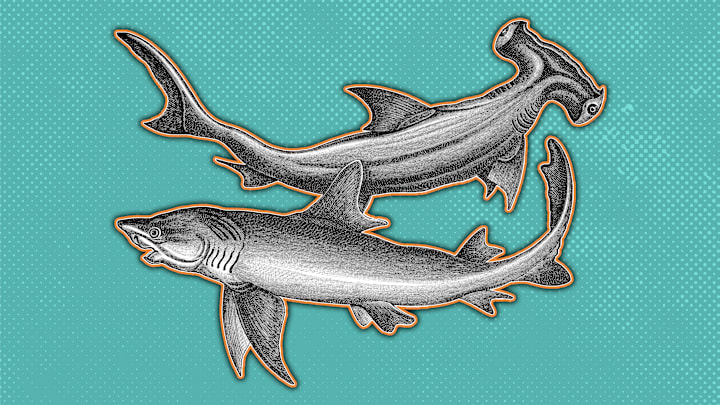
Sharks are older than trees.

Speaking of sharks: they’re older than trees. The first thing we’d call a tree, Archaeopteris, dates back 350 million years, and it’s now extinct. Sharks, meanwhile, have been around for 400 to 450 million years.
Sharks are also older than the North Star.

Sharks are so old they’ve been around for a lot longer than even some astronomical bodies. Like the stars that make up Polaris, a.k.a. the North Star—they’re only around 70 million years old. And also Saturn’s rings, which are 10 to 100 million years old. Sharks are also older than the Atlantic Ocean, which emerged after the supercontinent Pangea split up 150 million years ago.
Bananas are naturally radioactive.

Bananas have high levels of potassium, and some potassium is radioactive—and that means bananas are naturally radioactive. It’s not a lot of radiation, though. As the Environmental Protection Agency explains, “Consuming one banana would deliver a total dose of 0.01 millirem (0.1 microsieverts) of radiation. … To put that in context, you would need to eat about 100 bananas to receive the same amount of radiation exposure as you get each day in [the] United States from natural radiation in the environment.”
The U.S. Capitol Building is radioactive.

You know what else is radioactive? The U.S. Capitol building, thanks to the granite it’s constructed from. According to PBS, the building “is so radioactive, due to the high uranium content in its granite walls, it could never be licensed as a nuclear power reactor site.” A 2001 report measured a dose of radiation at some locations in the building at 30 microrem per hour, which the report notes “is up to 550 percent greater than the typical dose rate ‘at the fence line’ around nuclear power plants” and “is about 13,000 times greater than ongoing worldwide exposures to radiation from the Chernobyl accident.”
Jimmy Carter once peed radioactive urine.

In 1952, president Jimmy Carter was a Navy man in the atomic energy program. He and a team were sent to clean up a reactor in Chalk River, Ontario, that had been damaged by a meltdown after a power surge. At that time, we didn’t really have a firm grasp on the damage radiation could cause, which was still being studied. So Carter suited up and was lowered into the reactor, getting a dose of radiation that would frankly horrify us today. “For about six months after that I had radioactivity in my urine,” Carter said in 2008. “They let us get probably a thousand times more radiation than they would now. It was in the early stages and they didn't know.”
Butt is a real unit of measurement.

If you’ve ever talked about having a “buttload” of something, hold on to your butts, because butt is a real unit of measurement. It was at one point used for casks of liquids like wine and whiskey. As Adam Clark Estes so elegantly put it at Gizmodo, “That means if you fill the barrel up, you technically have a buttload of wine—though you’d probably just call it a full butt.” A butt amounts to about 108 imperial gallons, or about 130 American gallons.
Farts can leak out of your mouth if you hold them in.

Before we move on from butts, did you know that farts can actually leak out of your mouth if you don’t partake in that toot? Apparently, the unexpressed gas goes back through your gut wall, gets absorbed into your circulation, and then you exhale it. This might sound like another “if you keep making that face it’s gonna stay that way,” but this time it’s actually true.
The last time all of humanity was on Earth was October 31, 2000.

Here’s a fact that might blow your mind: The last time all of humanity was on earth together was October 31, 2000. That’s the day the first crew of the International Space Station headed into orbit, and someone’s been on the ISS ever since.
Oxford University is older than the Aztec civilization.

Though Aztec civilization feels like ancient history—probably because archaeologists spend a lot of time digging up evidence of it—in reality, we can trace its beginnings to 1325. By that point, Oxford University had already existed for more than 200 years: It first opened its doors in 1096.
Presidential assassin Charles Guiteau was in a utopian community.

In 1881, Charles Guiteau assassinated President James Garfield under the delusion that the president had refused him a position in the government. A couple of decades before that, Guiteau had been a member of the Oneida Community, which you might know from silverware but which began as a free-love utopian community—which we would today most definitely consider a cult—founded by a preacher named John Humphrey Noyes in the late 1840s. One of the community’s practices was “Complex Marriage,” which basically held that people could not shack up with one other person but that they could sleep with whomever they liked, provided the other person was also interested, which was actually kind of progressive. Complex Marriage was basically the tamest and least upsetting of the community’s doctrines.
Guiteau did not do well in Oneida. He didn’t want to do the required chores and was super mad when women—some of whom called him “Charles Gitout”— refused to sleep with him. He also didn’t like participating in “mutual criticisms,” in which other community members surrounded you and detailed all of your shortcomings, of which Charles Guiteau had a lot. He pretty much thought he was on a mission from God, so all of this insulted him a great deal. He would eventually leave the community and try to blackmail it into giving him $9000, which did not work out for him, and eventually he found himself on a path to murder.
You’re covered in stripes.

Like zebras and tigers, you have stripes. These stripes—which cover you from head to toe—are invisible. They’re known as Blaschko’s Lines after dermatologist Alfred Blaschko, who noticed that the moles and other skin conditions tended to show up in line-like formations on his patients, and the lines didn’t correspond to any known system of the body. Today, we know that this is a holdover from our development from a single cell to a whole human. You can see the stripes under UV light.
The song “Baby Got Back” is older than an important medical policy.

In June 2025, Dr. Sam Ghali tweeted, “Hit me with a shocking medical fact,” to which Medic Kim replied, “‘Baby Got Back’ is older than the first policy requiring women and minorities to be included in clinical trials and medical research.”
It seems kind of wild to exclude a huge part of the population from clinical trials, right? Let alone that this problem was corrected so recently. As a reminder, Sir Mix a Lot’s “Baby Got Back” came out in May 1992. And according to the National Institutes for Health, “Between 1989 and 1993, inclusion of women in clinical research was NIH policy, but it was not law.” In 1993, including women and underrepresented groups was made law in a section of the NIH Revitalization Act of 1993, which mandated, among other things, that:
“NIH ensures that women and minorities are included in all clinical research.
In trials including women and minorities, the trial should be designed and carried out so that it is possible to analyze whether the variables being studied affect women and minorities differently than other participants.
Cost is not an acceptable reason for excluding women and minorities.”
That law went into effect in September 1994, after which, according to the NIH, it “would not fund any grant, cooperative agreement, or contract or support any intramural project unless it complied with this policy.”