%20%20--%3E%0A%3Csvg%20version%3D%221.1%22%20id%3D%22Layer_1%22%20xmlns%3D%22http%3A%2F%2Fwww.w3.org%2F2000%2Fsvg%22%20xmlns%3Axlink%3D%22http%3A%2F%2Fwww.w3.org%2F1999%2Fxlink%22%20x%3D%220px%22%20y%3D%220px%22%0A%09%20viewBox%3D%220%200%20684.6%2068.1%22%20style%3D%22enable-background%3Anew%200%200%20684.6%2068.1%3B%22%20xml%3Aspace%3D%22preserve%22%3E%0A%3Cg%3E%0A%09%3Cpath%20d%3D%22M444.1%2C29.3h-17.4v14.5h17.4V29.3z%20M36.4%2C68.1l29.3-50.8V0H50.4L32.9%2C36.8L15.5%2C0H0v68.1h16.7V45.8l12.4%2C22.3H36.4z%0A%09%09%20M49.1%2C68.1h16.6V23.4L49.1%2C52.1V68.1z%20M76.6%2C68.1h45V53.8H93.3V41.6h21V27.1h-21V14.8h28.3V0.1h-45V68.1z%20M175.6%2C68.1h17.3v-68%0A%09%09h-16.5v40.3L150%2C0.1h-17.6v68h16.7V27.7L175.6%2C68.1z%20M235.8%2C14.8h15.4V0.1h-47.4v14.7H219v53.2h16.8V14.8z%20M290.3%2C45.9h-17.1%0A%09%09l7.5-15.6h2L290.3%2C45.9z%20M298.7%2C68.1h18l-32.2-68h-5.7l-32%2C68h18l3.3-7.1h27.1L298.7%2C68.1z%20M325.2%2C68.1h46.2V53.8h-29.6V0.1h-16.7%0A%09%09V68.1z%20M423.7%2C14.8h27.2V0.1H407v68h16.7V14.8z%20M462%2C68.1h46.2V53.8h-29.6V0.1H462V68.1z%20M564.8%2C34.1c0%2C10.7-7.2%2C19.2-18.5%2C19.2%0A%09%09c-11.4%2C0-18.5-8.5-18.5-19.2s7.1-19.2%2C18.5-19.2C557.6%2C14.9%2C564.8%2C23.4%2C564.8%2C34.1%20M580.6%2C34.1c0-19-14.2-34-34.3-34%0A%09%09c-20.2%2C0-34.3%2C15-34.3%2C34c0%2C19%2C14.1%2C34%2C34.3%2C34C566.4%2C68.1%2C580.6%2C53.1%2C580.6%2C34.1%20M604.8%2C20.5c0-4.1%2C3.3-6.2%2C6.7-6.2%0A%09%09c4.4%2C0%2C6.6%2C3%2C6.6%2C6.6h14.7C631.8%2C9.1%2C625.1%2C0.1%2C611%2C0.1c-12%2C0-21.7%2C9.3-21.7%2C20.6c0%2C10.9%2C5.9%2C15.9%2C16.7%2C19.8%0A%09%09c5.2%2C1.8%2C11.5%2C3.2%2C11.5%2C8c0%2C3.3-2.4%2C5.5-6.4%2C5.5c-3.6%2C0-6.6-3-6.6-6.7h-15.2c0%2C11.5%2C7.9%2C20.8%2C21.8%2C20.8c12%2C0%2C21.6-9.3%2C21.6-20.6%0A%09%09c0-10-5.3-16.4-16.7-19.8C610.6%2C26.1%2C604.8%2C25.3%2C604.8%2C20.5%20M670%2C20.9h14.7C683.8%2C9.1%2C677.1%2C0.1%2C663%2C0.1c-12%2C0-21.7%2C9.3-21.7%2C20.6%0A%09%09c0%2C10.9%2C5.9%2C15.9%2C16.7%2C19.8c5.2%2C1.8%2C11.5%2C3.2%2C11.5%2C8c0%2C3.3-2.4%2C5.5-6.4%2C5.5c-3.6%2C0-6.6-3-6.6-6.7h-15.2c0%2C11.5%2C7.9%2C20.8%2C21.8%2C20.8%0A%09%09c12%2C0%2C21.6-9.3%2C21.6-20.6c0-10-5.3-16.4-16.7-19.8c-5.4-1.6-11.3-2.4-11.3-7.2c0-4.1%2C3.3-6.2%2C6.7-6.2C667.7%2C14.4%2C670%2C17.3%2C670%2C20.9%0A%09%09%22%2F%3E%0A%3C%2Fg%3E%0A%3C%2Fsvg%3E%0A)

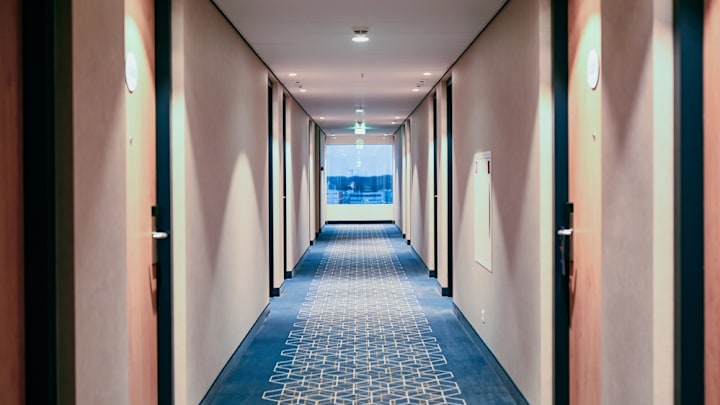
No matter where you are in the world, if you’re staying in any sort of large hotel chain, the hallways are likely to look almost exactly the same.
It’s easy to picture if you’ve been to even one: dreary patterned carpet, an endless series of nearly identical doors, and perhaps some unassuming art or mirrors along the way. At one point, on some floors, there’ll be a little room with a vending machine and an ice-maker; at another point you’ll reach the elevator, and at another you’ll find the door to the stairs.
It’s sometimes all too easy to get lost in this mazelike vortex of endless repetition, dizzying patterns, and locked doors. If you've ever wondered about the reasons behind all this, there are a few basic explanations.
How Guest Comfort Influences Hotel Hallway Design

First and foremost, hotel design is always intended to maximize guests' comfort, happiness, and willingness to book more stays in the future. While it may not seem completely intuitive that a completely recognizable hallway setup would equal guest satisfaction, seeing a repetitive, familiar layout “reinforces brand loyalty and trust,” according to the architecture magazine ArchUp.
This plays into the same psychology that makes us reach for familiar brands even if cheaper options might be available. Humans associate familiarity with safety and reliability, and prevailing wisdom holds that exhausted travelers are more likely to be grateful for comfort than novelty.
Even the art on hotel hallway walls is typically intentionally inoffensive and abstract in order to “avoid cultural sensitivity issues,” per ArchUp. Neutral wall color palettes can also trigger associations with cleanliness and a sense of calm. Predictable layouts also make it easier for guests to find ice-makers, exits, and elevators. Sound also plays a role in hotel hallway design, as thick carpets help muffle the sound of late-night arrivals and disruptive conversations.
How Standardized Hotel Designs Save Money

Sometimes, hotels’ identical hallways also have underlying economic reasons behind them. Many hotel chains utilize the same building techniques and materials all across the world, which cuts costs and can lead to standardization. Also, hotel rooms tend to be placed close to each other and in specific arrangements so they can share plumbing infrastructure.
Most hotel hallways are also designed to maximize space and costs while preserving guest comfort. They’re typically 60 to 72 inches wide, a size that can accommodate two service carts next to each other and that can allow a suitcase to pass a service cart, but not too much more. Additionally, in the United States, the Americans with Disabilities Act (ADA) generally requires public spaces to be a minimum width of 60 inches so that two wheelchairs can pass one another.
Additionally, the carpets we see in hotel hallways are often anything but calming, and sometimes the patterns can get a bit out of hand, particularly in older hotel chains. This actually has more to do with cleanliness than anything else, as a busy pattern better disguises stains and dirt and makes cleaning less of an urgent task for hotel staff.
Of course, all this is not necessarily the case for many boutique, luxury, or locally-owned hotels. Recent years have seen an overarching shift from standardized, globalized hotel templates to unique designs based more on local cultures and individual locations.
While some people might enjoy standard hotels' traditionally similar appearances, for others, hotel hallways can feel like uncanny liminal spaces, particularly when they’re extremely quiet and empty. If identical hotel hallways give you the heebie jeebies and make you feel like you're in The Shining rather than on vacation, there’s always the option of a locally owned, reliably quirky bed and breakfast.