%20%20--%3E%0A%3Csvg%20version%3D%221.1%22%20id%3D%22Layer_1%22%20xmlns%3D%22http%3A%2F%2Fwww.w3.org%2F2000%2Fsvg%22%20xmlns%3Axlink%3D%22http%3A%2F%2Fwww.w3.org%2F1999%2Fxlink%22%20x%3D%220px%22%20y%3D%220px%22%0A%09%20viewBox%3D%220%200%20684.6%2068.1%22%20style%3D%22enable-background%3Anew%200%200%20684.6%2068.1%3B%22%20xml%3Aspace%3D%22preserve%22%3E%0A%3Cg%3E%0A%09%3Cpath%20d%3D%22M444.1%2C29.3h-17.4v14.5h17.4V29.3z%20M36.4%2C68.1l29.3-50.8V0H50.4L32.9%2C36.8L15.5%2C0H0v68.1h16.7V45.8l12.4%2C22.3H36.4z%0A%09%09%20M49.1%2C68.1h16.6V23.4L49.1%2C52.1V68.1z%20M76.6%2C68.1h45V53.8H93.3V41.6h21V27.1h-21V14.8h28.3V0.1h-45V68.1z%20M175.6%2C68.1h17.3v-68%0A%09%09h-16.5v40.3L150%2C0.1h-17.6v68h16.7V27.7L175.6%2C68.1z%20M235.8%2C14.8h15.4V0.1h-47.4v14.7H219v53.2h16.8V14.8z%20M290.3%2C45.9h-17.1%0A%09%09l7.5-15.6h2L290.3%2C45.9z%20M298.7%2C68.1h18l-32.2-68h-5.7l-32%2C68h18l3.3-7.1h27.1L298.7%2C68.1z%20M325.2%2C68.1h46.2V53.8h-29.6V0.1h-16.7%0A%09%09V68.1z%20M423.7%2C14.8h27.2V0.1H407v68h16.7V14.8z%20M462%2C68.1h46.2V53.8h-29.6V0.1H462V68.1z%20M564.8%2C34.1c0%2C10.7-7.2%2C19.2-18.5%2C19.2%0A%09%09c-11.4%2C0-18.5-8.5-18.5-19.2s7.1-19.2%2C18.5-19.2C557.6%2C14.9%2C564.8%2C23.4%2C564.8%2C34.1%20M580.6%2C34.1c0-19-14.2-34-34.3-34%0A%09%09c-20.2%2C0-34.3%2C15-34.3%2C34c0%2C19%2C14.1%2C34%2C34.3%2C34C566.4%2C68.1%2C580.6%2C53.1%2C580.6%2C34.1%20M604.8%2C20.5c0-4.1%2C3.3-6.2%2C6.7-6.2%0A%09%09c4.4%2C0%2C6.6%2C3%2C6.6%2C6.6h14.7C631.8%2C9.1%2C625.1%2C0.1%2C611%2C0.1c-12%2C0-21.7%2C9.3-21.7%2C20.6c0%2C10.9%2C5.9%2C15.9%2C16.7%2C19.8%0A%09%09c5.2%2C1.8%2C11.5%2C3.2%2C11.5%2C8c0%2C3.3-2.4%2C5.5-6.4%2C5.5c-3.6%2C0-6.6-3-6.6-6.7h-15.2c0%2C11.5%2C7.9%2C20.8%2C21.8%2C20.8c12%2C0%2C21.6-9.3%2C21.6-20.6%0A%09%09c0-10-5.3-16.4-16.7-19.8C610.6%2C26.1%2C604.8%2C25.3%2C604.8%2C20.5%20M670%2C20.9h14.7C683.8%2C9.1%2C677.1%2C0.1%2C663%2C0.1c-12%2C0-21.7%2C9.3-21.7%2C20.6%0A%09%09c0%2C10.9%2C5.9%2C15.9%2C16.7%2C19.8c5.2%2C1.8%2C11.5%2C3.2%2C11.5%2C8c0%2C3.3-2.4%2C5.5-6.4%2C5.5c-3.6%2C0-6.6-3-6.6-6.7h-15.2c0%2C11.5%2C7.9%2C20.8%2C21.8%2C20.8%0A%09%09c12%2C0%2C21.6-9.3%2C21.6-20.6c0-10-5.3-16.4-16.7-19.8c-5.4-1.6-11.3-2.4-11.3-7.2c0-4.1%2C3.3-6.2%2C6.7-6.2C667.7%2C14.4%2C670%2C17.3%2C670%2C20.9%0A%09%09%22%2F%3E%0A%3C%2Fg%3E%0A%3C%2Fsvg%3E%0A)

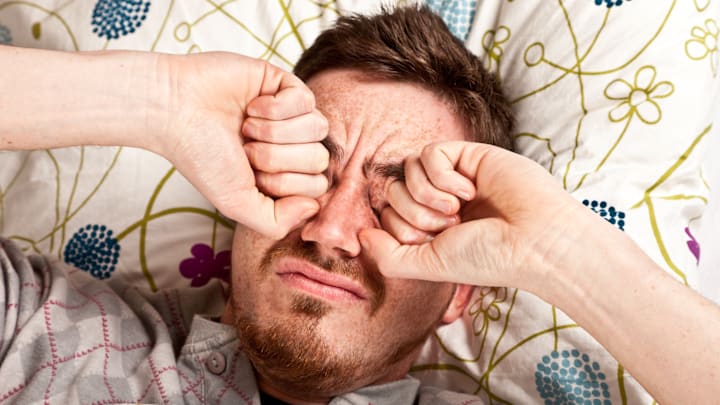
If you've ever been half asleep on the couch, rubbing your eyes routinely, you're not alone; it's a universal move. Babies do it. Adults do it. People pretending they're "not tired" do it the most. And while it looks like an insignificant, sleepy habit, eye-rubbing is actually your body's response to behind-the-scenes biological processes.
Before you rub your eyes and doze off, let's talk science.
BLINK AND YOU'LL MISS IT
When you're tired, your blinking slows. You stare. You zone out. Blinking keeps your eyes coated with tears. According to BBC's Science Focus, blinking less means your tear film (produced by your lacrimal glands) starts to dry up, leaving your eyes feeling heavy and scratchy (almost as if they've been dusted with sand).
So, how does your body respond to this sensation? By sending signals to your brain, the part that regulates behaviors and emotions, which then tells your hands to rub your eyes. This helps spread any remaining moisture and nudges your hormones to produce more basal tears. It's like emergency hydration for your eyeballs.
THE EYE-HEART CONNECTION
Here's the surprising part.
The muscles that move your eyes are connected to a reflex that affects your heart rate. So, in a sense, your eyes are connected to your heart. When those muscles are stimulated by rubbing your eyes, your nervous system responds by sending signals to your vagus nerve and slowing down your heart rate.
That's why rubbing your eyes isn't just an effective way to add moisture; it also makes you feel calmer because your heart is slowing down. Essentially, when your body shifts from alert to rest mode, your heart rate can decrease by up to 20 percent, according to SciShow.
SLEEP SIGNALS
Put those two things together, soothed eyes and a slower heart rate, and you've got a habit that feels oddly satisfying. It's not only relief; it's sleep assurance. It's your body saying, "We're done for the day. Let's wrap it up."
That's why rubbing your eyes is also accompanied by a yawn, a long sigh, or a slow blink that puts an end to your daily to-do list. It's a built-in shutdown that your nervous system takes note of.
EASY ON YOUR EYES

Before you start aggressively rubbing your eyes with your knuckles, remember they’re delicate. Rubbing them softly through closed lids is fine, but using brute force isn't doing them any favors. Constant rubbing can lead to misshapen corneas over time, greatly impacting your vision. If your eyes are frequently irritated, the issue might not be that you’re tired. It could be a sign you need to step away from the screens and invest in eye drops.
Science backs rest, not eye abuse!
TIME FOR BED
Rubbing your eyes when you're tired isn't necessarily a bad habit. It's your body multitasking by adding moisture, slowing down your heart rate, and steering you towards a good night's sleep.
Next time you catch yourself rubbing your eyes, don't fight it. Maybe they're dry, your heart needs steadying, or it's time for bed. If your eyeballs are physically telling you to clock out, it's probably time to call it a night!