%20%20--%3E%0A%3Csvg%20version%3D%221.1%22%20id%3D%22Layer_1%22%20xmlns%3D%22http%3A%2F%2Fwww.w3.org%2F2000%2Fsvg%22%20xmlns%3Axlink%3D%22http%3A%2F%2Fwww.w3.org%2F1999%2Fxlink%22%20x%3D%220px%22%20y%3D%220px%22%0A%09%20viewBox%3D%220%200%20684.6%2068.1%22%20style%3D%22enable-background%3Anew%200%200%20684.6%2068.1%3B%22%20xml%3Aspace%3D%22preserve%22%3E%0A%3Cg%3E%0A%09%3Cpath%20d%3D%22M444.1%2C29.3h-17.4v14.5h17.4V29.3z%20M36.4%2C68.1l29.3-50.8V0H50.4L32.9%2C36.8L15.5%2C0H0v68.1h16.7V45.8l12.4%2C22.3H36.4z%0A%09%09%20M49.1%2C68.1h16.6V23.4L49.1%2C52.1V68.1z%20M76.6%2C68.1h45V53.8H93.3V41.6h21V27.1h-21V14.8h28.3V0.1h-45V68.1z%20M175.6%2C68.1h17.3v-68%0A%09%09h-16.5v40.3L150%2C0.1h-17.6v68h16.7V27.7L175.6%2C68.1z%20M235.8%2C14.8h15.4V0.1h-47.4v14.7H219v53.2h16.8V14.8z%20M290.3%2C45.9h-17.1%0A%09%09l7.5-15.6h2L290.3%2C45.9z%20M298.7%2C68.1h18l-32.2-68h-5.7l-32%2C68h18l3.3-7.1h27.1L298.7%2C68.1z%20M325.2%2C68.1h46.2V53.8h-29.6V0.1h-16.7%0A%09%09V68.1z%20M423.7%2C14.8h27.2V0.1H407v68h16.7V14.8z%20M462%2C68.1h46.2V53.8h-29.6V0.1H462V68.1z%20M564.8%2C34.1c0%2C10.7-7.2%2C19.2-18.5%2C19.2%0A%09%09c-11.4%2C0-18.5-8.5-18.5-19.2s7.1-19.2%2C18.5-19.2C557.6%2C14.9%2C564.8%2C23.4%2C564.8%2C34.1%20M580.6%2C34.1c0-19-14.2-34-34.3-34%0A%09%09c-20.2%2C0-34.3%2C15-34.3%2C34c0%2C19%2C14.1%2C34%2C34.3%2C34C566.4%2C68.1%2C580.6%2C53.1%2C580.6%2C34.1%20M604.8%2C20.5c0-4.1%2C3.3-6.2%2C6.7-6.2%0A%09%09c4.4%2C0%2C6.6%2C3%2C6.6%2C6.6h14.7C631.8%2C9.1%2C625.1%2C0.1%2C611%2C0.1c-12%2C0-21.7%2C9.3-21.7%2C20.6c0%2C10.9%2C5.9%2C15.9%2C16.7%2C19.8%0A%09%09c5.2%2C1.8%2C11.5%2C3.2%2C11.5%2C8c0%2C3.3-2.4%2C5.5-6.4%2C5.5c-3.6%2C0-6.6-3-6.6-6.7h-15.2c0%2C11.5%2C7.9%2C20.8%2C21.8%2C20.8c12%2C0%2C21.6-9.3%2C21.6-20.6%0A%09%09c0-10-5.3-16.4-16.7-19.8C610.6%2C26.1%2C604.8%2C25.3%2C604.8%2C20.5%20M670%2C20.9h14.7C683.8%2C9.1%2C677.1%2C0.1%2C663%2C0.1c-12%2C0-21.7%2C9.3-21.7%2C20.6%0A%09%09c0%2C10.9%2C5.9%2C15.9%2C16.7%2C19.8c5.2%2C1.8%2C11.5%2C3.2%2C11.5%2C8c0%2C3.3-2.4%2C5.5-6.4%2C5.5c-3.6%2C0-6.6-3-6.6-6.7h-15.2c0%2C11.5%2C7.9%2C20.8%2C21.8%2C20.8%0A%09%09c12%2C0%2C21.6-9.3%2C21.6-20.6c0-10-5.3-16.4-16.7-19.8c-5.4-1.6-11.3-2.4-11.3-7.2c0-4.1%2C3.3-6.2%2C6.7-6.2C667.7%2C14.4%2C670%2C17.3%2C670%2C20.9%0A%09%09%22%2F%3E%0A%3C%2Fg%3E%0A%3C%2Fsvg%3E%0A)

Humans have changed a lot over the past few hundred millennia. We evolved from ancient apes, which are believed to have in turn evolved from sea creatures that existed in the distant, distant past, and Homo sapiens have only existed for a paltry 300,000 years.
Some animals, however, have remained almost exactly the same for hundreds of millions of years. Virtually untouched by evolution’s sway, they still crawl around today looking quite similar to how they did at when dinosaurs roamed the Earth, or in some cases, long before that. Ahead are nine creatures that have always been perfect just the way they are, at least in an evolutionary sense.
Sharks

Sharks have haunted the seas for some 450 million years, emerging during the Silurian period and remaining in existence across countless mass extinction events. Of course, sharks have changed shape a bit across the millennia, and some particularly gigantic ancient sharks, like the megalodon, don’t exist anymore—at least that we know of.
The oldest shark teeth date back to 410 million years ago, and the first recognizable sharks emerged around 380 million years ago. Around 252 million years ago, a mass extinction event wiped out around 96% of marine life—but sharks persisted, and soon evolved their trademark flexible jaws, which allow them to devour gigantic prey. Megalodons emerged between 66 to 23 million years ago, and some ancient species that still live today include frilled sharks, which are believed to have originated around 80 million years, and the rare, deep-sea-dwelling goblin sharks, which can be traced back to around 125 million years ago.
Sea Turtles

With their hard shells, large eyes, and scaly flippers, turtles definitely look the part of prehistoric creatures, and that’s because they are. The first turtles are believed to have emerged 230 million years ago during the Triassic period, and the first sea turtles followed around 145 million years ago. Unfortunately, these creatures’ long run on Earth is being threatened by pollution, climate change, and other dangers.
Horseshoe Crabs

These creatures are the only remaining members of the order Xiphosura, a group of arthropods that are closely related to arachnids. This means that horseshoe crabs are actually more similar to spiders and scorpions than crabs. These coastal creatures have been around for some 470 million years, dating them back to before dinosaurs evolved.
Nautilus

These peculiar cephalopods are sometimes called “living fossils,” as they’ve existed basically unchanged for over 480 million years. Known for their beautiful spiral-patterned shells, these mollusks have over 90 tentacles and tend to live in deep-sea reefs up to 2,200 feet below sea level. They predate trees and four-legged animals, but unfortunately, oceanic acidification, overfishing, and other issues also threaten this ancient aquatic inhabitant.
Crocodiles

If crocodiles look a bit like prehistoric monsters, that’s because they do indeed have their roots in ancient times. These mysterious and fearsome reptiles share some ancestry with dinosaurs, but can trace the roots of their current forms back around 95 million years ago, when the first crocodilians evolved in the Late Cretaceous period.
Of course, many different variations of crocodilian ancestors have come and gone over the years, including a recently discovered and particularly unsettling long-legged, fast-moving creature that once terrorized what is now England some 215 million years ago.
Cedar Wood Wasps
These tiny wasps are the last species standing from a family of wasps that lived around 165 million years ago, during the Middle Jurassic period. Today, these creatures are mostly found in California and British Columbia, and typically lay their eggs in burnt cedar wood, making them particularly common in areas affected by wildfires.
Platypuses

The platypus has long been a bit of an oddball in the animal kingdom, so much so that Charles Darwin once wrote that “two distinct Creators must have been at work” when the creature was made. Despite their weirdness, these egg-laying mammals have stood the test of time, as the oldest fossils of platypus relatives date back to the early Cretaceous period, around 110 million years ago.
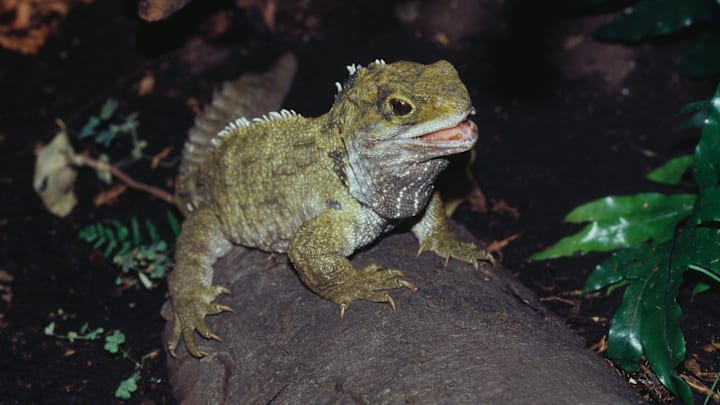
Tuatara

The tuatara are the last remaining species from the once-extensive Rhynchocephalia order of reptiles. Today, these scaly, three-eyed creatures can often be found taking shelter in birds' nests on a few small, unihabited islands near New Zealand’s North Island, but their ancestors walked the Earth some 250 million years ago, and they have remained essentially unchanged for the majority of that time.
Lungfish

Lungfish have inhabited Earth’s rivers and swamps for some 410 million years, remaining basically the same during all that time. True to their name, they actually do possess lungs that consist of many small air sacs, allowing them to breathe air in the case of droughts while also surviving underwater.