%20%20--%3E%0A%3Csvg%20version%3D%221.1%22%20id%3D%22Layer_1%22%20xmlns%3D%22http%3A%2F%2Fwww.w3.org%2F2000%2Fsvg%22%20xmlns%3Axlink%3D%22http%3A%2F%2Fwww.w3.org%2F1999%2Fxlink%22%20x%3D%220px%22%20y%3D%220px%22%0A%09%20viewBox%3D%220%200%20684.6%2068.1%22%20style%3D%22enable-background%3Anew%200%200%20684.6%2068.1%3B%22%20xml%3Aspace%3D%22preserve%22%3E%0A%3Cg%3E%0A%09%3Cpath%20d%3D%22M444.1%2C29.3h-17.4v14.5h17.4V29.3z%20M36.4%2C68.1l29.3-50.8V0H50.4L32.9%2C36.8L15.5%2C0H0v68.1h16.7V45.8l12.4%2C22.3H36.4z%0A%09%09%20M49.1%2C68.1h16.6V23.4L49.1%2C52.1V68.1z%20M76.6%2C68.1h45V53.8H93.3V41.6h21V27.1h-21V14.8h28.3V0.1h-45V68.1z%20M175.6%2C68.1h17.3v-68%0A%09%09h-16.5v40.3L150%2C0.1h-17.6v68h16.7V27.7L175.6%2C68.1z%20M235.8%2C14.8h15.4V0.1h-47.4v14.7H219v53.2h16.8V14.8z%20M290.3%2C45.9h-17.1%0A%09%09l7.5-15.6h2L290.3%2C45.9z%20M298.7%2C68.1h18l-32.2-68h-5.7l-32%2C68h18l3.3-7.1h27.1L298.7%2C68.1z%20M325.2%2C68.1h46.2V53.8h-29.6V0.1h-16.7%0A%09%09V68.1z%20M423.7%2C14.8h27.2V0.1H407v68h16.7V14.8z%20M462%2C68.1h46.2V53.8h-29.6V0.1H462V68.1z%20M564.8%2C34.1c0%2C10.7-7.2%2C19.2-18.5%2C19.2%0A%09%09c-11.4%2C0-18.5-8.5-18.5-19.2s7.1-19.2%2C18.5-19.2C557.6%2C14.9%2C564.8%2C23.4%2C564.8%2C34.1%20M580.6%2C34.1c0-19-14.2-34-34.3-34%0A%09%09c-20.2%2C0-34.3%2C15-34.3%2C34c0%2C19%2C14.1%2C34%2C34.3%2C34C566.4%2C68.1%2C580.6%2C53.1%2C580.6%2C34.1%20M604.8%2C20.5c0-4.1%2C3.3-6.2%2C6.7-6.2%0A%09%09c4.4%2C0%2C6.6%2C3%2C6.6%2C6.6h14.7C631.8%2C9.1%2C625.1%2C0.1%2C611%2C0.1c-12%2C0-21.7%2C9.3-21.7%2C20.6c0%2C10.9%2C5.9%2C15.9%2C16.7%2C19.8%0A%09%09c5.2%2C1.8%2C11.5%2C3.2%2C11.5%2C8c0%2C3.3-2.4%2C5.5-6.4%2C5.5c-3.6%2C0-6.6-3-6.6-6.7h-15.2c0%2C11.5%2C7.9%2C20.8%2C21.8%2C20.8c12%2C0%2C21.6-9.3%2C21.6-20.6%0A%09%09c0-10-5.3-16.4-16.7-19.8C610.6%2C26.1%2C604.8%2C25.3%2C604.8%2C20.5%20M670%2C20.9h14.7C683.8%2C9.1%2C677.1%2C0.1%2C663%2C0.1c-12%2C0-21.7%2C9.3-21.7%2C20.6%0A%09%09c0%2C10.9%2C5.9%2C15.9%2C16.7%2C19.8c5.2%2C1.8%2C11.5%2C3.2%2C11.5%2C8c0%2C3.3-2.4%2C5.5-6.4%2C5.5c-3.6%2C0-6.6-3-6.6-6.7h-15.2c0%2C11.5%2C7.9%2C20.8%2C21.8%2C20.8%0A%09%09c12%2C0%2C21.6-9.3%2C21.6-20.6c0-10-5.3-16.4-16.7-19.8c-5.4-1.6-11.3-2.4-11.3-7.2c0-4.1%2C3.3-6.2%2C6.7-6.2C667.7%2C14.4%2C670%2C17.3%2C670%2C20.9%0A%09%09%22%2F%3E%0A%3C%2Fg%3E%0A%3C%2Fsvg%3E%0A)

Dubrovnik may look like a medieval dream carved into the Dalmatian coast, but you’re far from the only one who knows it. As visitor numbers climb, travelers are increasingly swapping its packed Old Town for lesser-known European cities that offer similar scenery with a little more breathing room.
Instead of navigating the crowded Stradun or waiting for space along the city walls, many are heading to places where the pace of life itself feels different. In parts of the Adriatic, locals even have a word for this slower rhythm: fjaka—a state of easy, unforced relaxation that favors lingering cafe visits, unhurried meals, and simply being present. It’s this kind of atmosphere travelers are seeking in places where stone-built historic centers, seaside promenades, and hillside views feel just as dreamy, but far less compressed by tourism.
Think fortified towns perched above the water in Montenegro, lived-in port cities along Italy’s Adriatic coast, and quieter stretches of the Albanian Riviera where beaches take priority over sightseeing itineraries.
The appeal isn’t about replacing Croatian hotspot entirely, but about finding versions of its core experience—medieval architecture, coastal settings, and layered history—without the same level of congestion. Here are five European cities travelers are visiting instead.
Himarë, Albania

The Albanian Riviera is like the cooler, younger cousin of the Greek Islands and the Dalmatian coast—though it shares an equally ancient history with both. In Himarë, that coastal appeal takes on a quieter, more understated form, with light-blue waters, pebbled beaches, and an old hillside town overlooking the Ionian Sea.
Unlike more established Mediterranean destinations, Himarë still feels loosely developed, where stretches of coastline remain unstructured and small communities sit between mountains and sea. The town itself is split between a relaxed beachfront and a hilltop settlement, connected by winding roads and open views of the water below.
Rocky beaches like Gjipe and Jalë, along with the city’s budget-friendly appeal and slower pace, make it a compelling alternative for travelers seeking a more relaxed version of the Adriatic and Ionian coastlines.
Just a short drive from Himarë, Porto Palermo is home to the well-preserved Porto Palermo Castle—also known as Ali Pasha's castle—dramatically set on a rocky peninsula overlooking the bay, with origins dating back to the early 19th century. Beyond its historic site, the area prioritizes slowing down over traditional sightseeing, with travelers spending their time at nearby beach clubs or lingering in Greek-style tavernas rather than hopping between landmarks and museums.
Kotor, Montenegro

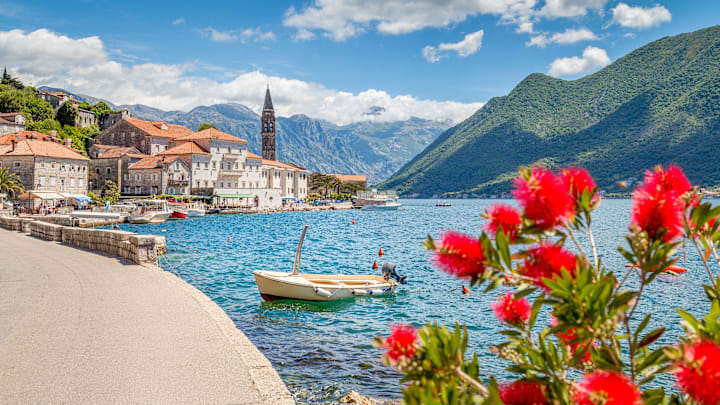
From turquoise waters framed by limestone cliffs to the Venetian-era architecture of its compact Old Town, Kotor—often dubbed a “mini Dubrovnik”—is drawing travelers seeking the dramatic beauty of the Dalmatian coast without the crowds of its unofficial capital.
Once a Venetian stronghold, the town’s historic core is a dense maze of stone streets, hidden squares, and fortified walls that climb all the way up the surrounding mountains. In fact, the entire city is enclosed by fortifications that extend down the cliffs on both sides, giving it a striking sense of being pressed into the landscape itself. Built in a rough triangular layout with winding lanes designed to perplex attackers, the Old Town still feels like a place shaped as much by defense as by daily life.
The best way to take it in is from above, where a hike up to the Fortress of St. John reveals the full scale of Kotor’s setting: terracotta rooftops clustered tightly below, the bay stretching outward in a narrow arc, and sheer mountains closing in from every direction. Down in the Old Town, centuries of history are visible in its weathered architecture, while subtle details, such as sea-green and blue windowpanes, echo the cool tones of the water just beyond the walls.
Compared to Dubrovnik, Kotor feels more enclosed and less polished, hence its reputation as a smaller, quieter counterpart to its famous neighbor. Instead of broad promenades and cruise-ship crowds, it offers a more intimate rhythm—church bells echoing through narrow alleys, cats stretched across sunlit stones, and a harbor that always feels just a hop and a skip away. The result is a place where the medieval atmosphere isn’t curated for visitors so much as preserved by geography itself.
Bari, Italy

Italy might not come to mind at first—or even second—when you think of big-name Balkan cities like Dubrovnik or Split, but don’t overlook Bari just yet. Just across the Adriatic lies this bustling southern Italian city, the capital of Puglia, located in the “heel” of Italy’s boot. While it may lack towering medieval walls, Bari makes up for it with a charming historic center where daily life unfolds in the streets: freshly washed linens hanging between buildings, neighbors chatting from doorways, and locals shaping fresh orecchiette by hand just steps from centuries-old churches.
At the heart of it all is Bari Vecchia, a cluster of narrow alleys that open unexpectedly into sunlit squares and small courtyards. Romanesque landmarks like the Basilica of Saint Nicholas anchor the neighborhood, while the waterfront lies just beyond, offering glimpses of the sparkling sea at the end of serpentine streets. Unlike Dubrovnik’s more curated feel, Bari’s Old Town is less about preservation for visitors and more about continuity, with Italian traditions that have carried on for generations.
The best way to experience Bari is simply by meandering, letting the rhythm of the neighborhood guide you from one corner to the next. Bakeries and trattorias spill into the streets, serving regional specialties like focaccia and ear-shaped pasta that reflect the city’s position as a crossroads of southern Italy. There’s no single viewpoint or defining panorama; instead, the appeal lies in the details, from carved stone doorways to the city serving as a gateway in its own right to famed beach towns like Polignano a Mare and Monopoli, just a stone’s throw away.
Thessaloniki, Greece

Set along the Aegean Sea, Thessaloniki offers a different kind of coastal charm than Dubrovnik, one that’s less about fortified walls and more about layers of history unfolding across a living city. Often overlooked in favor of the famed Greek islands, the country’s second-largest city has long drawn locals and now travelers who want a seaside destination with depth, where ancient ruins, Byzantine churches, and Ottoman relics sit alongside a buzzing modern culture.
Founded in 316 BCE, Thessaloniki has spent centuries as a crossroads of empires, and its architecture reflects that long, complex history. Roman arches and forums appear between apartment buildings, early Christian basilicas stand just blocks from lively markets, and the city’s iconic waterfront is anchored by the White Tower of Thessaloniki, a reminder of its time under Ottoman rule. Unlike Dubrovnik’s tightly preserved Old Town, Thessaloniki’s historic elements are woven into everyday life, creating a cityscape that feels less like a snapshot in time and more like an ongoing story.
The best way to experience it is by following the waterfront promenade, where locals gather at cafés and bars that spill out toward the sea. From there, the city rises gradually uphill, revealing neighborhoods filled with narrow streets, hidden courtyards, and panoramic views over the Thermaic Gulf. Along the way, bakeries and tavernas highlight Thessaloniki’s reputation as one of Greece’s top food cities, mixing classic Greek fare with a contemporary flair.
Šibenik, Croatia

From the Balkans to Italy’s “boot,” there are plenty of alternatives to Dubrovnik that capture its coastal charm and ancient walled-city energy. But you don’t even need to leave Croatia to find a slightly less crowded—but still similarly atmospheric—option.
That’s where Šibenik comes in, a Dalmatian coastal city often overshadowed by better-known stops along the Adriatic. Founded by Slavic settlers in the 11th century, it’s considered one of the oldest native Croatian towns on the coast, and later came under the influence of Venetian, Byzantine, and Habsburg rule. Despite that layered past, it feels notably low-key today, with a compact population and a slower rhythm than many of its more touristed neighbors.
Its historic center is built for wandering, with honeyed stone streets, terracotta roofs, and narrow lanes that unfold toward the waterfront. At its heart stands the UNESCO-listed Cathedral of St. James, a striking 15th-century landmark that anchors the Old Town’s skyline. While Dubrovnik is more widely recognized as King’s Landing in Game of Thrones, Šibenik’s historic streets and coastal setting have a similarly cinematic quality that made for the perfect Braavos.
Unlike more heavily visited Croatian cities, Šibenik’s shoreline remains relatively calm, offering open views of the crystal-clear Adriatic without the constant churn of cruise ships. Just beyond the city, visitors can explore Krka National Park by boat, passing waterfalls and river landscapes, or follow trails down the valley toward the historic Krka Monastery. Back in town, fresh seafood and Dalmatian wines define the coastal rhythm, rounding out a destination that delivers much of Dubrovnik’s historic atmosphere, just with more room to experience it.