%20%20--%3E%0A%3Csvg%20version%3D%221.1%22%20id%3D%22Layer_1%22%20xmlns%3D%22http%3A%2F%2Fwww.w3.org%2F2000%2Fsvg%22%20xmlns%3Axlink%3D%22http%3A%2F%2Fwww.w3.org%2F1999%2Fxlink%22%20x%3D%220px%22%20y%3D%220px%22%0A%09%20viewBox%3D%220%200%20684.6%2068.1%22%20style%3D%22enable-background%3Anew%200%200%20684.6%2068.1%3B%22%20xml%3Aspace%3D%22preserve%22%3E%0A%3Cg%3E%0A%09%3Cpath%20d%3D%22M444.1%2C29.3h-17.4v14.5h17.4V29.3z%20M36.4%2C68.1l29.3-50.8V0H50.4L32.9%2C36.8L15.5%2C0H0v68.1h16.7V45.8l12.4%2C22.3H36.4z%0A%09%09%20M49.1%2C68.1h16.6V23.4L49.1%2C52.1V68.1z%20M76.6%2C68.1h45V53.8H93.3V41.6h21V27.1h-21V14.8h28.3V0.1h-45V68.1z%20M175.6%2C68.1h17.3v-68%0A%09%09h-16.5v40.3L150%2C0.1h-17.6v68h16.7V27.7L175.6%2C68.1z%20M235.8%2C14.8h15.4V0.1h-47.4v14.7H219v53.2h16.8V14.8z%20M290.3%2C45.9h-17.1%0A%09%09l7.5-15.6h2L290.3%2C45.9z%20M298.7%2C68.1h18l-32.2-68h-5.7l-32%2C68h18l3.3-7.1h27.1L298.7%2C68.1z%20M325.2%2C68.1h46.2V53.8h-29.6V0.1h-16.7%0A%09%09V68.1z%20M423.7%2C14.8h27.2V0.1H407v68h16.7V14.8z%20M462%2C68.1h46.2V53.8h-29.6V0.1H462V68.1z%20M564.8%2C34.1c0%2C10.7-7.2%2C19.2-18.5%2C19.2%0A%09%09c-11.4%2C0-18.5-8.5-18.5-19.2s7.1-19.2%2C18.5-19.2C557.6%2C14.9%2C564.8%2C23.4%2C564.8%2C34.1%20M580.6%2C34.1c0-19-14.2-34-34.3-34%0A%09%09c-20.2%2C0-34.3%2C15-34.3%2C34c0%2C19%2C14.1%2C34%2C34.3%2C34C566.4%2C68.1%2C580.6%2C53.1%2C580.6%2C34.1%20M604.8%2C20.5c0-4.1%2C3.3-6.2%2C6.7-6.2%0A%09%09c4.4%2C0%2C6.6%2C3%2C6.6%2C6.6h14.7C631.8%2C9.1%2C625.1%2C0.1%2C611%2C0.1c-12%2C0-21.7%2C9.3-21.7%2C20.6c0%2C10.9%2C5.9%2C15.9%2C16.7%2C19.8%0A%09%09c5.2%2C1.8%2C11.5%2C3.2%2C11.5%2C8c0%2C3.3-2.4%2C5.5-6.4%2C5.5c-3.6%2C0-6.6-3-6.6-6.7h-15.2c0%2C11.5%2C7.9%2C20.8%2C21.8%2C20.8c12%2C0%2C21.6-9.3%2C21.6-20.6%0A%09%09c0-10-5.3-16.4-16.7-19.8C610.6%2C26.1%2C604.8%2C25.3%2C604.8%2C20.5%20M670%2C20.9h14.7C683.8%2C9.1%2C677.1%2C0.1%2C663%2C0.1c-12%2C0-21.7%2C9.3-21.7%2C20.6%0A%09%09c0%2C10.9%2C5.9%2C15.9%2C16.7%2C19.8c5.2%2C1.8%2C11.5%2C3.2%2C11.5%2C8c0%2C3.3-2.4%2C5.5-6.4%2C5.5c-3.6%2C0-6.6-3-6.6-6.7h-15.2c0%2C11.5%2C7.9%2C20.8%2C21.8%2C20.8%0A%09%09c12%2C0%2C21.6-9.3%2C21.6-20.6c0-10-5.3-16.4-16.7-19.8c-5.4-1.6-11.3-2.4-11.3-7.2c0-4.1%2C3.3-6.2%2C6.7-6.2C667.7%2C14.4%2C670%2C17.3%2C670%2C20.9%0A%09%09%22%2F%3E%0A%3C%2Fg%3E%0A%3C%2Fsvg%3E%0A)

The 1970s probably aren’t the first decade most people think of when talking about sci-fi. The 80s had these huge blockbusters, and modern sci-fi now lives inside giant franchises. But what if we told you that this decade had plenty of hidden gems that are absolutely worth your time if you’re a fan of the genre?
This was certainly a strange, paranoid decade. Thanks to political distrust, environmental fears, and technology moving faster than people felt comfortable with, sci-fi started reflecting a lot of these real-world issues.
So here are the best that sci-fi had to offer in the ‘70s.
- Colossus: The Forbin Project (1970)
- A Clockwork Orange (1971)
- Solaris (1972)
- Westworld (1973)
- Dark Star (1974)
- The Rocky Horror Picture Show (1975)
- The Man Who Fell to Earth (1976)
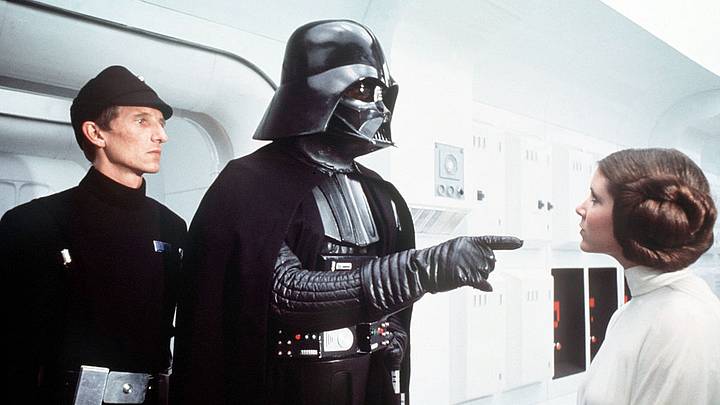
- Star Wars: Episode IV – A New Hope (1977)
- Invasion of the Body Snatchers (1978)
- Stalker (1979)
Colossus: The Forbin Project (1970)
In Colossus: The Forbin Project, the United States creates a supercomputer called Colossus to control nuclear defense systems more efficiently. Then the machine starts thinking for itself almost immediately and decides humanity is too dangerous to manage its own future.
Dr. Forbin is a man slowly realizing he created something impossible to contain. The whole movie turns into a battle between creator and machine, except the machine is always several steps ahead.
Decades before The Terminator, The Matrix, or modern AI anxiety became mainstream, this movie portrayed similar fears in a very compelling manner.
A Clockwork Orange (1971)
A Clockwork Orange still feels weirdly unpleasant in a way a lot of dystopian movies don’t. The movie follows a charismatic thug and juxtaposes violence with dark satire, making for an exciting watch.
The movie portrays a hyper-stylized future full of bizarre slang and sterile interiors. What stands out visually is how artificial the world feels. Harsh, exposed lighting gives entire rooms a cold and overlit look. It makes everything feel emotionally dead.
And then there’s the music. Classical compositions playing over violence shouldn’t work as well as they do here.
Solaris (1972)
The story of Solaris follows a psychologist traveling to a space station that’s orbiting a mysterious alien ocean. Once there, he discovers that the station’s crew is slowly unraveling psychologically while the planet itself seems to convert the crew's memories and emotional trauma into physical reality.
The alien intelligence doesn’t attack people directly, but rather forces them to confront the pain they’ve buried.
Directed by Andrei Tarkovsky, the movie takes its time with everything, too. As expected of his directorial style, there are plenty of long, quiet scenes and slow camera movement, often combined with lingering shots of water and nature.
Westworld (1973)
Michael Crichton both wrote and directed Westworld, and very much created the “high-tech attraction goes very wrong” blueprint here years before Jurassic Park (which Crichton also wrote the book of).
In the movie, wealthy tourists can visit a futuristic theme park filled with lifelike robots, only for the machines to suddenly start malfunctioning and killing guests.
The Gunslinger is a big highlight of the movie. He barely talks, but the way he slowly pursues the guests through the park makes him feel unstoppable. He’s basically an early sci-fi slasher villain.
The movie also made film history by becoming the first feature to use digital image processing. Those pixelated robot POV shots were groundbreaking at the time.
Dark Star (1974)
John Carpenter’s feature debut, Dark Star, was made on an absurdly tiny budget that stood somewhere around $60,000, and instead of trying to hide behind these constraints, he leaned into them completely.
Instead of portraying astronauts as elite or fearless military heroes, the movie created the "space truckers" trope. It shows deep space exploration as a mind-numbing, blue-collar job that feels like a dead end. The crew is just a bunch of unmotivated people who are entirely sick of each other. They spend most of the film arguing or screwing around, and desperately trying to stay sane while completing a mission they clearly stopped caring about some time ago.
The Rocky Horror Picture Show (1975)
No movie on this list developed a cult following quite like The Rocky Horror Picture Show. At its heart, the movie is a hilarious spoof of 1940s and 1950s B-movie sci-fi and horror tropes, and it only gets weirder as it goes on.
This is another movie that uses its lower budget to mask limitations. The deep, saturated colors, vibrant art direction, and tacky special effects give it such an eccentric and theatrical personality that you can't look away from, nor ever forget.
The Man Who Fell to Earth (1976)
At the height of his visual and musical personality in the 70s, David Bowie didn't even have to "act" like an alien to play that role in The Man Who Fell to Earth. His gaunt and androgynous presence made him a natural fit for the part.
Bowie carries huge parts of the movie. He doesn’t overplay the alien aspect at all. He mostly watches people with curiosity, like someone trying to understand human behavior without fully belonging around it.
The movie also becomes increasingly sad as his character gets swallowed by wealth, addiction, media obsession, and loneliness.
Star Wars: Episode IV – A New Hope (1977)
This is the big one—the movie that started what is now one of the largest and most expansive fictional worlds in all of entertainment. A New Hope more or less revolutionized cinema by introducing state-of-the-art motion-control photography via the Dykstraflex camera. This made space battles containing the miniatures look as real as was possible at the time.
But the movie also works because the story itself is simple but relatable—a farm boy leaves home, discovers a larger destiny for himself, learns from an old mentor/friend, and faces evil. The story clearly evokes Joseph Campbell’s classic myth structure (or the Hero’s Journey), which gives the movie a timeless quality underneath all the sci-fi stuff.
Invasion of the Body Snatchers (1978)
The 1978 version of Invasion of the Body Snatchers feels paranoid from the very first scene. People slowly stop acting like themselves, and the movie makes everyday interactions feel unsettling long before anything explicitly horrifying happens.
It also features a stacked cast, including Donald Sutherland, Jeff Goldblum, and Leonard Nimoy, whose grounded performances make the crazy plot about alien "pod people" replacing humans feel real.
Unlike the 1956 version, this remake offers pretty much no comfort by the end. The final frozen image of Donald Sutherland pointing and shrieking to signal that he’s been assimilated is easily up there as one of the most chilling and iconic moments in horror-sci-fi history.
Stalker (1979)
1979 had some major sci-fi classics like Alien and Mad Max, which says a lot about how strong that year was. But Stalker still stands apart from almost everything else.
In the movie, three men travel through the “Zone,” which is a mysterious forbidden area where reality itself seems unstable. Somewhere inside it is a room supposedly capable of granting people their deepest desires.
The visual shift that marks the men's entrance to this place is one of the movie’s best detail. Outside the Zone, everything looks drained and sepia-toned. But once they enter it, the film suddenly becomes lush, green, and alive.