%20%20--%3E%0A%3Csvg%20version%3D%221.1%22%20id%3D%22Layer_1%22%20xmlns%3D%22http%3A%2F%2Fwww.w3.org%2F2000%2Fsvg%22%20xmlns%3Axlink%3D%22http%3A%2F%2Fwww.w3.org%2F1999%2Fxlink%22%20x%3D%220px%22%20y%3D%220px%22%0A%09%20viewBox%3D%220%200%20684.6%2068.1%22%20style%3D%22enable-background%3Anew%200%200%20684.6%2068.1%3B%22%20xml%3Aspace%3D%22preserve%22%3E%0A%3Cg%3E%0A%09%3Cpath%20d%3D%22M444.1%2C29.3h-17.4v14.5h17.4V29.3z%20M36.4%2C68.1l29.3-50.8V0H50.4L32.9%2C36.8L15.5%2C0H0v68.1h16.7V45.8l12.4%2C22.3H36.4z%0A%09%09%20M49.1%2C68.1h16.6V23.4L49.1%2C52.1V68.1z%20M76.6%2C68.1h45V53.8H93.3V41.6h21V27.1h-21V14.8h28.3V0.1h-45V68.1z%20M175.6%2C68.1h17.3v-68%0A%09%09h-16.5v40.3L150%2C0.1h-17.6v68h16.7V27.7L175.6%2C68.1z%20M235.8%2C14.8h15.4V0.1h-47.4v14.7H219v53.2h16.8V14.8z%20M290.3%2C45.9h-17.1%0A%09%09l7.5-15.6h2L290.3%2C45.9z%20M298.7%2C68.1h18l-32.2-68h-5.7l-32%2C68h18l3.3-7.1h27.1L298.7%2C68.1z%20M325.2%2C68.1h46.2V53.8h-29.6V0.1h-16.7%0A%09%09V68.1z%20M423.7%2C14.8h27.2V0.1H407v68h16.7V14.8z%20M462%2C68.1h46.2V53.8h-29.6V0.1H462V68.1z%20M564.8%2C34.1c0%2C10.7-7.2%2C19.2-18.5%2C19.2%0A%09%09c-11.4%2C0-18.5-8.5-18.5-19.2s7.1-19.2%2C18.5-19.2C557.6%2C14.9%2C564.8%2C23.4%2C564.8%2C34.1%20M580.6%2C34.1c0-19-14.2-34-34.3-34%0A%09%09c-20.2%2C0-34.3%2C15-34.3%2C34c0%2C19%2C14.1%2C34%2C34.3%2C34C566.4%2C68.1%2C580.6%2C53.1%2C580.6%2C34.1%20M604.8%2C20.5c0-4.1%2C3.3-6.2%2C6.7-6.2%0A%09%09c4.4%2C0%2C6.6%2C3%2C6.6%2C6.6h14.7C631.8%2C9.1%2C625.1%2C0.1%2C611%2C0.1c-12%2C0-21.7%2C9.3-21.7%2C20.6c0%2C10.9%2C5.9%2C15.9%2C16.7%2C19.8%0A%09%09c5.2%2C1.8%2C11.5%2C3.2%2C11.5%2C8c0%2C3.3-2.4%2C5.5-6.4%2C5.5c-3.6%2C0-6.6-3-6.6-6.7h-15.2c0%2C11.5%2C7.9%2C20.8%2C21.8%2C20.8c12%2C0%2C21.6-9.3%2C21.6-20.6%0A%09%09c0-10-5.3-16.4-16.7-19.8C610.6%2C26.1%2C604.8%2C25.3%2C604.8%2C20.5%20M670%2C20.9h14.7C683.8%2C9.1%2C677.1%2C0.1%2C663%2C0.1c-12%2C0-21.7%2C9.3-21.7%2C20.6%0A%09%09c0%2C10.9%2C5.9%2C15.9%2C16.7%2C19.8c5.2%2C1.8%2C11.5%2C3.2%2C11.5%2C8c0%2C3.3-2.4%2C5.5-6.4%2C5.5c-3.6%2C0-6.6-3-6.6-6.7h-15.2c0%2C11.5%2C7.9%2C20.8%2C21.8%2C20.8%0A%09%09c12%2C0%2C21.6-9.3%2C21.6-20.6c0-10-5.3-16.4-16.7-19.8c-5.4-1.6-11.3-2.4-11.3-7.2c0-4.1%2C3.3-6.2%2C6.7-6.2C667.7%2C14.4%2C670%2C17.3%2C670%2C20.9%0A%09%09%22%2F%3E%0A%3C%2Fg%3E%0A%3C%2Fsvg%3E%0A)

Sci-fi in the 1980s was something of an "Auteur Blockbuster" era, where directors like James Cameron, Ridley Scott, and Paul Verhoeven (to name a few) often used big studio budgets to explore cynical and anti-authoritarian themes.
This was also the golden age of practical effects. Before CGI became the go-to for most movies, everything you saw was a physical model, a matte painting, some clever filmmaking, or a guy in a very expensive suit. This gave the movies a tactile and lived-in quality that makes them feel just as real today as they did forty-plus years ago.
From the reaches of a galaxy far, far away to the dystopian streets of Detroit, these are the best the science fiction genre had to offer in the 80s.
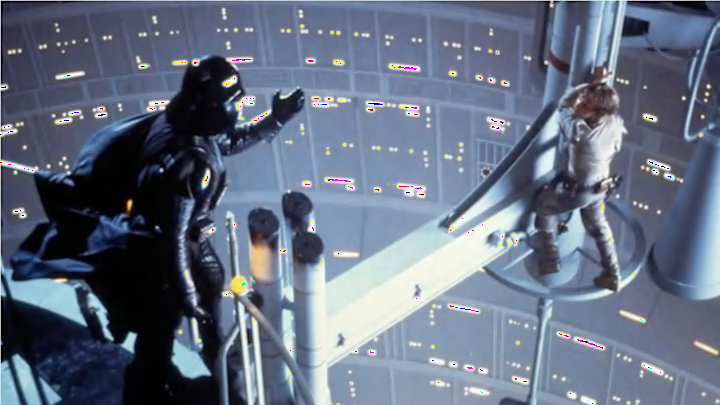
Star Wars: Episode V – The Empire Strikes Back (1980)
While the first Star Wars felt more like a classic fairytale in space, The Empire Strikes Back is where the saga became a thing of legend. The movie took a much darker and more character-driven approach.
The story splits our heroes up, with Luke heading to the swamp planet Dagobah to train with Yoda, while Han and Leia are hunted by Darth Vader.
Another reason it stands out is that it refused to give the audience a happy ending, instead ending on a cliffhanger. It perfectly showed how sequels could be more complex and emotionally resonant than the originals.
Escape from New York (1981)
John Carpenter’s Escape from New York is more of a "low-fi" sci-fi action flick. In a future where Manhattan has been turned into a maximum-security prison, the government recruits Snake Plissken (Kurt Russell), who’s a cynical former soldier turned criminal, to go in and rescue the President in 24 hours.
Russell’s performance is, of course, legendary. Snake barely talks and spends most of the film annoyed at everyone around him, and still became one of the defining antiheroes of the '80s anyway. The eyepatch helps, obviously.
The atmosphere is thick with synth-heavy music composed by Carpenter himself, which gives the ruined city an energy of its own. The movie didn’t have a huge budget, but it understood how to turn limitations into style.
Blade Runner (1982)
1982 was perhaps the best year of this decade in terms of sci-fi history, with E.T. and The Thing both releasing in June, but Blade Runner is the one that changed the visual language of cinema forever.
The movie follows Rick Deckard (Harrison Ford), a "Blade Runner" whose job is to hunt down and "retire" four escaped replicants who have returned to Earth to find their creator. It’s a neo-noir detective story set in a neon-soaked version of 2019 Los Angeles. But sure, it overestimated how futuristic 2019 would actually be.
The world-building still remains unmatched. The designs for the flying spinners and the massive Tyrell Corporation pyramids created a future-noir look that still inspires other works.
Just be sure to watch the much superior The Final Cut (2007) version.
Star Wars: Episode VI – Return of the Jedi (1983)
The conclusion to the original Star Wars trilogy had the impossible task of tying up all the loose ends, and it still did so very well. While some fans were (and are still) split on the introduction of the Ewoks and a lighter tone in certain parts, Return of the Jedi does feature some of the best action in the series.
The practical effects also reached their peak here, such as the Jabba’s Palace sequence, which featured dozens of unique puppets and animatronics, including the massive Jabba himself.
The space battle over Endor was pretty complex to plan and shoot, too, and it pushed ILM’s optical printers to the breaking point. Overall, the movie stuck the landing where it mattered the most.
The Terminator (1984)
The Terminator is just a perfect blend of sci-fi, slasher horror, and noir.
Much like the other great sci-fi movies of the ‘80s, which are now cult classics, this is another film that was made on a relatively small budget. This forced James Cameron to be incredibly creative. What began as a fairly lean sci-fi horror movie became one of the biggest action movie franchises.
A lot of time-travel movies can get tangled in their own rules. The Terminator mostly just uses the concept to create tension and a sense of dread, which was the right choice.
Brazil (1985)
Terry Gilliam’s Brazil is one of the most surreal movies you’ll see, irrespective of genre. Being a discomforting satire of bureaucracy and totalitarianism, the movie follows a low-level government employee who tries to correct a simple administrative error but somehow ends up becoming an enemy of the state.
The world is a "retro-future" nightmare where everything is cluttered with malfunctioning pipes and endless paperwork. It’s essentially 1984 if it were directed by someone with a penchant for black comedy.
The production design is incredible; the sets are huge and filled with strange and analog technology that constantly breaks down.
The movie also had a famously messy release because the studio wanted a happier ending. Gilliam fought hard against that. The actual ending is pretty bleak in exactly the way the film needed.
Aliens (1986)
James Cameron stepped into the Alien franchise with a goal of doing something different—he switched genres from horror to action-war movie without losing the dread or tension of the original. That could’ve easily gone badly and alienated fans of the original.
This time, there isn't just one alien, but there are hundreds. The film also has some amazing pacing. It takes its time building tension before unleashing chaos in the second half.
The Colonial Marines also bring a lot of charm and some humor to the mix, and every one of them was memorable. They joke around, insult each other, act overconfident, and become people you care about.
RoboCop (1987)
RoboCop is much smarter than its title might suggest. The movie is a violent and satirical look at corporate greed, privatization, and the loss of identity. The movie follows Alex Murphy, a cop in a dystopian Detroit who is brutally murdered and resurrected as a cyborg law-enforcement unit by the MegaCorp OCP.
The movie is famous for its media breaks, which are fake commercials and news segments that satirize the excessiveness of the 1980s. Every broadcast feels slightly more insane.
Akira (1988)
Akira was a landmark for Japanese animation, bringing the Cyberpunk aesthetic to a global audience with a level of animation detail and quality that had never been seen before. Set in Neo-Tokyo thirty years after a nuclear explosion, it follows Kaneda and his friend Tetsuo, who gains god-like psychic powers after a government experiment goes wrong.
The animation is still breathtaking, and it was one of the first anime to use pre-recorded dialogue, featuring over 160,000 hand-drawn frames. And of course, the Kaneda bike slide has become one of the most referenced shots in all of cinematic history. But the movie’s legacy goes way beyond iconic shots.
The Abyss (1989)
As you can probably tell by now, James Cameron was on a roll in the ‘80s, and ended the decade with The Abyss, a film that took his obsession with the ocean to the extreme. In the movie, a civilian diving team is drafted to help search for a lost nuclear submarine and discovers something in the depths.
The filming was famously difficult, with the cast and crew spending months in a massive underwater set built in an unfinished nuclear reactor.
The setting does a lot of the heavy lifting. Deep underwater darkness already feels naturally haunting before the sci-fi elements even fully arrive.