%20%20--%3E%0A%3Csvg%20version%3D%221.1%22%20id%3D%22Layer_1%22%20xmlns%3D%22http%3A%2F%2Fwww.w3.org%2F2000%2Fsvg%22%20xmlns%3Axlink%3D%22http%3A%2F%2Fwww.w3.org%2F1999%2Fxlink%22%20x%3D%220px%22%20y%3D%220px%22%0A%09%20viewBox%3D%220%200%20684.6%2068.1%22%20style%3D%22enable-background%3Anew%200%200%20684.6%2068.1%3B%22%20xml%3Aspace%3D%22preserve%22%3E%0A%3Cg%3E%0A%09%3Cpath%20d%3D%22M444.1%2C29.3h-17.4v14.5h17.4V29.3z%20M36.4%2C68.1l29.3-50.8V0H50.4L32.9%2C36.8L15.5%2C0H0v68.1h16.7V45.8l12.4%2C22.3H36.4z%0A%09%09%20M49.1%2C68.1h16.6V23.4L49.1%2C52.1V68.1z%20M76.6%2C68.1h45V53.8H93.3V41.6h21V27.1h-21V14.8h28.3V0.1h-45V68.1z%20M175.6%2C68.1h17.3v-68%0A%09%09h-16.5v40.3L150%2C0.1h-17.6v68h16.7V27.7L175.6%2C68.1z%20M235.8%2C14.8h15.4V0.1h-47.4v14.7H219v53.2h16.8V14.8z%20M290.3%2C45.9h-17.1%0A%09%09l7.5-15.6h2L290.3%2C45.9z%20M298.7%2C68.1h18l-32.2-68h-5.7l-32%2C68h18l3.3-7.1h27.1L298.7%2C68.1z%20M325.2%2C68.1h46.2V53.8h-29.6V0.1h-16.7%0A%09%09V68.1z%20M423.7%2C14.8h27.2V0.1H407v68h16.7V14.8z%20M462%2C68.1h46.2V53.8h-29.6V0.1H462V68.1z%20M564.8%2C34.1c0%2C10.7-7.2%2C19.2-18.5%2C19.2%0A%09%09c-11.4%2C0-18.5-8.5-18.5-19.2s7.1-19.2%2C18.5-19.2C557.6%2C14.9%2C564.8%2C23.4%2C564.8%2C34.1%20M580.6%2C34.1c0-19-14.2-34-34.3-34%0A%09%09c-20.2%2C0-34.3%2C15-34.3%2C34c0%2C19%2C14.1%2C34%2C34.3%2C34C566.4%2C68.1%2C580.6%2C53.1%2C580.6%2C34.1%20M604.8%2C20.5c0-4.1%2C3.3-6.2%2C6.7-6.2%0A%09%09c4.4%2C0%2C6.6%2C3%2C6.6%2C6.6h14.7C631.8%2C9.1%2C625.1%2C0.1%2C611%2C0.1c-12%2C0-21.7%2C9.3-21.7%2C20.6c0%2C10.9%2C5.9%2C15.9%2C16.7%2C19.8%0A%09%09c5.2%2C1.8%2C11.5%2C3.2%2C11.5%2C8c0%2C3.3-2.4%2C5.5-6.4%2C5.5c-3.6%2C0-6.6-3-6.6-6.7h-15.2c0%2C11.5%2C7.9%2C20.8%2C21.8%2C20.8c12%2C0%2C21.6-9.3%2C21.6-20.6%0A%09%09c0-10-5.3-16.4-16.7-19.8C610.6%2C26.1%2C604.8%2C25.3%2C604.8%2C20.5%20M670%2C20.9h14.7C683.8%2C9.1%2C677.1%2C0.1%2C663%2C0.1c-12%2C0-21.7%2C9.3-21.7%2C20.6%0A%09%09c0%2C10.9%2C5.9%2C15.9%2C16.7%2C19.8c5.2%2C1.8%2C11.5%2C3.2%2C11.5%2C8c0%2C3.3-2.4%2C5.5-6.4%2C5.5c-3.6%2C0-6.6-3-6.6-6.7h-15.2c0%2C11.5%2C7.9%2C20.8%2C21.8%2C20.8%0A%09%09c12%2C0%2C21.6-9.3%2C21.6-20.6c0-10-5.3-16.4-16.7-19.8c-5.4-1.6-11.3-2.4-11.3-7.2c0-4.1%2C3.3-6.2%2C6.7-6.2C667.7%2C14.4%2C670%2C17.3%2C670%2C20.9%0A%09%09%22%2F%3E%0A%3C%2Fg%3E%0A%3C%2Fsvg%3E%0A)

Some movie reviewers can seem overly critical, and will review kids’ animations and daft comedies in the same way they would Citizen Kane. Others are so effusive in their praise that practically everything they see gets the five-star treatment.
But as the great Roger Ebert once said of his approach to movie criticism, “Any worthwhile review is subjective.” It’s the critic’s job to argue their opinion about a film, and leave you to decide whether it’s worth your time seeing it or not. Even then, though, some of the very best and most prolific of movie critics can seemingly get it wrong.
Many movies that are now variously considered fan favorites, classics of their type, or even flawless cinematic masterworks originally fell foul of the critics when they were first released. These 10 are misjudged masterpieces that have since gone on to see a resurgence in popularity in the years since.
- Metropolis (1927)
- It’s a Wonderful Life (1946)
- The Night of the Hunter (1955)
- Vertigo (1958)
- Willy Wonka and the Chocolate Factory (1971)
- The Shining (1980)
- The Thing (1982)
- Scarface (1983)
- The Muppet Christmas Carol (1992)
- The Mummy (1999)
Metropolis (1927)
A century ago, Fritz Lang’s two-and-a-half-hour German expressionist sci-fi epic Metropolis set new standards in production design, set pieces, and special effects, established many of the tropes of science fiction cinema that remain in place today, and has gone on to influence 100 years of sci-fi movie-making.
For good reason, the film is now widely considered one of the greatest ever made; in 2001, it became the first film in history to be added to UNESCO’s “Memory of the World” International Register, and its brilliance has even been recognized by the Vatican. Despite its place in cinema history, however, on its release in 1927, the critics hated it.
Metropolis received a glittering premiere in Berlin, after which Variety said it “gets nowhere,” and complained that “so much really artistic work” had clearly gone to waste on a “manufactured story.” The New Yorker went further, calling it “unconvincing,” “overlong,” and “soulless,” with “a terrible Teutonic heaviness.”
And even the great science fiction author H.G. Wells got in on the action, too, writing that “I have recently seen the silliest film. I do not believe it would be possible to make one sillier.”
It’s a Wonderful Life (1946)
Frank Capra’s beloved festive masterpiece It’s a Wonderful Life famously opened to some lukewarm reviews in 1946 and was an infamous box office disappointment that lost RKO studios over $500,000. Admittedly, while some critics saw merit in the film right away (it went on to be nominated for five Academy Awards, after all), others were not only unconvinced, they were downright scathing.
The New Republic disparagingly labelled Capra as “Hollywood’s Horatio Alger,” who “fights with more cinematic know-how and zeal than any other director to convince movie audiences that American life is exactly like the Saturday Evening Post covers of Norman Rockwell.”
The New York Times bemoaned the film’s reliance on “simple Pollyanna platitudes,” and said that “the weakness of this picture … is the sentimentality of it.” And the New Yorker described it as “chock-full of whimsey,” with performances “so mincing as to border on baby talk,” and even lead James Stewart proving unable “to escape from the sticky confines of the script … to pull the picture out of its doldrums.”
Capra himself wrote about the film’s mixed reception in his 1971 autobiography The Name Above the Title, stating that while some critics “sprayed it with incense,” others “sprayed it with bladder juice.”
The Night of the Hunter (1955)
Charles Laughton was already one of the biggest names in Hollywood and a past Best Actor Oscar-winner when he turned his hand to directing with 1955’s The Night of the Hunter.
An adaptation of Davis Grubb’s novel of the same name, the movie tells the story of a murderously deranged preacher (a career-best performance by Robert Mitchum) who ruthlessly pursues a young widow and her two children, believing them to know the whereabouts of a large stash of money. Famously filmed in a bizarre-at-the-time expressionistic style, the movie has gone on to be widely praised as one of the greatest in movie history. Back in 1955, however, the critics despised it.
“Seldom has so much ugliness been put into one movie,” wrote the Chicago Tribune. The New York Times labelled it a “weird and intriguing endeavor” that falls apart under Laughton’s direction. Life called it “pretentious.” Industry journal Harrison’s Reports dismissed it as “a choppily-edited, foggy melodrama.” And Variety stated that the film is “rich in promise” but “loses sustained drive,” with Laughton’s imaginative visual style—now lauded as one of the film’s greatest and most groundbreaking achievements—dismissed as having “too many offbeat touches that have a misty effect.”
All told, the reviews were so scathing that the famously thin-skinned Laughton never stepped behind the camera again.
Vertigo (1958)
Now lauded as one of the greatest filmmakers of all time, Alfred Hitchcock’s boundary-pushing approach to moviemaking often saw his work fall foul of contemporary critics and commentators, and it was only towards the end of his life that his reputation as a true auteur began to emerge.
As a result, many of his films that are now considered unquestionable classics received mixed to negative reviews on their release—none more so than 1958’s Vertigo.
“Too long and slow,” the Variety review read at the time. “Far-fetched nonsense,” said the New Yorker. “Hard to grasp at best,” the Los Angeles Times commented, adding that the plot takes “too long to unfold,” and that “except for a few startling dramatic moments,” the most impressive part of the film was “the scenery.”
In his 2002 examination of the movie, meanwhile, the author Charles Barr noted that European critics were even more scathing. “Of the 28 newspaper and magazine reviews [in England] that I have looked at,” he wrote, “six are, with reservations, favourable, nine are very mixed, and 13 almost wholly negative.”
Contemporary critics, however, have been more positive, and the movie has gone on to be reassessed as perhaps Hitchcock’s best, if not one of the greatest films of all time. In 1989, it was even among the very first set of films selected by the Library of Congress for preservation in the U.S. National Film Registry.
Willy Wonka and the Chocolate Factory (1971)
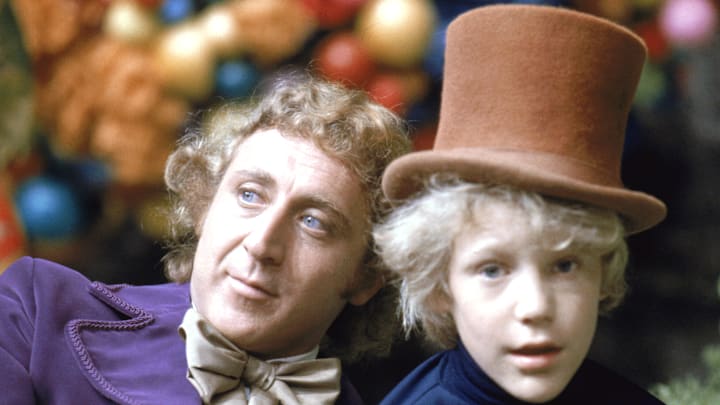
1971’s big-screen adaptation, Willy Wonka and the Chocolate Factory, has become a childhood favorite for many Gen X-ers and Millennials, thanks to its wild visuals, memorable songs, and an “unforgettable” title performance by Gene Wilder.
The British Film Institute has even gone on to recognize it as one of the greatest movie musicals of all time, ranking it alongside the likes of The Sound of Music, West Side Story, and Cabaret. The contemporary response to the film in the ‘70s, however, wasn’t quite so complimentary.
“Tedious and stagy with little sparkle and precious little humor,” was the New York Times’ appraisal back in 1971. The film’s songs were “instantly forgettable,” said the Los Angeles Times.
And while his future co-critic Roger Ebert gave it a perfect four stars out of four, Gene Siskel in the Chicago Tribune was less impressed. The appearance of the factory, he wrote, is a “terrible letdown.” The chocolate river “looks too much like the Chicago River to be inviting,” while “nothing in the factory looks appealing.” All told, he called it “barely acceptable,” and advised parents that they would find more entertainment in “dropping their children off at the theater and driving around the back.” Ouch.
The Shining (1980)
Few filmmakers have quite so noticeable a difference between their personal reputation and the reception their films actually received as Stanley Kubrick.
Practically all of his movies (and in particular, his later ones) have undergone widespread critical reassessment since their release—including such modern classics as 2001: A Space Odyssey (“monumentally unimaginative,” according to Pauline Kael), Full Metal Jacket (“as steely cold and manipulative as the regime it depicts,” according to Time Out), and Barry Lyndon (“the motion picture equivalent of one of those very large, very heavy, very expensive, very elegant and very dull books that exist solely to be seen on coffee tables,” according to the Los Angeles Times).
1980’s The Shining, now widely lauded as one of the greatest horror movies of all time, is perhaps the most noticeably reassessed movie in Kubrick’s catalog, with past reviews variously calling it a “crashing disappointment,” “shallow, self-conscious and dull,” and “elaborately ineffective.”
The Thing (1982)
Alongside The Shining, John Carpenter’s 1982 groundbreaking masterpiece The Thing likewise overcame scathing early reviews to go on to be considered among the greatest horror movies in cinema history.
“The Thing is bereft, despairing and nihilistic,” wrote the Los Angeles Times, which compared the movie unfavorably to the year’s other big being-from-outer-space film, E.T. Newsweek complained that the movie sacrificed everything “at the altar of gore,” while the New York Times was even more critical, labelling it as “instant junk” and claiming it to be of interest only to those who enjoy watching “autopsies on dogs.”
Scarface (1983)
Contemporary critics have variously labelled Brian De Palma’s 1983 masterpiece Scarface as one of the best crime films of all time, one of the best gangster films of all time, one of the best films of the 1980s, and one of the best of all Al Pacino’s on-screen performances. At the time, however, the film’s reception could scarcely have been more different.
“One of the largest empty vessels to float on an ocean of celluloid,” said the Los Angeles Times. “A sadly overblown B movie,” was New York Magazine’s assessment. “Derivative” and “saddled with old cliches,” wrote the Washington Post.
At a star-studded debut screening in New York, meanwhile, the film’s pre-credits dedication to Howard Hawks (the director of the 1932 original on which De Palma’s ultra-violent remake was based) was enough to elicit boos from the appalled audience of trade figures and A-list celebrities.
Despite being in attendance at the gala premiere, author Kurt Vonnegut at least wasn’t among the boo-ers; he had already walked out after the infamous chainsaw-in-the-shower scene.
The Muppet Christmas Carol (1992)
For anyone who grew up in the ‘90s or early 2000s, The Muppet Christmas Carol has likely become a staple holiday viewing. In fact, it was recently crowned the greatest Christmas film of all time by readers of the BBC’s Radio Times magazine, and has even been named cinema’s best Charles Dickens adaptation.
Modern audiences and critics alike might laud the film for its jokes, soundtrack, and genuine literary cachet, but contemporary responses to the film were mixed at best.
“There’s no great show of wit or tunefulness here,” said The New York Times, which also complained the film “strives to be elaborate,” and labelled the songs “saccharine” and “seldom memorable.”
The Los Angeles Times was even less impressed, calling the film “treacly” and “soggy,” and claiming that “somewhere along the way … the magic has fallen out of the story.” And while Roger Ebert may have been a fan, Gene Siskel very much was not, stating that he didn’t think “there were any particularly good, big, laugh-out scenes,” and suggesting that “some of the creativity” of earlier Muppet movies was now noticeably lacking following the death of creator Jim Henson.
The Mummy (1999)
The Mummy was one of the biggest box office draws of 1999, a year that saw it go toe-to-toe against the likes of The Matrix, The Sixth Sense, and Star Wars: Episode I. Since then, its popularity among audiences has only continued to grow, and its crowd-pleasing reputation as one of the most enjoyable blockbusters of the ‘90s is today all but assured (and a long-awaited sequel featuring the original cast is on the way).
At the time of its release, however, cinemagoers and critics were far from in agreement.
“Uninspiring,” said the Los Angeles Times. “Pure hokum,” said Variety. The film “stumbles and screeches on for an interminable two hours,” said the Washington Post. “Relentlessly unsatisfying” was The AV Club’s opinion, adding that the film tried to emulate Indiana Jones but “the results turn out far too forced.”
Entertainment Weekly rated the film a lowly B–, calling it “blasé” with “much to look at … but not a lot at stake.” And the BBC, meanwhile, somewhat wrongly predicted that the film’s “over-reliance” on CGI effects “is only likely to date this movie in coming years.”