%20%20--%3E%0A%3Csvg%20version%3D%221.1%22%20id%3D%22Layer_1%22%20xmlns%3D%22http%3A%2F%2Fwww.w3.org%2F2000%2Fsvg%22%20xmlns%3Axlink%3D%22http%3A%2F%2Fwww.w3.org%2F1999%2Fxlink%22%20x%3D%220px%22%20y%3D%220px%22%0A%09%20viewBox%3D%220%200%20684.6%2068.1%22%20style%3D%22enable-background%3Anew%200%200%20684.6%2068.1%3B%22%20xml%3Aspace%3D%22preserve%22%3E%0A%3Cg%3E%0A%09%3Cpath%20d%3D%22M444.1%2C29.3h-17.4v14.5h17.4V29.3z%20M36.4%2C68.1l29.3-50.8V0H50.4L32.9%2C36.8L15.5%2C0H0v68.1h16.7V45.8l12.4%2C22.3H36.4z%0A%09%09%20M49.1%2C68.1h16.6V23.4L49.1%2C52.1V68.1z%20M76.6%2C68.1h45V53.8H93.3V41.6h21V27.1h-21V14.8h28.3V0.1h-45V68.1z%20M175.6%2C68.1h17.3v-68%0A%09%09h-16.5v40.3L150%2C0.1h-17.6v68h16.7V27.7L175.6%2C68.1z%20M235.8%2C14.8h15.4V0.1h-47.4v14.7H219v53.2h16.8V14.8z%20M290.3%2C45.9h-17.1%0A%09%09l7.5-15.6h2L290.3%2C45.9z%20M298.7%2C68.1h18l-32.2-68h-5.7l-32%2C68h18l3.3-7.1h27.1L298.7%2C68.1z%20M325.2%2C68.1h46.2V53.8h-29.6V0.1h-16.7%0A%09%09V68.1z%20M423.7%2C14.8h27.2V0.1H407v68h16.7V14.8z%20M462%2C68.1h46.2V53.8h-29.6V0.1H462V68.1z%20M564.8%2C34.1c0%2C10.7-7.2%2C19.2-18.5%2C19.2%0A%09%09c-11.4%2C0-18.5-8.5-18.5-19.2s7.1-19.2%2C18.5-19.2C557.6%2C14.9%2C564.8%2C23.4%2C564.8%2C34.1%20M580.6%2C34.1c0-19-14.2-34-34.3-34%0A%09%09c-20.2%2C0-34.3%2C15-34.3%2C34c0%2C19%2C14.1%2C34%2C34.3%2C34C566.4%2C68.1%2C580.6%2C53.1%2C580.6%2C34.1%20M604.8%2C20.5c0-4.1%2C3.3-6.2%2C6.7-6.2%0A%09%09c4.4%2C0%2C6.6%2C3%2C6.6%2C6.6h14.7C631.8%2C9.1%2C625.1%2C0.1%2C611%2C0.1c-12%2C0-21.7%2C9.3-21.7%2C20.6c0%2C10.9%2C5.9%2C15.9%2C16.7%2C19.8%0A%09%09c5.2%2C1.8%2C11.5%2C3.2%2C11.5%2C8c0%2C3.3-2.4%2C5.5-6.4%2C5.5c-3.6%2C0-6.6-3-6.6-6.7h-15.2c0%2C11.5%2C7.9%2C20.8%2C21.8%2C20.8c12%2C0%2C21.6-9.3%2C21.6-20.6%0A%09%09c0-10-5.3-16.4-16.7-19.8C610.6%2C26.1%2C604.8%2C25.3%2C604.8%2C20.5%20M670%2C20.9h14.7C683.8%2C9.1%2C677.1%2C0.1%2C663%2C0.1c-12%2C0-21.7%2C9.3-21.7%2C20.6%0A%09%09c0%2C10.9%2C5.9%2C15.9%2C16.7%2C19.8c5.2%2C1.8%2C11.5%2C3.2%2C11.5%2C8c0%2C3.3-2.4%2C5.5-6.4%2C5.5c-3.6%2C0-6.6-3-6.6-6.7h-15.2c0%2C11.5%2C7.9%2C20.8%2C21.8%2C20.8%0A%09%09c12%2C0%2C21.6-9.3%2C21.6-20.6c0-10-5.3-16.4-16.7-19.8c-5.4-1.6-11.3-2.4-11.3-7.2c0-4.1%2C3.3-6.2%2C6.7-6.2C667.7%2C14.4%2C670%2C17.3%2C670%2C20.9%0A%09%09%22%2F%3E%0A%3C%2Fg%3E%0A%3C%2Fsvg%3E%0A)

In 1969, NBC canceled Star Trek after three seasons, and networks have been giving up on great TV shows a little too early ever since. This list covers six decades, from a 1970s reporter who chased monsters for ABC to a 2010s sitcom that never stayed in one time slot long enough to settle in.
Star Trek: The Original Series (1966-1969)

Gene Roddenberry’s series sent Captain James T. Kirk (William Shatner), his logical first officer Spock (Leonard Nimoy), and the rest of the starship Enterprise crew out to explore the galaxy. NBC canceled Star Trek in 1969, the same year Neil Armstrong walked on the moon), after three seasons and 79 episodes.
NASA planned to name its first space shuttle orbiter Constitution, until nearly 100,000 Star Trek fans wrote to the White House asking for Enterprise, and President Gerald Ford went along with them. When the orbiter rolled out on September 17, 1976, an Air Force band played the Star Trek theme.
Kolchak: The Night Stalker (1974-1975)

Before Fox Mulder, there was Carl Kolchak (Darren McGavin), a rumpled reporter for Chicago’s International News Service who ran into a vampire, a zombie, or Jack the Ripper just about every week. ABC dropped the series after 20 episodes in March 1975, though McGavin, frustrated by the monster-of-the-week formula, had asked to end it himself. X-Files creator Chris Carter has since named it among his inspirations.
When Things Were Rotten (1975)
Mel Brooks took a crack at Robin Hood 18 years before Robin Hood: Men in Tights, and his ABC sitcom reportedly drew a 36 percent share of the audience for its pilot in September 1975. The ratings slid from there, and the show was gone after 13 episodes, the last of them airing December 3.
Brooks put it this way in his 2021 memoir: “I’m giving them free Mel Brooks on television and ABC just cancels it? Well, that’s show business.”
Police Squad! (1982)

The Airplane! team of Jim Abrahams and David and Jerry Zucker made the show a straight-faced spoof of TV cop shows, especially Lee Marvin’s 1950s series M Squad. Every episode opened by killing off its special guest star before the credits were done, including William Shatner, Lorne Greene, Florence Henderson, and William Conrad.
Leslie Nielsen’s deadpan Detective Lieutenant Frank Drebin premiered on ABC in March 1982 and lasted four airings before the network canceled the show, with six episodes produced in all. Six years later, Drebin got a second shot on the big screen in The Naked Gun: From the Files of Police Squad!
Square Pegs (1982-1983)

Long before Sex and the City, Sarah Jessica Parker played Patty Greene, a Weemawee High freshman angling to get in with the popular kids, in a new wave sitcom that had the Waitresses sing its theme and booked Devo to play a Bat Mitzvah.
Its premiere won its Monday-at-8 time slot on CBS only to be canceled in May 1983 after 20 episodes. A year later, TV Guide ran a postmortem titled “Anatomy Of A Failure: How Drugs, Ego, And Chaos Helped Kill A Promising Series.”
Max Headroom (1987-1988)

The show was set in a near future where TV networks ran the world, and Max was the digital copy of Edison Carter, the star investigative reporter for Network 23. The “computer-generated” TV host of the 1980s wasn’t computer-generated at all: Matt Frewer wore a suit of latex and foam prosthetic makeup, superimposed over hand-drawn cel animation. (Believe it or not, this counted as high tech in the ‘80s!)
ABC gave Max his own sci-fi drama in March 1987, and that year it won three Emmys, for art direction, sound editing, and sound mixing. The series ended in 1988 after 14 episodes, and the final one, “Baby Grobags,” never aired during the original run.
Frank’s Place (1987-1988)

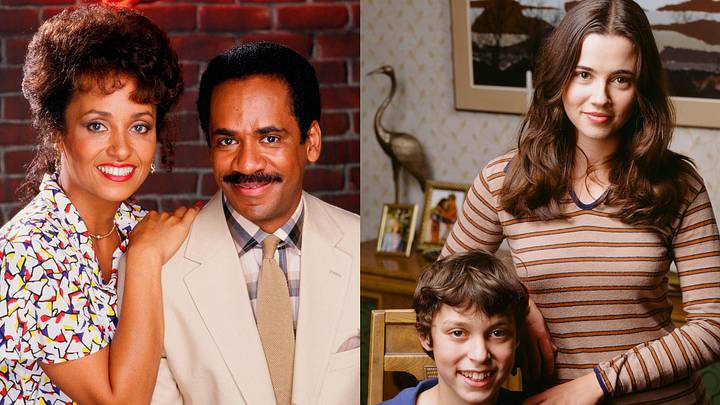
Tim Reid, WKRP in Cincinnati’s Venus Flytrap, played a Brown University professor who inherits his father’s New Orleans restaurant, in a CBS comedy with a mostly Black cast, a Southern setting, and no laugh track.
It won 1988 Emmys for its writing (by WKRP creator Hugh Wilson) and for guest star Beah Richards, but CBS kept moving it around the schedule, and it ended after 22 episodes. By the time Rolling Stone called it one of TV’s greatest gone-too-soon shows, fans could only find it on YouTube or bootleg VHS.
Twin Peaks (1990-1991)

FBI Special Agent Dale Cooper (Kyle MacLachlan) came to a small Pacific Northwest town to find out who killed homecoming queen Laura Palmer, whose body washed up in the first episode.
The two-hour Twin Peaks pilot drew 36 million viewers on April 8, 1990, and once the show settled into Thursday nights, it cut into the huge audience for NBC’s long-running hit Cheers. The first season picked up 14 Emmy nominations, but ratings fell off in season two, and ABC pulled the plug in 1991 after 30 episodes.
David Lynch and Mark Frost got the last word 26 years later, when Twin Peaks: The Return ran 18 episodes on Showtime.
Brooklyn Bridge (1991-1993)
Gary David Goldberg followed Family Ties with a semi-autobiographical sitcom about a 14-year-old boy in 1956 Brooklyn whose life revolves around family, the synagogue, and the Dodgers. It won the Golden Globe for best comedy series and collected eight Emmy nominations, but CBS dropped it after two seasons.
“I had my childhood canceled,” Goldberg once said. “It was very personal.”
The Ben Stiller Show (1992-1993)
The show parodied movies like Die Hard, Cape Fear, and The Last of the Mohicans, and its star’s celebrity impressions included Tom Cruise. Fox canceled Ben Stiller’s sketch show before its first season had finished airing, and almost a year after the premiere, it won the Emmy for Outstanding Writing for a Variety or Music Program.
“We had no idea,” Stiller said backstage, with Judd Apatow, Bob Odenkirk, and David Cross standing next to him in the press room. The cast also had Janeane Garofalo and Andy Dick, which is a lot of future careers for 13 episodes.
The Critic (1994-1995)
Jay Sherman (Jon Lovitz) was a cynical TV film critic whose catchphrase, “It stinks!,” covered most of what he reviewed, including fake sequels like Snow Man, the follow-up to Rain Man. ABC premiered the cartoon on January 26, 1994, and canceled it after 13 episodes. Fox picked it up the next year and canceled it again after 10 more.
Sports Night (1998-2000)

Aaron Sorkin’s ABC comedy about a SportsCenter-style cable sports show spent its run fighting its own network, and the fight leaked onto the screen: Sorkin got rid of the laugh track ABC had insisted on, and his real-life battles with the network worked their way into the show’s storylines.
ABC canceled it in 2000 after two seasons and 45 episodes. By then, NBC was already airing Sorkin and his collaborator Thomas Schlamme’s The West Wing, which they ran for four seasons.
Freaks and Geeks (1999-2000)

Lindsay Weir (Linda Cardellini), a former mathlete, starts hanging out with the burnouts (James Franco, Seth Rogen, and Jason Segel among them), while her little brother, Sam (John Francis Daley), is stuck with the geeks. TIME critic James Poniewozik put Paul Feig and Judd Apatow’s high school dramedy on his list of the All-TIME 100 TV Shows, writing, “Adolescence never hurt so good as it did in this comedy-drama about outcasts in a Michigan high school circa 1980.”
Critics loved it from the start, but the ratings were low, and NBC gave it one season and 18 episodes in 1999 and 2000.
Firefly (2002)
Set in 2517, the show followed Captain Malcolm Reynolds (Nathan Fillion), a veteran of a civil war, and the crew of Serenity, a small transport ship that took whatever jobs came along.
“If I got $300 million from the California Lottery, the first thing I would do is buy the rights to Firefly, make it on my own, and distribute it on the Internet,” Nathan Fillion told Entertainment Weekly in 2011, and fans promptly started a website to collect pledges.
Fox had premiered Joss Whedon’s space Western on September 20, 2002, and canceled it after airing 11 of its 14 episodes. All 14 episodes, including the three Fox never aired, are now streaming on Hulu.
Joan of Arcadia (2003-2005)

Amber Tamblyn earned a 2004 Emmy nomination for playing a young woman who speaks to God, and the CBS drama was nominated for Outstanding Drama Series the same year. It lasted two seasons and 45 episodes before CBS canceled it in May 2005, along with JAG and Judging Amy.
Its median viewer was reportedly 53.9 years old, and Viacom co-president Leslie Moonves told reporters, “I think talking to ghosts will skew younger than talking to God.”
Arrested Development (2003-2006)
Narrated by Ron Howard, Mitchell Hurwitz’s series followed the Bluths, a rich family that lost everything when patriarch George Sr. was arrested for fraud, leaving son Michael (Jason Bateman) to hold them together.
In its first season, Fox’s comedy won the Emmy for Outstanding Comedy Series, along with trophies for writing, directing, casting, and editing. Two seasons later, Fox burned off its final four episodes in a single two-hour block on February 10, 2006, opposite the opening ceremony of the Winter Olympics.
That made 53 episodes on Fox, until Netflix brought the family back with 15 more in 2013.
Wonderfalls (2004)
Caroline Dhavernas played Jaye Tyler, an Ivy League graduate working at a Niagara Falls gift shop whose souvenirs start talking to her, in Bryan Fuller’s Fox dramedy. Fox canceled it after four episodes, and all 13 were eventually broadcast in Canada and released on DVD. Dhavernas has a theory about the ratings: “They put us on Thursday night against The Apprentice with Donald Trump.”
Deadwood (2004-2006)
Set in the 1870s gold-mining camp of Deadwood, in what’s now South Dakota, the show put real figures like Seth Bullock (Timothy Olyphant), Wild Bill Hickok, and Calamity Jane alongside its invented ones.
Ian McShane won a Golden Globe in 2005 for playing Al Swearengen, the profane saloon owner at the center of David Milch’s HBO Western. HBO ended it abruptly in 2006 after three seasons and 36 episodes, and there was talk of a couple of TV movies to finish the story. It took 13 years, and when Deadwood: The Movie finally arrived in 2019, there was only one.
Veronica Mars (2004-2007)

In the seaside town of Neptune, California, high schooler Veronica Mars works cases for her father’s private detective agency while trying to solve the murder of her best friend, Lilly Kane.
Kristen Bell’s teenage private eye ran three seasons and 64 episodes on UPN and then The CW, came back as a crowdfunded movie in 2014, and still had one more surprise. At San Diego Comic-Con on July 19, 2019, Hulu closed its panel by announcing that all eight episodes of the revival season were streaming right then, a week ahead of the planned July 26 premiere.
Pushing Daisies (2007-2009)

Lee Pace played a pie maker who can raise the dead with one touch and kill them again with a second, in ABC’s candy-colored fairy tale. The writers’ strike held its first season to nine episodes, and ABC shelved it partway through the second, then aired the last three episodes on Saturday nights months later, in 2009. That made 22 episodes in all.
Party Down (2009-2010)
“Are we having fun yet?” asked Adam Scott’s frustrated actor Henry, part of a catering crew of wannabes and has-beens working swanky Los Angeles parties. Starz canceled the comedy in June 2010 after two seasons and 20 episodes, and 13 years later, the network brought it back for a six-episode third season, which premiered February 24, 2023, with most of the original cast. Lizzy Caplan sat this one out.
Happy Endings (2011-2013)
Six friends in Chicago try to keep the group together after Alex (Elisha Cuthbert) leaves Dave (Zachary Knighton) at the altar in the first episode. ABC shifted its ensemble sitcom’s time slots, aired episodes out of order, and canceled it in May 2013 after three seasons and 57 episodes.
USA Network looked at picking it up, and creator David Caspe later said that deal was “as close as it could come without happening.” The cast finally reunited on July 20, 2020, for a virtual special on Sony’s YouTube page that raised money for Color of Change and World Central Kitchen.