%20%20--%3E%0A%3Csvg%20version%3D%221.1%22%20id%3D%22Layer_1%22%20xmlns%3D%22http%3A%2F%2Fwww.w3.org%2F2000%2Fsvg%22%20xmlns%3Axlink%3D%22http%3A%2F%2Fwww.w3.org%2F1999%2Fxlink%22%20x%3D%220px%22%20y%3D%220px%22%0A%09%20viewBox%3D%220%200%20684.6%2068.1%22%20style%3D%22enable-background%3Anew%200%200%20684.6%2068.1%3B%22%20xml%3Aspace%3D%22preserve%22%3E%0A%3Cg%3E%0A%09%3Cpath%20d%3D%22M444.1%2C29.3h-17.4v14.5h17.4V29.3z%20M36.4%2C68.1l29.3-50.8V0H50.4L32.9%2C36.8L15.5%2C0H0v68.1h16.7V45.8l12.4%2C22.3H36.4z%0A%09%09%20M49.1%2C68.1h16.6V23.4L49.1%2C52.1V68.1z%20M76.6%2C68.1h45V53.8H93.3V41.6h21V27.1h-21V14.8h28.3V0.1h-45V68.1z%20M175.6%2C68.1h17.3v-68%0A%09%09h-16.5v40.3L150%2C0.1h-17.6v68h16.7V27.7L175.6%2C68.1z%20M235.8%2C14.8h15.4V0.1h-47.4v14.7H219v53.2h16.8V14.8z%20M290.3%2C45.9h-17.1%0A%09%09l7.5-15.6h2L290.3%2C45.9z%20M298.7%2C68.1h18l-32.2-68h-5.7l-32%2C68h18l3.3-7.1h27.1L298.7%2C68.1z%20M325.2%2C68.1h46.2V53.8h-29.6V0.1h-16.7%0A%09%09V68.1z%20M423.7%2C14.8h27.2V0.1H407v68h16.7V14.8z%20M462%2C68.1h46.2V53.8h-29.6V0.1H462V68.1z%20M564.8%2C34.1c0%2C10.7-7.2%2C19.2-18.5%2C19.2%0A%09%09c-11.4%2C0-18.5-8.5-18.5-19.2s7.1-19.2%2C18.5-19.2C557.6%2C14.9%2C564.8%2C23.4%2C564.8%2C34.1%20M580.6%2C34.1c0-19-14.2-34-34.3-34%0A%09%09c-20.2%2C0-34.3%2C15-34.3%2C34c0%2C19%2C14.1%2C34%2C34.3%2C34C566.4%2C68.1%2C580.6%2C53.1%2C580.6%2C34.1%20M604.8%2C20.5c0-4.1%2C3.3-6.2%2C6.7-6.2%0A%09%09c4.4%2C0%2C6.6%2C3%2C6.6%2C6.6h14.7C631.8%2C9.1%2C625.1%2C0.1%2C611%2C0.1c-12%2C0-21.7%2C9.3-21.7%2C20.6c0%2C10.9%2C5.9%2C15.9%2C16.7%2C19.8%0A%09%09c5.2%2C1.8%2C11.5%2C3.2%2C11.5%2C8c0%2C3.3-2.4%2C5.5-6.4%2C5.5c-3.6%2C0-6.6-3-6.6-6.7h-15.2c0%2C11.5%2C7.9%2C20.8%2C21.8%2C20.8c12%2C0%2C21.6-9.3%2C21.6-20.6%0A%09%09c0-10-5.3-16.4-16.7-19.8C610.6%2C26.1%2C604.8%2C25.3%2C604.8%2C20.5%20M670%2C20.9h14.7C683.8%2C9.1%2C677.1%2C0.1%2C663%2C0.1c-12%2C0-21.7%2C9.3-21.7%2C20.6%0A%09%09c0%2C10.9%2C5.9%2C15.9%2C16.7%2C19.8c5.2%2C1.8%2C11.5%2C3.2%2C11.5%2C8c0%2C3.3-2.4%2C5.5-6.4%2C5.5c-3.6%2C0-6.6-3-6.6-6.7h-15.2c0%2C11.5%2C7.9%2C20.8%2C21.8%2C20.8%0A%09%09c12%2C0%2C21.6-9.3%2C21.6-20.6c0-10-5.3-16.4-16.7-19.8c-5.4-1.6-11.3-2.4-11.3-7.2c0-4.1%2C3.3-6.2%2C6.7-6.2C667.7%2C14.4%2C670%2C17.3%2C670%2C20.9%0A%09%09%22%2F%3E%0A%3C%2Fg%3E%0A%3C%2Fsvg%3E%0A)

Abandoned places often emanate a particular beauty and power, as anyone with a love for urban exploration or off-the-beaten-path tourism can attest. While some people might prefer to spend their vacations visiting palaces or beaches, many others have particular affinities for wandering through vine-covered halls of buildings that have been lost to time.
These places can hold deep lessons about history and the inevitability of change, which comes for us all in the end. They can also simply be thrilling places to explore, as you never know when you’ll stumble upon some miraculous graffiti or something else completely unexpected. Additionally, they can be potent reminders of past tragedies and atrocities. They’re also often much quieter and more reflective than ordinary tourist attractions, and they offer new perspectives on history and on what happens to human-made structures when nature and time begin to slowly reclaim them.
Many abandoned places are, unfortunately, not easy to visit—or possibly forbidden. Fortunately, visitors do have permission to visit all of the abandoned places on this list, though of course it’s important to proceed at your own risk and follow any rules and regulations that might pop up along the way.
- Hashima Island, Japan
- Craco, Italy
- Spinalonga, Greece
- Houtouwan Village, China
- Bannerman Castle, New York, USA
- Oradour-sur-Glane, France
Hashima Island, Japan

Japan’s Hashima Island was once a thriving coal town, but it closed in 1974 after the island’s coal mine shut down. This island is also known as Gunkanjima, or Battleship Island, and it is studded with dilapidated ruins that provide a sobering example of the effects of unsustainable industrialization. Many of the buildings were also built by Korean and Chinese prisoners of war who were forced to labor there under brutal conditions before and during World War II, making the island a relic of that challenging aspect of Japan’s past as well.
Today, the island is one of 505 abandoned or uninhabited islands located near Nagasaki, and it is a popular tourist destination that is accessible via regular boat tours from the mainland. It features a peaceful Shinto shrine at the center and offers views of the East China Sea, and has been used in a number of films, including the James Bond movie Skyfall.
Craco, Italy

Italy’s Craco is a ghost town located in the hills of Basilicata. It was originally founded by Greeks and contains tombs that date back to 540 A.D. Over the course of its existence, it was plagued by centuries of violence, plagues, and instability. By the 20th century, Craco had become more peaceful but began to fall prey to regular landslides, possibly caused by poor infrastructure, and many people left due to unfavorable agricultural conditions.
A flood in 1972 followed by a devastating 1980 earthquake resulted in the town being entirely abandoned. Today, it is partially accessible by tours, and visitors can wander through the ruined archways and crumbling towers, feeling the reverberations of the past in every step.
Spinalonga, Greece

Greece’s Spinalonga Island began as a Venetian fortress in the 16th century, and was a leper colony from 1904 to 1957, making it one of the last leper colonies in Europe. Entitled the “Island of Tears,” it was originally a desolate and miserable place where those unwanted by society would be sent.
In 1936, a law student named Epaminondas Remoundakis began to fight for better medical care on the island, and inhabitants were eventually able to run cafes, schools, and other institutions. Fortunately, a cure for leprosy was discovered in 1948, and the island was abandoned in 1957. Today, it is a popular tourist destination for visitors on the island of Crete looking for an off-the-beaten-path destination.
Houtouwan Village, China

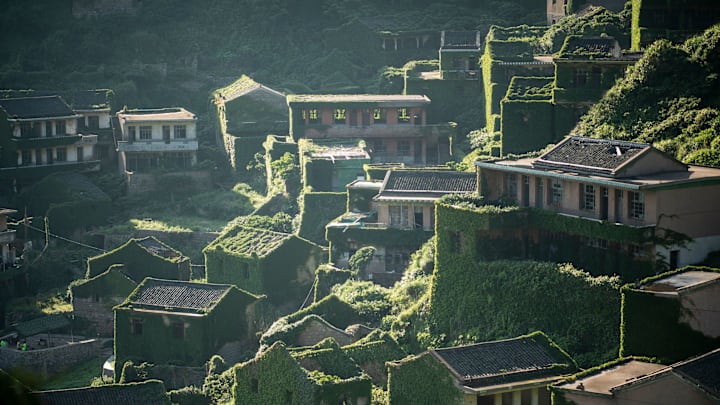
China’s Houtouwan Village is located on Shengshan Island, China, and was once a thriving fishing village. But villagers began to move out in large numbers in the 1990s, largely to escape the village’s isolation, and eventually the town was officially depopulated. Today, it has been completely swallowed by vines and moss and looks like a fairylike wonderland, and visitors can pay a little to wander through its mysterious green landscape with the help of some local guides.
Bannerman Castle, New York, USA

Located on an island on the Hudson River, New York’s majestic and crumbling Bannerman Castle did not actually start as a home for royalty. Instead, it was created by the Scottish-born merchant Francis Bannerman VI, who acquired huge amounts of military merchandise during his time as a buyer and seller in New York City.
Eventually, he ran out of space for all of his belongings in the Big Apple, purchased an island in 1900, and commissioned the creation of a massive fortress where he could store his weapons, instruments, ammunition, and ephemera. When he died in 1918, construction stopped entirely, and in 1920, some of Bannerman’s shells and powder accidentally exploded, causing more damage. Today, the castle is protected by the Bannerman Castle Trust, and visitors can explore it via walking tours that depart regularly from Beacon, New York.
Oradour-sur-Glane, France

France’s Oradour-sur-Glane is an abandoned town with a tragic history. It was a peaceful village before it was completely destroyed by Nazis in 1944, when a German troop massacred 642 people and torched the village to ruins. It is not known exactly why the massacre occurred, but its brutality has left the village with the name “Village des Martyrs," or Village of Martyrs. The village remains an enduring reminder of Nazi cruelty as well as a warning for future generations. Today, visitors can explore the town’s devastating past by wandering around its ruins or visiting its underground museum, reflecting on the extent of human atrocity amid the quaint landscape.
Love trivia? Order Mental Floss’s new game, Brain Brawl, to test your knowledge in a head-to-head tournament style.