%20%20--%3E%0A%3Csvg%20version%3D%221.1%22%20id%3D%22Layer_1%22%20xmlns%3D%22http%3A%2F%2Fwww.w3.org%2F2000%2Fsvg%22%20xmlns%3Axlink%3D%22http%3A%2F%2Fwww.w3.org%2F1999%2Fxlink%22%20x%3D%220px%22%20y%3D%220px%22%0A%09%20viewBox%3D%220%200%20684.6%2068.1%22%20style%3D%22enable-background%3Anew%200%200%20684.6%2068.1%3B%22%20xml%3Aspace%3D%22preserve%22%3E%0A%3Cg%3E%0A%09%3Cpath%20d%3D%22M444.1%2C29.3h-17.4v14.5h17.4V29.3z%20M36.4%2C68.1l29.3-50.8V0H50.4L32.9%2C36.8L15.5%2C0H0v68.1h16.7V45.8l12.4%2C22.3H36.4z%0A%09%09%20M49.1%2C68.1h16.6V23.4L49.1%2C52.1V68.1z%20M76.6%2C68.1h45V53.8H93.3V41.6h21V27.1h-21V14.8h28.3V0.1h-45V68.1z%20M175.6%2C68.1h17.3v-68%0A%09%09h-16.5v40.3L150%2C0.1h-17.6v68h16.7V27.7L175.6%2C68.1z%20M235.8%2C14.8h15.4V0.1h-47.4v14.7H219v53.2h16.8V14.8z%20M290.3%2C45.9h-17.1%0A%09%09l7.5-15.6h2L290.3%2C45.9z%20M298.7%2C68.1h18l-32.2-68h-5.7l-32%2C68h18l3.3-7.1h27.1L298.7%2C68.1z%20M325.2%2C68.1h46.2V53.8h-29.6V0.1h-16.7%0A%09%09V68.1z%20M423.7%2C14.8h27.2V0.1H407v68h16.7V14.8z%20M462%2C68.1h46.2V53.8h-29.6V0.1H462V68.1z%20M564.8%2C34.1c0%2C10.7-7.2%2C19.2-18.5%2C19.2%0A%09%09c-11.4%2C0-18.5-8.5-18.5-19.2s7.1-19.2%2C18.5-19.2C557.6%2C14.9%2C564.8%2C23.4%2C564.8%2C34.1%20M580.6%2C34.1c0-19-14.2-34-34.3-34%0A%09%09c-20.2%2C0-34.3%2C15-34.3%2C34c0%2C19%2C14.1%2C34%2C34.3%2C34C566.4%2C68.1%2C580.6%2C53.1%2C580.6%2C34.1%20M604.8%2C20.5c0-4.1%2C3.3-6.2%2C6.7-6.2%0A%09%09c4.4%2C0%2C6.6%2C3%2C6.6%2C6.6h14.7C631.8%2C9.1%2C625.1%2C0.1%2C611%2C0.1c-12%2C0-21.7%2C9.3-21.7%2C20.6c0%2C10.9%2C5.9%2C15.9%2C16.7%2C19.8%0A%09%09c5.2%2C1.8%2C11.5%2C3.2%2C11.5%2C8c0%2C3.3-2.4%2C5.5-6.4%2C5.5c-3.6%2C0-6.6-3-6.6-6.7h-15.2c0%2C11.5%2C7.9%2C20.8%2C21.8%2C20.8c12%2C0%2C21.6-9.3%2C21.6-20.6%0A%09%09c0-10-5.3-16.4-16.7-19.8C610.6%2C26.1%2C604.8%2C25.3%2C604.8%2C20.5%20M670%2C20.9h14.7C683.8%2C9.1%2C677.1%2C0.1%2C663%2C0.1c-12%2C0-21.7%2C9.3-21.7%2C20.6%0A%09%09c0%2C10.9%2C5.9%2C15.9%2C16.7%2C19.8c5.2%2C1.8%2C11.5%2C3.2%2C11.5%2C8c0%2C3.3-2.4%2C5.5-6.4%2C5.5c-3.6%2C0-6.6-3-6.6-6.7h-15.2c0%2C11.5%2C7.9%2C20.8%2C21.8%2C20.8%0A%09%09c12%2C0%2C21.6-9.3%2C21.6-20.6c0-10-5.3-16.4-16.7-19.8c-5.4-1.6-11.3-2.4-11.3-7.2c0-4.1%2C3.3-6.2%2C6.7-6.2C667.7%2C14.4%2C670%2C17.3%2C670%2C20.9%0A%09%09%22%2F%3E%0A%3C%2Fg%3E%0A%3C%2Fsvg%3E%0A)

New Coke. Ishtar. The Virtual Boy. Chips that require diapers. When we think of history’s biggest failures, these high-profile examples usually come to mind. But what exactly is a flop? To us, it’s something that arrived with great fanfare and big expectations, then ate pavement. Hard. Lots of people point to the 1990 ABC show Cop Rock as the embodiment of a flop, but does anyone expect a musical cop show to actually do well? Probably not.
A World’s Fair, on the other hand? That should prove worthwhile. Unless your main attraction drops dead a few days prior to attending.
Let’s dive into various historical flops, failures, and misses, as adopted from the above episode of The List Show on YouTube.
- Olestra
- The 1923 World’s Fair
- The DeLorean
- Supertrain
- Premier
- Geraldo Rivera Opens Al Capone’s Vault
- Wine and Dine
- McDonald’s Pizza
- Cable Music Channel
- John Carter
Olestra

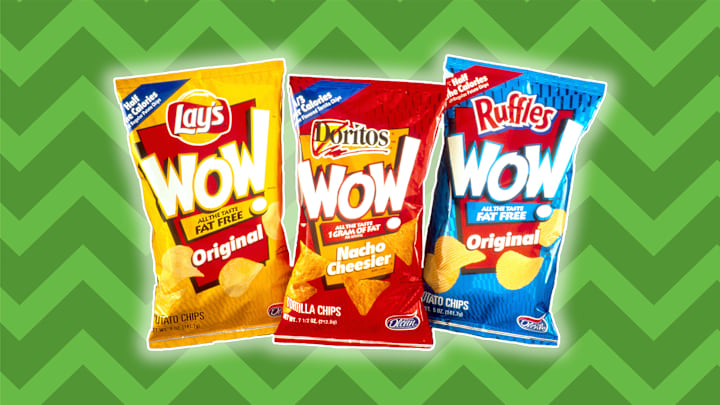
It doesn’t take a consumer expert to know that any product that might cause anal leakage is facing an uphill battle to success. In 1996, Procter & Gamble gained FDA approval of olestra, a proprietary “fake fat” that couldn’t be absorbed by the human body. The development, which took the company more than 25 years to create and get approved, debuted to much fanfare. In 1998, P&G began making its Pringles with olestra and also sold the additive to other food manufacturers that began rolling out products made with it. PepsiCo’s Frito-Lay subsidiary branded them Wow chips, and finally, people could devour all the Ruffles and Doritos they wanted without fear of an expanding waistline.
Instead, what reportedly expanded were their colons. Because olestra isn’t digestible, it passes through the intestinal tract with alarming speed. The food companies were inundated with consumer complaints, and the FDA required a label be placed on each package warning that the “product may cause cramping and loose stools.”
Sales of the fat-free chips were initially promising. But within two years, profits declined and use of olestra in food products slowed to a dribble. The FDA removed the warning label in 2003 after a blind study showed that the ingredient does not cause more intestinal problems than other processed foods, but that didn’t save it in the end. Wow was rebranded in 2004 as “Light” for Frito-Lay products, but wasn’t discontinued until 2016. Olestra is still FDA approved today, although you’ll be hard pressed to find a product containing it.
The 1923 World’s Fair

Organized by Hollywood producers to clean up the movie business’s image and reverse declining attendance, 1923’s American Historical Revue and Motion Picture Exposition promised to make Los Angeles a hub of activity and excitement. More than 1 million people were expected to flock to LA’s Memorial Coliseum to greet film stars and reignite their passion for movies. Advertisements proclaimed it would be “the most spectacular and stupendous pageant of the century.”
Not quite. Instead of 1 million, the event drew just 300,000, and most of those people attended because free tickets were handed out. Two hundred and seventy-five thousand commemorative half-dollar coins were minted by the U.S. government, but they were priced at $1 each and just 10 percent of them sold. While there was some fun stuff, like watching movie scenes being shot and a Charlie Chaplin lookalike competition, other attractions included lectures on morality.
Surely then-president Warren G. Harding, who was scheduled to speak at the show, could salvage this. Alas, he was one of the very few presidents to die in office—just days before he was supposed to appear at the World’s Fair. It’s little wonder the entire thing wound up losing $200,000 for its organizers. But at least they didn’t risk prison time. The same can’t be said for the next flop on this list.
You May Also Like ...
- 20 Epic Fails From the History of Pop Culture
- 11 of the Most Expensive Typos in History
- 10 Failed Utopias
Add Mental Floss as a preferred news source!
The DeLorean

It’s rare that one of the most iconic props in movies is simultaneously one of the world’s biggest product flops, but here we are. In 1981, automaker John DeLorean introduced his namesake, the DeLorean DMC-12. This stainless-steel car with gull-wing doors was like a glimpse into the future. In this case, Back to the Future, the 1985 film that turned it into a time machine.
But the real DeLorean couldn’t reliably travel to a 7-Eleven, much less back to the 1800s. The stainless-steel body panels made the vehicle so heavy it took over 10 seconds to get up to 60 miles per hour. Those cool doors? They’d get stuck.
Only about 8900 DeLorean cars were ever made. John DeLorean was so financially afflicted by the car’s failure he allegedly turned to smuggling drugs to help offset his losses. DeLorean argued that undercover federal agents solicited his help in the drug scheme, and that convinced a jury to acquit him in 1984.
Supertrain
In 1979, NBC threw all its weight and a lot of its money behind Supertrain, a one-hour drama about a luxury passenger train and all the drama on board. It was trying to emulate The Love Boat, only it crashed and burned. The price tag for building elaborate train sets and models, including train cars measuring 80 feet long and 22 feet high, was reported to be around $10 million— at the time, it was the most expensive show ever made.
Apparently, all this spectacle didn’t register on the small screen. When ratings tanked, the network panicked and cut the cast in half, from 10 regulars to five, and tried to rein in other costs. One possibly apocryphal story has NBC president Fred Silverman so frustrated at the show’s failure that he kicked a model train on the set, not realizing it was made out of cast iron.
Supertrain—which was yanked after just nine episodes—wasn’t bad enough to bring down NBC, but it didn’t help that the network was also in dire straits when the U.S. boycotted the 1980 Summer Olympics in the Soviet Union following Russia’s invasion of Afghanistan. NBC canceled its planned live broadcast of the Games, which was a serious financial blow softened somewhat by an insurance policy from Lloyd’s of London. Fortunately, NBC hits like Cheers were just around the corner.
Premier
The biggest innovation in giving people lung cancer came in 1988, when cigarette giant R.J. Reynolds debuted Premier, a smokeless cigarette. It consisted of rolled tobacco with carbon on the end. When the smoker lit the carbon, they could inhale the hot air that rolled over the tobacco.
Though it wasn’t entirely smoke-free, the intention was to diminish nuisance secondhand smoke. But smokers were not impressed. Some compared the taste to burning plastic, though who knows what that actually tastes like. Others found that it was too hot to hold. Even lighting it was a problem: Smokers said they needed a blowtorch to get it going.
Retailers described sales of Premier in test markets as “slow to nonexistent.” R.J. Reynolds pulled it from test-marketing in 1989, despite spending over $300 million developing and marketing the product. The only reliable consumer base was high school kids, who wanted to sneak smokes in school halls without getting caught.
Geraldo Rivera Opens Al Capone’s Vault
Journalist and talk show host Geraldo Rivera once had an estimated 30 million people hanging on his every word. In 1986, Rivera aired a two-hour syndicated television special titled The Mystery of Al Capone’s Vaults in which he teased opening the gangster’s safes in Chicago’s Lexington Hotel live to see what might be inside. Maybe it held bodies. Maybe money. Maybe guns. A coroner was standing by. So was an IRS agent to seize any illicit stacks of cash.
But it wasn’t really a safe. It was more of a huge concrete wall. After some tedious excavation work, Rivera stepped inside and found … nothing.
Well, not nothing. He did produce some empty liquor bottles. And there was a lot of dirt. Rivera apologized and the special went on to be reviled for not being very special. While the finale was hugely disappointing after all that hype, it actually wasn’t a total disaster. It drew a 50 share, meaning half of all televisions turned on at the time were watching. It also led to Rivera getting more primetime shots and his own show. As one producer observed, what was really inside Capone’s vault was the future of reality television.
Wine and Dine

Not all flops can be blamed on their makers. Sometimes, it’s the audience that doesn’t quite get it. In the early 1970s, American food and alcoholic beverage company Heublein introduced Wine and Dine, a packaged meal kit that came with an entrée like chicken Chablis or beef burgundy, as well as a bottle of wine. The catch? The wine was meant for cooking, not drinking. But plenty of people didn’t follow the directions and wound up chugging a salty, highly unpalatable vino. None of those people came back for seconds, and Wine and Dine disappeared from shelves.
McDonald’s Pizza
When you have the market cornered on hamburgers, you start to think about what else you can dominate. This hungry hubris gripped McDonald’s in the 1980s when the fast food giant decided to get into the pizza business. McDonald’s Pizza was the company’s solution to customers passing up the chain during dinner hours. By serving up hot pies, executives felt that they could capture the business they lost in the evening to restaurants, pizzerias, or home-cooked food.
Initially, it seemed promising. McDonald’s designed a quick-cook pizza oven that could get a pie out in under six minutes. The downside was that the ovens took up valuable kitchen space and also slowed down the company’s delivery of their core menu items. Even worse, in some older buildings, the pizza box couldn’t actually fit through the drive-thru window, forcing franchisees to remodel their locations. McDonald’s had declared they’d be pizza disruptors, but the pies all but disappeared within a couple of years.
Cable Music Channel
By 1984, MTV was firmly cemented as the hippest cable station on the dial. That led media mogul Ted Turner to launch a competing network—Cable Music Channel. CMC debuted on October 26, 1984, and promised fewer ads per hour—four minutes to MTV’s eight minutes—along with more wholesome music choices from the likes of Dolly Parton, Frank Sinatra, and Willie Nelson. Turner argued that MTV had “violence and sadism” in its videos and that consumers wanted less “jabbering” from VJs. To entice cable services, CMC was offered to them for free; MTV charged providers 10 to 15 cents per customer.
But MTV had a huge advantage, and it wasn’t just brand recognition. The channel entered into a deal with major record labels like Polygram and RCA to grab exclusive rights to videos from select artists, keeping them off other music channels for six months. When cable operators overwhelmingly sided with MTV, Turner pulled the plug on CMC. It was on the air for just 34 days. MTV bought the channel and used the bandwidth for its own adult-leaning network: VH1.
John Carter
When people talk about flops, they’re most often talking about movies. And few have done as poorly as John Carter, a disastrous Disney production released in 2012 that ranks as one of the biggest disappointments ever.
It should have been a hit. It was based on a popular series of novels by Edgar Rice Burroughs that began with A Princess of Mars and had inspired filmmakers like George Lucas and James Cameron. It was directed by Pixar phenom Andrew Stanton. It was co-written by Pulitzer Prize winner Michael Chabon. It starred Taylor Kitsch, a breakout actor from NBC’s Friday Night Lights. And it had all the special effects a massive budget could buy, including Willem Dafoe walking on stilts to become Tars Tarkas, an 8-foot-tall CGI Martian.
But Burroughs’s work had been strip-mined for decades and a lot of the elements, like Martians and space princesses, had been co-opted by other films. That budget drew the wrong kind of attention, with the media wondering why Disney was taking such a huge gamble. Even the title was scrutinized for how generic it was.
John Carter cost about $250 million to make, with Disney spending another $100 million in marketing. It made roughly $300 million worldwide, but after a revenue split with theaters, Disney acknowledged the film led to about $200 million in losses.