%20%20--%3E%0A%3Csvg%20version%3D%221.1%22%20id%3D%22Layer_1%22%20xmlns%3D%22http%3A%2F%2Fwww.w3.org%2F2000%2Fsvg%22%20xmlns%3Axlink%3D%22http%3A%2F%2Fwww.w3.org%2F1999%2Fxlink%22%20x%3D%220px%22%20y%3D%220px%22%0A%09%20viewBox%3D%220%200%20684.6%2068.1%22%20style%3D%22enable-background%3Anew%200%200%20684.6%2068.1%3B%22%20xml%3Aspace%3D%22preserve%22%3E%0A%3Cg%3E%0A%09%3Cpath%20d%3D%22M444.1%2C29.3h-17.4v14.5h17.4V29.3z%20M36.4%2C68.1l29.3-50.8V0H50.4L32.9%2C36.8L15.5%2C0H0v68.1h16.7V45.8l12.4%2C22.3H36.4z%0A%09%09%20M49.1%2C68.1h16.6V23.4L49.1%2C52.1V68.1z%20M76.6%2C68.1h45V53.8H93.3V41.6h21V27.1h-21V14.8h28.3V0.1h-45V68.1z%20M175.6%2C68.1h17.3v-68%0A%09%09h-16.5v40.3L150%2C0.1h-17.6v68h16.7V27.7L175.6%2C68.1z%20M235.8%2C14.8h15.4V0.1h-47.4v14.7H219v53.2h16.8V14.8z%20M290.3%2C45.9h-17.1%0A%09%09l7.5-15.6h2L290.3%2C45.9z%20M298.7%2C68.1h18l-32.2-68h-5.7l-32%2C68h18l3.3-7.1h27.1L298.7%2C68.1z%20M325.2%2C68.1h46.2V53.8h-29.6V0.1h-16.7%0A%09%09V68.1z%20M423.7%2C14.8h27.2V0.1H407v68h16.7V14.8z%20M462%2C68.1h46.2V53.8h-29.6V0.1H462V68.1z%20M564.8%2C34.1c0%2C10.7-7.2%2C19.2-18.5%2C19.2%0A%09%09c-11.4%2C0-18.5-8.5-18.5-19.2s7.1-19.2%2C18.5-19.2C557.6%2C14.9%2C564.8%2C23.4%2C564.8%2C34.1%20M580.6%2C34.1c0-19-14.2-34-34.3-34%0A%09%09c-20.2%2C0-34.3%2C15-34.3%2C34c0%2C19%2C14.1%2C34%2C34.3%2C34C566.4%2C68.1%2C580.6%2C53.1%2C580.6%2C34.1%20M604.8%2C20.5c0-4.1%2C3.3-6.2%2C6.7-6.2%0A%09%09c4.4%2C0%2C6.6%2C3%2C6.6%2C6.6h14.7C631.8%2C9.1%2C625.1%2C0.1%2C611%2C0.1c-12%2C0-21.7%2C9.3-21.7%2C20.6c0%2C10.9%2C5.9%2C15.9%2C16.7%2C19.8%0A%09%09c5.2%2C1.8%2C11.5%2C3.2%2C11.5%2C8c0%2C3.3-2.4%2C5.5-6.4%2C5.5c-3.6%2C0-6.6-3-6.6-6.7h-15.2c0%2C11.5%2C7.9%2C20.8%2C21.8%2C20.8c12%2C0%2C21.6-9.3%2C21.6-20.6%0A%09%09c0-10-5.3-16.4-16.7-19.8C610.6%2C26.1%2C604.8%2C25.3%2C604.8%2C20.5%20M670%2C20.9h14.7C683.8%2C9.1%2C677.1%2C0.1%2C663%2C0.1c-12%2C0-21.7%2C9.3-21.7%2C20.6%0A%09%09c0%2C10.9%2C5.9%2C15.9%2C16.7%2C19.8c5.2%2C1.8%2C11.5%2C3.2%2C11.5%2C8c0%2C3.3-2.4%2C5.5-6.4%2C5.5c-3.6%2C0-6.6-3-6.6-6.7h-15.2c0%2C11.5%2C7.9%2C20.8%2C21.8%2C20.8%0A%09%09c12%2C0%2C21.6-9.3%2C21.6-20.6c0-10-5.3-16.4-16.7-19.8c-5.4-1.6-11.3-2.4-11.3-7.2c0-4.1%2C3.3-6.2%2C6.7-6.2C667.7%2C14.4%2C670%2C17.3%2C670%2C20.9%0A%09%09%22%2F%3E%0A%3C%2Fg%3E%0A%3C%2Fsvg%3E%0A)

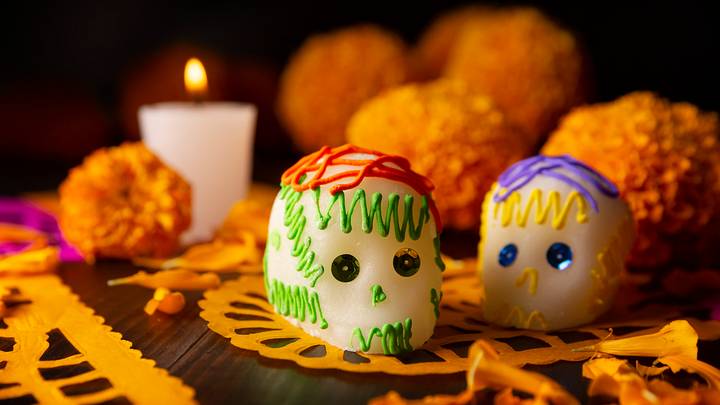
Reducing Día de los Muertos to sugar skulls and dancing skeletons doesn't make you uneducated, but it might mean you're American. The Halloween-centric country shares a border with Mexico, and yet its neighbor's most spirited tradition is often treated as an afterthought.
The Day of the Dead is much more than just "Mexican Halloween." Rooted in ancient indigenous cultures of present-day Mexico, Día de los Muertos may center death, but it's far from sad or spooky. Yet behind every skeleton, marigold, and monarch lies a handful of common misconceptions.
Misconception: Día de los Muertos is just "Latin American Halloween"

Despite their overlapping calendar dates and shared obsession with skeletons, Día de los Muertos isn't a Mexican version of Halloween. While Halloween traces its origins to the ancient Celtic festival of Samhain—a night when the barrier between the living and the dead blurred and people wore costumes to ward off spirits—Día de los Muertos has a completely different backstory. Its roots trace back to indigenous Mesoamerican cultures and their rituals for honoring the dead. Then came Spanish conquistadors in the 16th century, bringing Catholic traditions like All Saints' Day and All Souls' Day that merged into the holiday we know today. Unlike Halloween, it's less about macabre scares and more about meaningful remembrance.
Misconception: It's a somber holiday dedicated to mourning the dead

Life doesn't end when a loved one passes away, and the central premise of Día de los Muertos is that the link between the living and the dead doesn't either. While many people automatically think a holiday about death means mourning, the Day of the Dead is about celebrating happy memories through joyful traditions. From comfort food to lively Mexican folk music, the holiday is about welcoming spirits home, and it all starts with the ofrenda. Spanish for "offering," the typical ofrenda consists of an altar filled with colorful marigolds, sugar skulls, and cherished photos. It might look like a memorial, but it's more of a way to make those spirits feel more at home in the physical world. The scent of flowers, familiar foods, and festive music all act as a path guiding them back from the afterlife.
Misconception: La Catrina is an ancient Aztec death goddess

That skeleton dressed in a flouncy frock and giant hat you see everywhere on Día de los Muertos? She has a name: La Catrina. She's also a lot younger than most people think, originating as a satirical etching created by Mexican artist José Guadalupe Posada around 1910. The original La Calavera Catrina was a parody of wealthy, Eurocentric Mexicans, carrying a deeper message: in death, we're all equal. In just a century and some change, Posada's social critique became the most famous symbol of the Day of the Dead, leading many to assume she must be an ancient religious icon.
Misconception: Día de los Muertos is celebrated exclusively in Mexico

The Day of the Dead may have been born in Mexico, but its reach extends far beyond the country's borders. With an estimated 40.5 million people of partial or full Mexican ancestry in the U.S., communities with significant Mexican populations in places like California and Texas naturally celebrate Día de los Muertos. The release of the James Bond movie Spectre in 2015 and Disney Pixar's Coco in 2017 only increased American cultural awareness, culminating in an explosion of new parades from Chicago to San Antonio.
Its timing ranges wider than most people think, too. While standard calendars only mark November 1 and 2 for Día de los Muertos, celebrations actually start unfolding from October 27 for the spirits of pets, October 28 for those who passed away in accidents, and October 31 to honor unborn children.
Misconception: Skeletal makeup and costumes are meant to be scary

Spooky, scary skeletons aren't the goal during Día de los Muertos, when intricate face paint brings the bony symbol to life. Sugar skull and Catrina makeup isn't supposed to be scary, unlike the skeletal and death-inspired costumes associated with Halloween. Instead, the white base decorated with black skull features and colorful shapes is an ode to late loved ones, once again bridging the gap between life and death. So if you were planning on dressing up as a "scary" skeleton for Halloween, consider a classic zombie or witch costume to avoid disrespecting the deeper meaning behind the Day of the Dead.