%20%20--%3E%0A%3Csvg%20version%3D%221.1%22%20id%3D%22Layer_1%22%20xmlns%3D%22http%3A%2F%2Fwww.w3.org%2F2000%2Fsvg%22%20xmlns%3Axlink%3D%22http%3A%2F%2Fwww.w3.org%2F1999%2Fxlink%22%20x%3D%220px%22%20y%3D%220px%22%0A%09%20viewBox%3D%220%200%20684.6%2068.1%22%20style%3D%22enable-background%3Anew%200%200%20684.6%2068.1%3B%22%20xml%3Aspace%3D%22preserve%22%3E%0A%3Cg%3E%0A%09%3Cpath%20d%3D%22M444.1%2C29.3h-17.4v14.5h17.4V29.3z%20M36.4%2C68.1l29.3-50.8V0H50.4L32.9%2C36.8L15.5%2C0H0v68.1h16.7V45.8l12.4%2C22.3H36.4z%0A%09%09%20M49.1%2C68.1h16.6V23.4L49.1%2C52.1V68.1z%20M76.6%2C68.1h45V53.8H93.3V41.6h21V27.1h-21V14.8h28.3V0.1h-45V68.1z%20M175.6%2C68.1h17.3v-68%0A%09%09h-16.5v40.3L150%2C0.1h-17.6v68h16.7V27.7L175.6%2C68.1z%20M235.8%2C14.8h15.4V0.1h-47.4v14.7H219v53.2h16.8V14.8z%20M290.3%2C45.9h-17.1%0A%09%09l7.5-15.6h2L290.3%2C45.9z%20M298.7%2C68.1h18l-32.2-68h-5.7l-32%2C68h18l3.3-7.1h27.1L298.7%2C68.1z%20M325.2%2C68.1h46.2V53.8h-29.6V0.1h-16.7%0A%09%09V68.1z%20M423.7%2C14.8h27.2V0.1H407v68h16.7V14.8z%20M462%2C68.1h46.2V53.8h-29.6V0.1H462V68.1z%20M564.8%2C34.1c0%2C10.7-7.2%2C19.2-18.5%2C19.2%0A%09%09c-11.4%2C0-18.5-8.5-18.5-19.2s7.1-19.2%2C18.5-19.2C557.6%2C14.9%2C564.8%2C23.4%2C564.8%2C34.1%20M580.6%2C34.1c0-19-14.2-34-34.3-34%0A%09%09c-20.2%2C0-34.3%2C15-34.3%2C34c0%2C19%2C14.1%2C34%2C34.3%2C34C566.4%2C68.1%2C580.6%2C53.1%2C580.6%2C34.1%20M604.8%2C20.5c0-4.1%2C3.3-6.2%2C6.7-6.2%0A%09%09c4.4%2C0%2C6.6%2C3%2C6.6%2C6.6h14.7C631.8%2C9.1%2C625.1%2C0.1%2C611%2C0.1c-12%2C0-21.7%2C9.3-21.7%2C20.6c0%2C10.9%2C5.9%2C15.9%2C16.7%2C19.8%0A%09%09c5.2%2C1.8%2C11.5%2C3.2%2C11.5%2C8c0%2C3.3-2.4%2C5.5-6.4%2C5.5c-3.6%2C0-6.6-3-6.6-6.7h-15.2c0%2C11.5%2C7.9%2C20.8%2C21.8%2C20.8c12%2C0%2C21.6-9.3%2C21.6-20.6%0A%09%09c0-10-5.3-16.4-16.7-19.8C610.6%2C26.1%2C604.8%2C25.3%2C604.8%2C20.5%20M670%2C20.9h14.7C683.8%2C9.1%2C677.1%2C0.1%2C663%2C0.1c-12%2C0-21.7%2C9.3-21.7%2C20.6%0A%09%09c0%2C10.9%2C5.9%2C15.9%2C16.7%2C19.8c5.2%2C1.8%2C11.5%2C3.2%2C11.5%2C8c0%2C3.3-2.4%2C5.5-6.4%2C5.5c-3.6%2C0-6.6-3-6.6-6.7h-15.2c0%2C11.5%2C7.9%2C20.8%2C21.8%2C20.8%0A%09%09c12%2C0%2C21.6-9.3%2C21.6-20.6c0-10-5.3-16.4-16.7-19.8c-5.4-1.6-11.3-2.4-11.3-7.2c0-4.1%2C3.3-6.2%2C6.7-6.2C667.7%2C14.4%2C670%2C17.3%2C670%2C20.9%0A%09%09%22%2F%3E%0A%3C%2Fg%3E%0A%3C%2Fsvg%3E%0A)

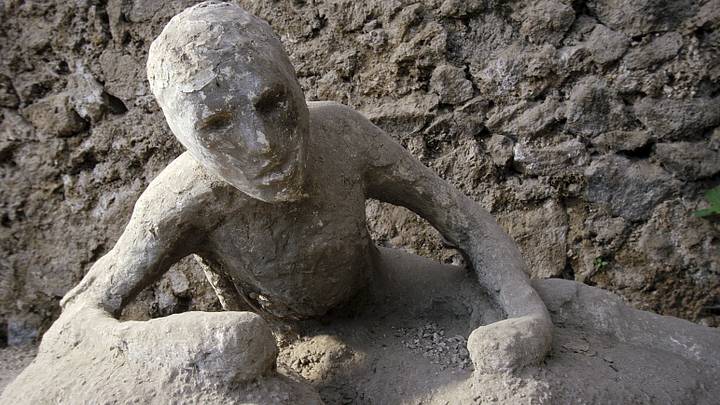
Mount Vesuvius buried the Campania region of Southern Italy and its inhabitants in ash, rock, and pumice in AD 79.
This thick blanket of volcanic materials blocked air and moisture, drastically slowing decay and preserving several ancient Roman cities, such as Pompeii, Herculaneum, and Oplontis, for centuries. This rare preservation made it possible for archaeologists to study buildings and near-complete human remains, providing an interesting glimpse into the daily life of ancient Romans before disaster struck.
What researchers uncovered were thriving communities with vast trade networks, a wide range of jobs, and diets not so different from those we see in modern Mediterranean regions. The remains were so intact that scientists could even distinguish between the diets of men and women.
SCIENTIFIC FINDINGS

In 2021, scientists analyzed the preserved remains of 17 adults who lived in Herculaneum (a neighboring town to Pompeii) at the time of the eruption. By examining the ratios of nitrogen and carbon isotopes absorbed in their teeth, evidence directly tied to dietary habits, they were able to determine the distinct diets of 11 men and six women.
Their findings revealed men enjoyed a larger variety of foods than women, who relied heavily on grains as a protein source.
So, what exactly did these ancient populations consume on the day Vesuvius erupted, and why did men and women eat different foods?
THE DIETS

Anthropologists discovered that men ate about 50% more seafood than women, likely because more men worked as fishermen and ate some of their own catches. In addition to fish, men also consumed more cereals, potentially even enjoying a greater selection than women due to their roles in society and the ages at which they were freed from slavery, according to a paper published in Science Advances.
Women, meanwhile, still delighted in a variety of dishes: meats, eggs, dairy products, legumes, and more fruits and vegetables than men. While their diets were supposedly more restricted, women living in Campania during the eruption of Vesuvius still managed to get sufficient protein and calories.
Smithsonian Magazine noted that at least 12% of these calories (for both men and women) came directly from olive oil, which was used less as a bread dip or a dressing and more as an energy source.
To compare, in modern Mediterranean populations, only about 5% of caloric intake comes from olive oil. As early as the first century CE (including AD 79), Romans were consuming around 20 liters of olive oil per year, with recent numbers proving it to be an enduring staple in Mediterranean cuisine and culture.
Wine was also commonly consumed by men and women who resided in Campania, though it was not considered a dietary source in the paper.