%20%20--%3E%0A%3Csvg%20version%3D%221.1%22%20id%3D%22Layer_1%22%20xmlns%3D%22http%3A%2F%2Fwww.w3.org%2F2000%2Fsvg%22%20xmlns%3Axlink%3D%22http%3A%2F%2Fwww.w3.org%2F1999%2Fxlink%22%20x%3D%220px%22%20y%3D%220px%22%0A%09%20viewBox%3D%220%200%20684.6%2068.1%22%20style%3D%22enable-background%3Anew%200%200%20684.6%2068.1%3B%22%20xml%3Aspace%3D%22preserve%22%3E%0A%3Cg%3E%0A%09%3Cpath%20d%3D%22M444.1%2C29.3h-17.4v14.5h17.4V29.3z%20M36.4%2C68.1l29.3-50.8V0H50.4L32.9%2C36.8L15.5%2C0H0v68.1h16.7V45.8l12.4%2C22.3H36.4z%0A%09%09%20M49.1%2C68.1h16.6V23.4L49.1%2C52.1V68.1z%20M76.6%2C68.1h45V53.8H93.3V41.6h21V27.1h-21V14.8h28.3V0.1h-45V68.1z%20M175.6%2C68.1h17.3v-68%0A%09%09h-16.5v40.3L150%2C0.1h-17.6v68h16.7V27.7L175.6%2C68.1z%20M235.8%2C14.8h15.4V0.1h-47.4v14.7H219v53.2h16.8V14.8z%20M290.3%2C45.9h-17.1%0A%09%09l7.5-15.6h2L290.3%2C45.9z%20M298.7%2C68.1h18l-32.2-68h-5.7l-32%2C68h18l3.3-7.1h27.1L298.7%2C68.1z%20M325.2%2C68.1h46.2V53.8h-29.6V0.1h-16.7%0A%09%09V68.1z%20M423.7%2C14.8h27.2V0.1H407v68h16.7V14.8z%20M462%2C68.1h46.2V53.8h-29.6V0.1H462V68.1z%20M564.8%2C34.1c0%2C10.7-7.2%2C19.2-18.5%2C19.2%0A%09%09c-11.4%2C0-18.5-8.5-18.5-19.2s7.1-19.2%2C18.5-19.2C557.6%2C14.9%2C564.8%2C23.4%2C564.8%2C34.1%20M580.6%2C34.1c0-19-14.2-34-34.3-34%0A%09%09c-20.2%2C0-34.3%2C15-34.3%2C34c0%2C19%2C14.1%2C34%2C34.3%2C34C566.4%2C68.1%2C580.6%2C53.1%2C580.6%2C34.1%20M604.8%2C20.5c0-4.1%2C3.3-6.2%2C6.7-6.2%0A%09%09c4.4%2C0%2C6.6%2C3%2C6.6%2C6.6h14.7C631.8%2C9.1%2C625.1%2C0.1%2C611%2C0.1c-12%2C0-21.7%2C9.3-21.7%2C20.6c0%2C10.9%2C5.9%2C15.9%2C16.7%2C19.8%0A%09%09c5.2%2C1.8%2C11.5%2C3.2%2C11.5%2C8c0%2C3.3-2.4%2C5.5-6.4%2C5.5c-3.6%2C0-6.6-3-6.6-6.7h-15.2c0%2C11.5%2C7.9%2C20.8%2C21.8%2C20.8c12%2C0%2C21.6-9.3%2C21.6-20.6%0A%09%09c0-10-5.3-16.4-16.7-19.8C610.6%2C26.1%2C604.8%2C25.3%2C604.8%2C20.5%20M670%2C20.9h14.7C683.8%2C9.1%2C677.1%2C0.1%2C663%2C0.1c-12%2C0-21.7%2C9.3-21.7%2C20.6%0A%09%09c0%2C10.9%2C5.9%2C15.9%2C16.7%2C19.8c5.2%2C1.8%2C11.5%2C3.2%2C11.5%2C8c0%2C3.3-2.4%2C5.5-6.4%2C5.5c-3.6%2C0-6.6-3-6.6-6.7h-15.2c0%2C11.5%2C7.9%2C20.8%2C21.8%2C20.8%0A%09%09c12%2C0%2C21.6-9.3%2C21.6-20.6c0-10-5.3-16.4-16.7-19.8c-5.4-1.6-11.3-2.4-11.3-7.2c0-4.1%2C3.3-6.2%2C6.7-6.2C667.7%2C14.4%2C670%2C17.3%2C670%2C20.9%0A%09%09%22%2F%3E%0A%3C%2Fg%3E%0A%3C%2Fsvg%3E%0A)

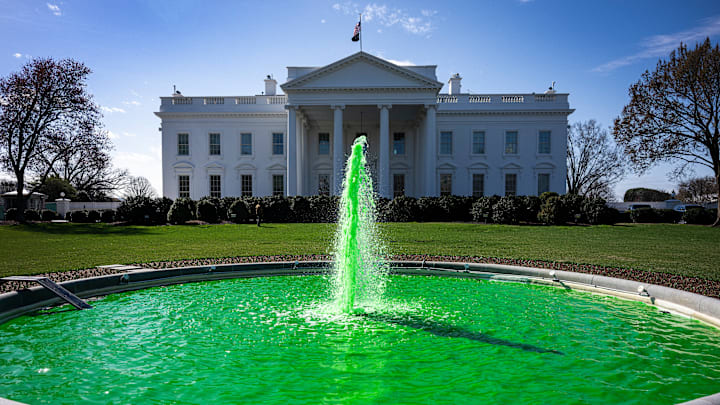
St. Patrick's Day celebrates the patron saint of Ireland, who, as legend has it, chased the snakes out of Ireland. The day is often celebrated with plenty of revelry involving food, parades, and beer.
Except that's not how St. Patrick's Day has always been celebrated—and in fact, some of the things you might associate with the holiday aren't even Irish at all. They're American! Perhaps that is befitting for the celebration of an Irish saint who may not have been born in Ireland. So what "Irish celebrations" have you been participating in all these years that actually started in the States?
Parades

One of the best things to do on St. Patrick's Day is enjoy a parade with plenty of St. Patrick's spirit. Often, these parades involve pipe and drum bands decked out in traditional garb that honors Irish culture.
Some revelers may book a flight to Ireland to participate in a parade in Dublin or Galway, but those cities didn't start the parade tradition. Instead, it was Irish soldiers stationed with British troops in Manhattan that held the first St. Patrick's Day parade on March 17, 1762. There is also some compelling evidence that St. Augustine, Florida held a procession through the city in 1601 as part of festivities that celebrated the feast day of St. Patrick. But New York still often gets the claim to fame.
Dublin, meanwhile, didn't have its first St. Patrick's Day parade until 1931, and it wasn't until 1995 that the country created a St. Patrick's Day Festival that lasts for a week for visitors and locals to enjoy.
Corned beef and cabbage

St. Patrick's Day is a great excuse to enjoy a traditional Irish meal of corned beef and cabbage—except this is not actually a traditional Irish St. Patrick's Day meal.
The United States saw an influx of Irish immigrants in the 1800s because of potato crops failing in Ireland, but immigrants found harsh living conditions in impoverished areas in New York City when they arrived. While ham and cabbage had been common in Ireland, corned beef was a cheaper substitute, making it a staple in Irish immigrant households. Irish immigrants would get leftover salted meat from ships at the local seaport.
Green beer

Sure, it may be odd to drink green beer, but it's not out of the ordinary on St. Patrick's Day, at least not in the United States.
The tradition of green beer was started in 1914 at a social club in the Bronx in New York City when an Irish immigrant named Dr. Thomas Hayes Curtin came up with the tradition. He decided the Schnerer Club should be completely decorated in green, including the beer, which he dyed with a laundry chemical called "Wash Blue." The blue dye mixed with the beer to create the green color. And while the chemical was toxic to ingest, the doctor assured attendees that it was added in a small enough quantity to not be harmful.
Dyeing a river green

One of the more unique St. Patrick's Day traditions is seeing the Chicago River dyed green. The tradition, however, doesn't have its origins in Ireland. Instead, it started in Chicago.
The tradition of dyeing the river began in 1962 when the city's Plumbers Local Union decided to dump 100 pounds of dye into the river to celebrate St. Patrick's Day. The dye had been used previously by the city to figure out where sewage in the water was coming from, but the plumbers' union was the first to use it specifically for St. Patrick's Day celebrations.
The dye is an environmentally safe, powdered, vegetable-based dye that is actually orange and turns green when it's mixed with water.