%20%20--%3E%0A%3Csvg%20version%3D%221.1%22%20id%3D%22Layer_1%22%20xmlns%3D%22http%3A%2F%2Fwww.w3.org%2F2000%2Fsvg%22%20xmlns%3Axlink%3D%22http%3A%2F%2Fwww.w3.org%2F1999%2Fxlink%22%20x%3D%220px%22%20y%3D%220px%22%0A%09%20viewBox%3D%220%200%20684.6%2068.1%22%20style%3D%22enable-background%3Anew%200%200%20684.6%2068.1%3B%22%20xml%3Aspace%3D%22preserve%22%3E%0A%3Cg%3E%0A%09%3Cpath%20d%3D%22M444.1%2C29.3h-17.4v14.5h17.4V29.3z%20M36.4%2C68.1l29.3-50.8V0H50.4L32.9%2C36.8L15.5%2C0H0v68.1h16.7V45.8l12.4%2C22.3H36.4z%0A%09%09%20M49.1%2C68.1h16.6V23.4L49.1%2C52.1V68.1z%20M76.6%2C68.1h45V53.8H93.3V41.6h21V27.1h-21V14.8h28.3V0.1h-45V68.1z%20M175.6%2C68.1h17.3v-68%0A%09%09h-16.5v40.3L150%2C0.1h-17.6v68h16.7V27.7L175.6%2C68.1z%20M235.8%2C14.8h15.4V0.1h-47.4v14.7H219v53.2h16.8V14.8z%20M290.3%2C45.9h-17.1%0A%09%09l7.5-15.6h2L290.3%2C45.9z%20M298.7%2C68.1h18l-32.2-68h-5.7l-32%2C68h18l3.3-7.1h27.1L298.7%2C68.1z%20M325.2%2C68.1h46.2V53.8h-29.6V0.1h-16.7%0A%09%09V68.1z%20M423.7%2C14.8h27.2V0.1H407v68h16.7V14.8z%20M462%2C68.1h46.2V53.8h-29.6V0.1H462V68.1z%20M564.8%2C34.1c0%2C10.7-7.2%2C19.2-18.5%2C19.2%0A%09%09c-11.4%2C0-18.5-8.5-18.5-19.2s7.1-19.2%2C18.5-19.2C557.6%2C14.9%2C564.8%2C23.4%2C564.8%2C34.1%20M580.6%2C34.1c0-19-14.2-34-34.3-34%0A%09%09c-20.2%2C0-34.3%2C15-34.3%2C34c0%2C19%2C14.1%2C34%2C34.3%2C34C566.4%2C68.1%2C580.6%2C53.1%2C580.6%2C34.1%20M604.8%2C20.5c0-4.1%2C3.3-6.2%2C6.7-6.2%0A%09%09c4.4%2C0%2C6.6%2C3%2C6.6%2C6.6h14.7C631.8%2C9.1%2C625.1%2C0.1%2C611%2C0.1c-12%2C0-21.7%2C9.3-21.7%2C20.6c0%2C10.9%2C5.9%2C15.9%2C16.7%2C19.8%0A%09%09c5.2%2C1.8%2C11.5%2C3.2%2C11.5%2C8c0%2C3.3-2.4%2C5.5-6.4%2C5.5c-3.6%2C0-6.6-3-6.6-6.7h-15.2c0%2C11.5%2C7.9%2C20.8%2C21.8%2C20.8c12%2C0%2C21.6-9.3%2C21.6-20.6%0A%09%09c0-10-5.3-16.4-16.7-19.8C610.6%2C26.1%2C604.8%2C25.3%2C604.8%2C20.5%20M670%2C20.9h14.7C683.8%2C9.1%2C677.1%2C0.1%2C663%2C0.1c-12%2C0-21.7%2C9.3-21.7%2C20.6%0A%09%09c0%2C10.9%2C5.9%2C15.9%2C16.7%2C19.8c5.2%2C1.8%2C11.5%2C3.2%2C11.5%2C8c0%2C3.3-2.4%2C5.5-6.4%2C5.5c-3.6%2C0-6.6-3-6.6-6.7h-15.2c0%2C11.5%2C7.9%2C20.8%2C21.8%2C20.8%0A%09%09c12%2C0%2C21.6-9.3%2C21.6-20.6c0-10-5.3-16.4-16.7-19.8c-5.4-1.6-11.3-2.4-11.3-7.2c0-4.1%2C3.3-6.2%2C6.7-6.2C667.7%2C14.4%2C670%2C17.3%2C670%2C20.9%0A%09%09%22%2F%3E%0A%3C%2Fg%3E%0A%3C%2Fsvg%3E%0A)

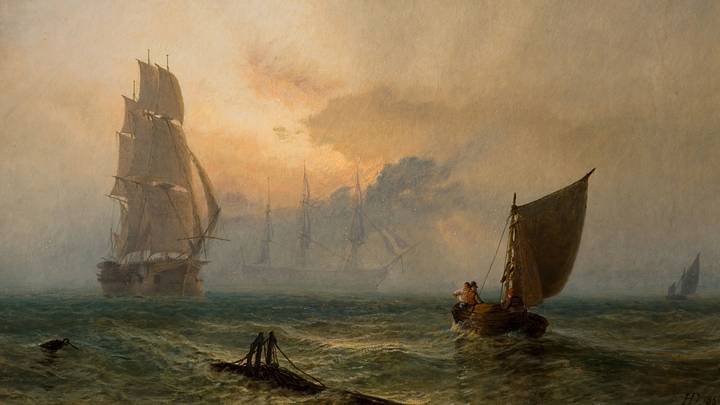
Avast behind, you salty sea dog! For many reasons, nautical history is replete with fantastic phrases and words, many of which remain in everyday use. Some of these have their origins in technical naval terms, and others stem from more colorful goings-on, but all are fun and evocative. Here is the story behind just a few.
Bottoms Up

This cheeky toast to anybody about to sample an alcoholic drink is sometimes said to date back to England, specifically the 18th century, when “taking the King's shilling” meant formally joining the Royal Navy—a shilling being a coin equal to one twentieth of a pound.
This tale may be apocryphal, but the story goes that navy recruiters would enter pubs and surreptitiously drop a shilling into a drinker's cup. When the unsuspecting fellow drained his flask, the shilling touched his mouth, and that was good enough to seal the deal. In response, bartenders started using clear-bottomed jugs, and hence “bottoms up” was a call to raise your cup and check for a hidden shilling before drinking.
To Show Your True Colors

This is one phrase that might be more readily understandable, particularly for those who come from a military background. Colors, in this case, refer to flags, which were routinely used onboard seafaring vessels to show which country a person belonged to. If you were up to no good—a pirate, say, or a smuggler—you may well have wished to disguise your true nature by hoisting whichever flag would serve you best under the circumstances. Hence, showing your true colors came to mean revealing your true nature, usually with negative connotations.
Pipe Down

To demand that someone pipe down is to tell them to be quiet or shut up. It's a strange phrase when you think about it, as the very purpose of a pipe—at least when it refers to an instrument—is to create noise. In nautical history, the blowing of a pipe served as a signal to mark the end of a day when sailors were required to disappear below decks and sleep. This was often referred to as “piping down the hammocks.”
Slush Fund

Nowadays, a slush fund is usually understood to mean money set aside by a business or organization in case of unforeseen needs. In politics and among unscrupulous companies, a slush fund is synonymous with bribery. Its nautical origins trace back to the ship's cook. Salted beef was a common diet onboard any vessel, and the cook would boil it in a large pot. The fat, or slush, would rise to the top, and a cook could surreptitiously scrape this aside to be sold once back on shore to increase his personal funds.
Overbearing

Have you ever encountered an overbearing person—one who voices his own opinions so loudly as to shout down all others? Or an overbearing smell or taste? The nautical meaning of overbearing is quite straightforward. When a ship sails towards another vessel specifically in order to overtake it, it is said to be overbearing.
The Whole Nine Yards

Many people (including this writer, until recently) assume that this phrase originated with American football. If you pause to consider, however, nine yards isn't the “whole” needed to secure another play. In truth, the origins of this phrase are not known for certain, but one theory links it to the high seas. In the past, sailing ships with square rigs sported three masts, each with three sails. Each sail would be secured by a yard arm—a timber spar. If the whole nine yards were in use, then all sails were up and employed.
Touch And Go

This handy phrase—which means something like “we might make it, but we might not”—can be used in any tight situation that has an uncertain outcome. It is said to have originated at sea, describing ships passing through shallow waters. Those onboard would feel a shudder if the hull scraped over the ground or a sandbank. Whether the vessel would flounder or carry on safely depended on whether the hull would touch and stick, or touch and go.