%20%20--%3E%0A%3Csvg%20version%3D%221.1%22%20id%3D%22Layer_1%22%20xmlns%3D%22http%3A%2F%2Fwww.w3.org%2F2000%2Fsvg%22%20xmlns%3Axlink%3D%22http%3A%2F%2Fwww.w3.org%2F1999%2Fxlink%22%20x%3D%220px%22%20y%3D%220px%22%0A%09%20viewBox%3D%220%200%20684.6%2068.1%22%20style%3D%22enable-background%3Anew%200%200%20684.6%2068.1%3B%22%20xml%3Aspace%3D%22preserve%22%3E%0A%3Cg%3E%0A%09%3Cpath%20d%3D%22M444.1%2C29.3h-17.4v14.5h17.4V29.3z%20M36.4%2C68.1l29.3-50.8V0H50.4L32.9%2C36.8L15.5%2C0H0v68.1h16.7V45.8l12.4%2C22.3H36.4z%0A%09%09%20M49.1%2C68.1h16.6V23.4L49.1%2C52.1V68.1z%20M76.6%2C68.1h45V53.8H93.3V41.6h21V27.1h-21V14.8h28.3V0.1h-45V68.1z%20M175.6%2C68.1h17.3v-68%0A%09%09h-16.5v40.3L150%2C0.1h-17.6v68h16.7V27.7L175.6%2C68.1z%20M235.8%2C14.8h15.4V0.1h-47.4v14.7H219v53.2h16.8V14.8z%20M290.3%2C45.9h-17.1%0A%09%09l7.5-15.6h2L290.3%2C45.9z%20M298.7%2C68.1h18l-32.2-68h-5.7l-32%2C68h18l3.3-7.1h27.1L298.7%2C68.1z%20M325.2%2C68.1h46.2V53.8h-29.6V0.1h-16.7%0A%09%09V68.1z%20M423.7%2C14.8h27.2V0.1H407v68h16.7V14.8z%20M462%2C68.1h46.2V53.8h-29.6V0.1H462V68.1z%20M564.8%2C34.1c0%2C10.7-7.2%2C19.2-18.5%2C19.2%0A%09%09c-11.4%2C0-18.5-8.5-18.5-19.2s7.1-19.2%2C18.5-19.2C557.6%2C14.9%2C564.8%2C23.4%2C564.8%2C34.1%20M580.6%2C34.1c0-19-14.2-34-34.3-34%0A%09%09c-20.2%2C0-34.3%2C15-34.3%2C34c0%2C19%2C14.1%2C34%2C34.3%2C34C566.4%2C68.1%2C580.6%2C53.1%2C580.6%2C34.1%20M604.8%2C20.5c0-4.1%2C3.3-6.2%2C6.7-6.2%0A%09%09c4.4%2C0%2C6.6%2C3%2C6.6%2C6.6h14.7C631.8%2C9.1%2C625.1%2C0.1%2C611%2C0.1c-12%2C0-21.7%2C9.3-21.7%2C20.6c0%2C10.9%2C5.9%2C15.9%2C16.7%2C19.8%0A%09%09c5.2%2C1.8%2C11.5%2C3.2%2C11.5%2C8c0%2C3.3-2.4%2C5.5-6.4%2C5.5c-3.6%2C0-6.6-3-6.6-6.7h-15.2c0%2C11.5%2C7.9%2C20.8%2C21.8%2C20.8c12%2C0%2C21.6-9.3%2C21.6-20.6%0A%09%09c0-10-5.3-16.4-16.7-19.8C610.6%2C26.1%2C604.8%2C25.3%2C604.8%2C20.5%20M670%2C20.9h14.7C683.8%2C9.1%2C677.1%2C0.1%2C663%2C0.1c-12%2C0-21.7%2C9.3-21.7%2C20.6%0A%09%09c0%2C10.9%2C5.9%2C15.9%2C16.7%2C19.8c5.2%2C1.8%2C11.5%2C3.2%2C11.5%2C8c0%2C3.3-2.4%2C5.5-6.4%2C5.5c-3.6%2C0-6.6-3-6.6-6.7h-15.2c0%2C11.5%2C7.9%2C20.8%2C21.8%2C20.8%0A%09%09c12%2C0%2C21.6-9.3%2C21.6-20.6c0-10-5.3-16.4-16.7-19.8c-5.4-1.6-11.3-2.4-11.3-7.2c0-4.1%2C3.3-6.2%2C6.7-6.2C667.7%2C14.4%2C670%2C17.3%2C670%2C20.9%0A%09%09%22%2F%3E%0A%3C%2Fg%3E%0A%3C%2Fsvg%3E%0A)


It’s such a natural reaction to something impressive or joyous that you might never have thought to question it. But why do we show our appreciation, approval, or even happiness by noisily clapping our hands together in a rowdy round of applause?
ORIGINS AND EARLY HISTORY

If wordlessly clapping your hands to make as much noise as possible feels like a rather primitive thing to do, you’d be quite right. It’s thought that the origins of applause lie far, far back in the evolutionary history of mankind, at a time when our ancestors—likely long before they had developed any kind of complex language by which to communicate—might have used a loud clap to catch a someone’s attention, make themselves the focus of a group, show nervousness or unease, or perhaps even to intimidate, threaten, or scare off a potential rival or predator. (It’s worth noting too that there’s a visual aspect to clapping as much as an auditory one, so rather like waving our hands to draw attention to ourselves, clapping might have worked as a visual cue just as much as an aural one.)
Given that it apparently has such a long history among both us and our ancestors, then, it’s perhaps unsurprising that clapping is all but hard-wired into our lives today, and as such it is thought to be a true human universal. In other words, it is thought that there is not a single culture on the planet that does not use some form of clapping as a means of communicating with one another.
DIFFERENT TYPES EMERGE
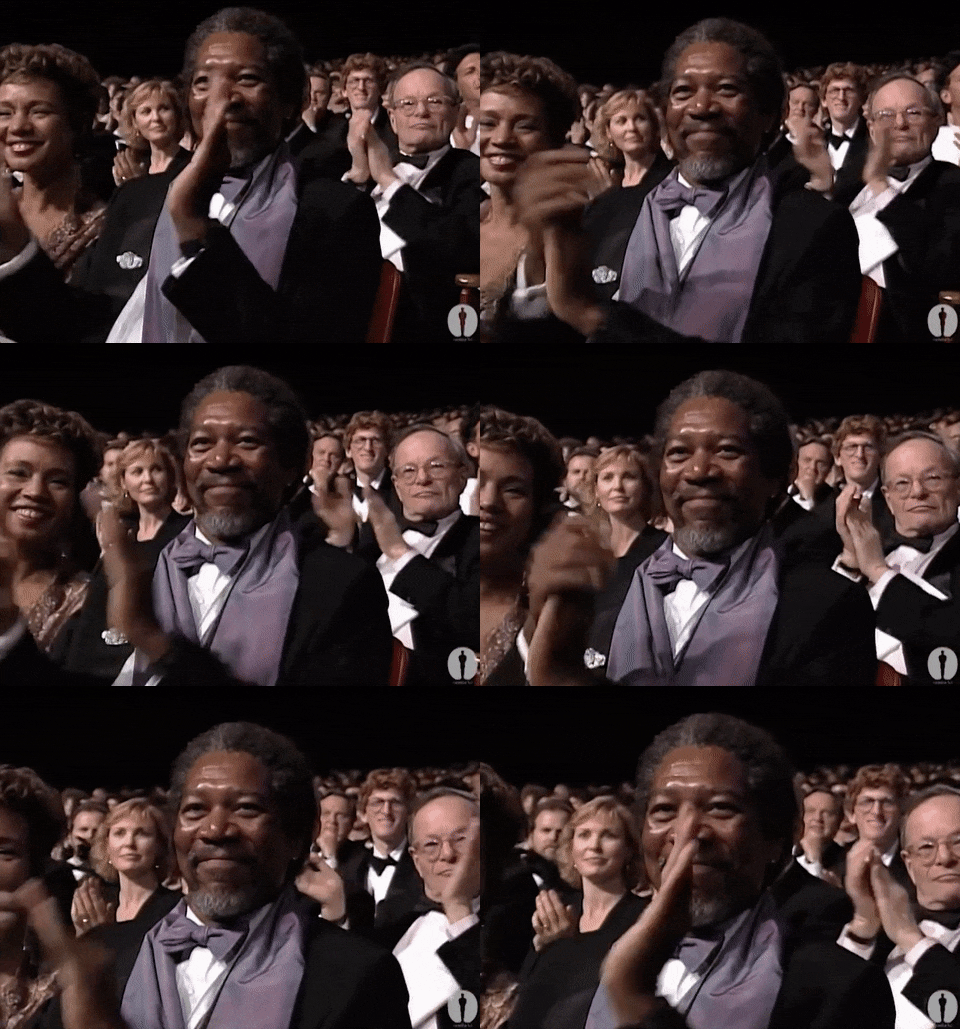
That being said, however, several different forms of clapping have been identified by psychologists, and it may not be the case that clapping is used in the same way or implies the same thing in every human culture. So-called motivational clapping, for instance, is clapping you use to spur someone on, or to encourage them to achieve something. Playful applause is the rhythmic, coordinated applause that might accompany a game or the beat of a piece of music. Protocol applause is the applause that accompanies formal events like speeches or political addresses—the kind of clapping that a speaker might intentionally cue from an audience, and which an audience might utilize to show their agreement with what is being said.
Perhaps the most common and familiar form or use of applause in our culture today, though, is so-called appreciative or recognitional applause—that is, the clapping of an audience who wish to show their gratitude, amazement, admiration, or enjoyment for a suitably impressive performance. Our prehistoric ancestors likely weren’t putting on extravagant live shows for one another back in the early days of our evolutionary development, of course, so where did this particular custom of applauding a performance come from?
Our ancestors might not have been putting on stage shows, but it’s nevertheless true that this kind of applause might indeed have prehistoric origins. Alongside other bodily means of making a raucous noise—whooping, shouting, or drumming the feet on the ground, and so on—appreciative applause might have emerged among early humans at a time when, as our first social groups began to form, creative group pursuits like music and storytelling first started to emerge. At the end of a particularly evocative tale or a rousing musical performance, ultimately, it’s entirely possible that an enthusiastic round of applause might have followed.
MODERN APPLAUSE CUSTOMS
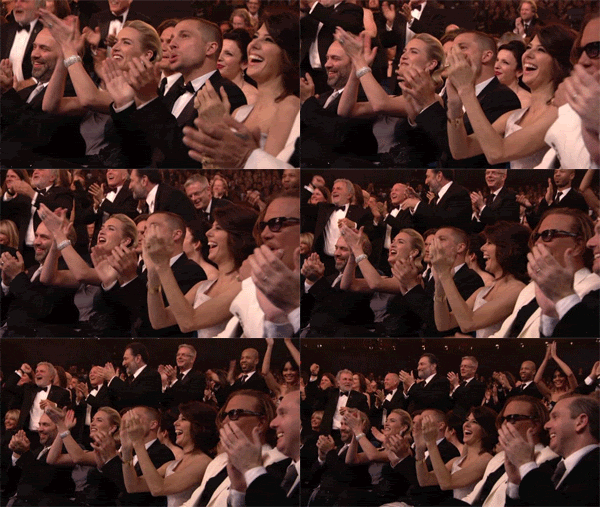
Without any hard evidence to back that idea up, though, it’s impossible to say for sure whether this particular form of applause has such ancient origins. The earliest hard evidence we do have of applause, however, comes from a handful of references from some of the earliest sections of the Bible. Clapping hands is recorded as an act of celebration during the coronation of King Joash in the second book of Kings (2 Kings 11:12), for instance, which was written more than 2,500 years ago in the 6th century BCE. The Greeks are known to have preferred to stamp their feet rather than applaud after live performances, but given how rowdy Greek audiences could apparently be in their responses (and given how easy it is to make noise by clapping the hands together), it’s at least plausible that they did so too. But the Romans without doubt used applause to show appreciation—although not always in the same way. Crowds might only snap their fingers in a more subtle or subdued show of appreciation, or else flap their togas or wave white handkerchiefs in the air if they were particularly impressed.
So clapping for appreciation appears to have emerged in antiquity, with the Romans (and likely the Greeks before them) being among the earliest cultures to have embraced audience applause as a means of celebrating and recognizing an excellent performance. Since then, however, how we use clapping in this context has continued to change. Until as recently as the 18th and 19th centuries, for instance, it wasn’t uncommon for audiences to applaud midway through formal performances if what they were enjoying was particularly impressive. “Right in the middle of the First Allegro,” Mozart once wrote in a letter to his father after a performance in 1778, “…the entire audience was sent into raptures—there was a big applaudissement;—and as I knew, when I wrote the passage, what good effect it would make.” Try applauding in the middle of a classical piano recital today, though, and you’ll likely be ejected from the concert hall…