%20%20--%3E%0A%3Csvg%20version%3D%221.1%22%20id%3D%22Layer_1%22%20xmlns%3D%22http%3A%2F%2Fwww.w3.org%2F2000%2Fsvg%22%20xmlns%3Axlink%3D%22http%3A%2F%2Fwww.w3.org%2F1999%2Fxlink%22%20x%3D%220px%22%20y%3D%220px%22%0A%09%20viewBox%3D%220%200%20684.6%2068.1%22%20style%3D%22enable-background%3Anew%200%200%20684.6%2068.1%3B%22%20xml%3Aspace%3D%22preserve%22%3E%0A%3Cg%3E%0A%09%3Cpath%20d%3D%22M444.1%2C29.3h-17.4v14.5h17.4V29.3z%20M36.4%2C68.1l29.3-50.8V0H50.4L32.9%2C36.8L15.5%2C0H0v68.1h16.7V45.8l12.4%2C22.3H36.4z%0A%09%09%20M49.1%2C68.1h16.6V23.4L49.1%2C52.1V68.1z%20M76.6%2C68.1h45V53.8H93.3V41.6h21V27.1h-21V14.8h28.3V0.1h-45V68.1z%20M175.6%2C68.1h17.3v-68%0A%09%09h-16.5v40.3L150%2C0.1h-17.6v68h16.7V27.7L175.6%2C68.1z%20M235.8%2C14.8h15.4V0.1h-47.4v14.7H219v53.2h16.8V14.8z%20M290.3%2C45.9h-17.1%0A%09%09l7.5-15.6h2L290.3%2C45.9z%20M298.7%2C68.1h18l-32.2-68h-5.7l-32%2C68h18l3.3-7.1h27.1L298.7%2C68.1z%20M325.2%2C68.1h46.2V53.8h-29.6V0.1h-16.7%0A%09%09V68.1z%20M423.7%2C14.8h27.2V0.1H407v68h16.7V14.8z%20M462%2C68.1h46.2V53.8h-29.6V0.1H462V68.1z%20M564.8%2C34.1c0%2C10.7-7.2%2C19.2-18.5%2C19.2%0A%09%09c-11.4%2C0-18.5-8.5-18.5-19.2s7.1-19.2%2C18.5-19.2C557.6%2C14.9%2C564.8%2C23.4%2C564.8%2C34.1%20M580.6%2C34.1c0-19-14.2-34-34.3-34%0A%09%09c-20.2%2C0-34.3%2C15-34.3%2C34c0%2C19%2C14.1%2C34%2C34.3%2C34C566.4%2C68.1%2C580.6%2C53.1%2C580.6%2C34.1%20M604.8%2C20.5c0-4.1%2C3.3-6.2%2C6.7-6.2%0A%09%09c4.4%2C0%2C6.6%2C3%2C6.6%2C6.6h14.7C631.8%2C9.1%2C625.1%2C0.1%2C611%2C0.1c-12%2C0-21.7%2C9.3-21.7%2C20.6c0%2C10.9%2C5.9%2C15.9%2C16.7%2C19.8%0A%09%09c5.2%2C1.8%2C11.5%2C3.2%2C11.5%2C8c0%2C3.3-2.4%2C5.5-6.4%2C5.5c-3.6%2C0-6.6-3-6.6-6.7h-15.2c0%2C11.5%2C7.9%2C20.8%2C21.8%2C20.8c12%2C0%2C21.6-9.3%2C21.6-20.6%0A%09%09c0-10-5.3-16.4-16.7-19.8C610.6%2C26.1%2C604.8%2C25.3%2C604.8%2C20.5%20M670%2C20.9h14.7C683.8%2C9.1%2C677.1%2C0.1%2C663%2C0.1c-12%2C0-21.7%2C9.3-21.7%2C20.6%0A%09%09c0%2C10.9%2C5.9%2C15.9%2C16.7%2C19.8c5.2%2C1.8%2C11.5%2C3.2%2C11.5%2C8c0%2C3.3-2.4%2C5.5-6.4%2C5.5c-3.6%2C0-6.6-3-6.6-6.7h-15.2c0%2C11.5%2C7.9%2C20.8%2C21.8%2C20.8%0A%09%09c12%2C0%2C21.6-9.3%2C21.6-20.6c0-10-5.3-16.4-16.7-19.8c-5.4-1.6-11.3-2.4-11.3-7.2c0-4.1%2C3.3-6.2%2C6.7-6.2C667.7%2C14.4%2C670%2C17.3%2C670%2C20.9%0A%09%09%22%2F%3E%0A%3C%2Fg%3E%0A%3C%2Fsvg%3E%0A)

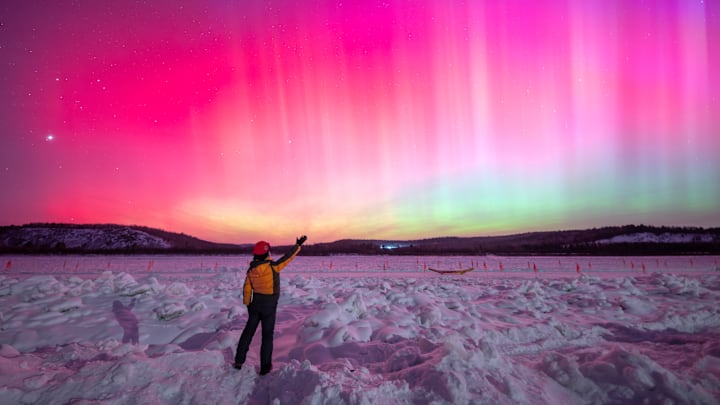
The Northern Lights have inspired imagination and awe for centuries, and they've challenged photographers for just as long. You travel thousands of miles (or witness them in your backyard if you’re fortunate enough), stand beneath a glowing sky, raise your camera, and end up with a photo that looks like your lens was smudged with frosting from this morning’s pastry.
The good news? You don't need to be a professional photographer to capture the Northern Lights at their most vibrant. You just need to be equipped with the right tips and preparation. Aurora photography is less about luck and more about showing up ready, patient, and dressed in the proper winter attire.
The best part? Anyone can learn! Here's what you need to know to get started.
HELLO DARKNESS MY OLD FRIEND

According to NASA, the aurora borealis occurs when energetic particles from the Sun interact with Earth's magnetic field, causing them to collide with atoms and molecules in the atmosphere and produce vivid streaks of color in the sky. While the Northern Lights are scientifically linked to solar activity, their appearance remains unpredictable.
National Geographic’s aurora experts say your best chance to capture this spectacle is inside or near the Arctic Circle (such as Iceland, Alaska, Norway, or northern Canada), where the skies are dark and light pollution is minimal.
TIP: You don’t have to travel to the Arctic Circle to enjoy an incredible view of the Northern Lights. If conditions are favorable and solar activity is strong, this phenomenon can appear closer to home than you might expect. Keep an eye on your local weather service for alerts, so you don’t miss the show!
Timing matters too. Autumn and Spring equinoxes are prime viewing seasons, and winter offers longer nights, which means more darkness and more opportunities to capture a photo that your group chat will never stop talking about.
TIP: Scout out the perfect location before nightfall. The photographers at Alpha Universe stress that stumbling around aimlessly in the dark could cause you to miss your photo-op. Find an ideal location earlier in the day, and your nighttime photographer alter ego will thank you.
TALES FROM THE TRIPOD

If there's one universal rule of aurora photography, it's that handheld shots set you up for disappointment. The Northern Lights are faint and constantly moving, which means long exposures that require a tripod.
A wide-angle lens is recommended to capture as much sky as possible, paired with manual focus. Autofocus in the dark tends to fall short. Set your focus manually using a bright star or distant light, then let it go.
Another detail to consider is format. You’ll want to shoot in RAW format if your camera offers the option. RAW files preserve the highest quality detail and color, which gives you more creative freedom when editing your photos.
Aside from editing applications, some photographers rely on in-camera tools like exposure simulation and bright monitoring, which help preview how the aurora will appear without having to take endless test shots. This eliminates the need to guess and increases the number of photos you'll want to show your loved ones.
No camera? No problem! You don't need an expensive piece of equipment to get a decent photo of this mystical phenomenon. Visit Iceland encourages smartphone users to set their phones up on a tripod, select night mode (for long exposures around 10 to 15 seconds), tap the screen to lock the focus, shoot in RAW to preserve color, lower the brightness, and let the lights work their magic.
SCENES THAT SPEAK FOR THEMSELVES

Sure, you're learning how to capture the best photo of the aurora, but don't forget about the stars and scenery. Professional photographers advise adding a strong foreground (like trees, mountains, houses, or a road stretching into the distance) to anchor your image. These elements give scale and turn your photo from pretty lights into a radiant image that tells a story.
TIP: Don't be afraid to shoot vertically. The Northern Lights rise high overhead, and portrait orientation can help capture their full effect.
A PHOTO THAT LASTS FOREVER

Photographing the Northern Lights is part science experiment, part art class. It’s also a true test of endurance, requiring you to set up a tripod, adjust your camera settings, wait patiently in the cold, and embrace all of the above to capture the perfect shot.
With proper preparation and the right gear, you won't just photograph the aurora, you'll remember the night you truly immersed yourself in the painting in the sky.