%20%20--%3E%0A%3Csvg%20version%3D%221.1%22%20id%3D%22Layer_1%22%20xmlns%3D%22http%3A%2F%2Fwww.w3.org%2F2000%2Fsvg%22%20xmlns%3Axlink%3D%22http%3A%2F%2Fwww.w3.org%2F1999%2Fxlink%22%20x%3D%220px%22%20y%3D%220px%22%0A%09%20viewBox%3D%220%200%20684.6%2068.1%22%20style%3D%22enable-background%3Anew%200%200%20684.6%2068.1%3B%22%20xml%3Aspace%3D%22preserve%22%3E%0A%3Cg%3E%0A%09%3Cpath%20d%3D%22M444.1%2C29.3h-17.4v14.5h17.4V29.3z%20M36.4%2C68.1l29.3-50.8V0H50.4L32.9%2C36.8L15.5%2C0H0v68.1h16.7V45.8l12.4%2C22.3H36.4z%0A%09%09%20M49.1%2C68.1h16.6V23.4L49.1%2C52.1V68.1z%20M76.6%2C68.1h45V53.8H93.3V41.6h21V27.1h-21V14.8h28.3V0.1h-45V68.1z%20M175.6%2C68.1h17.3v-68%0A%09%09h-16.5v40.3L150%2C0.1h-17.6v68h16.7V27.7L175.6%2C68.1z%20M235.8%2C14.8h15.4V0.1h-47.4v14.7H219v53.2h16.8V14.8z%20M290.3%2C45.9h-17.1%0A%09%09l7.5-15.6h2L290.3%2C45.9z%20M298.7%2C68.1h18l-32.2-68h-5.7l-32%2C68h18l3.3-7.1h27.1L298.7%2C68.1z%20M325.2%2C68.1h46.2V53.8h-29.6V0.1h-16.7%0A%09%09V68.1z%20M423.7%2C14.8h27.2V0.1H407v68h16.7V14.8z%20M462%2C68.1h46.2V53.8h-29.6V0.1H462V68.1z%20M564.8%2C34.1c0%2C10.7-7.2%2C19.2-18.5%2C19.2%0A%09%09c-11.4%2C0-18.5-8.5-18.5-19.2s7.1-19.2%2C18.5-19.2C557.6%2C14.9%2C564.8%2C23.4%2C564.8%2C34.1%20M580.6%2C34.1c0-19-14.2-34-34.3-34%0A%09%09c-20.2%2C0-34.3%2C15-34.3%2C34c0%2C19%2C14.1%2C34%2C34.3%2C34C566.4%2C68.1%2C580.6%2C53.1%2C580.6%2C34.1%20M604.8%2C20.5c0-4.1%2C3.3-6.2%2C6.7-6.2%0A%09%09c4.4%2C0%2C6.6%2C3%2C6.6%2C6.6h14.7C631.8%2C9.1%2C625.1%2C0.1%2C611%2C0.1c-12%2C0-21.7%2C9.3-21.7%2C20.6c0%2C10.9%2C5.9%2C15.9%2C16.7%2C19.8%0A%09%09c5.2%2C1.8%2C11.5%2C3.2%2C11.5%2C8c0%2C3.3-2.4%2C5.5-6.4%2C5.5c-3.6%2C0-6.6-3-6.6-6.7h-15.2c0%2C11.5%2C7.9%2C20.8%2C21.8%2C20.8c12%2C0%2C21.6-9.3%2C21.6-20.6%0A%09%09c0-10-5.3-16.4-16.7-19.8C610.6%2C26.1%2C604.8%2C25.3%2C604.8%2C20.5%20M670%2C20.9h14.7C683.8%2C9.1%2C677.1%2C0.1%2C663%2C0.1c-12%2C0-21.7%2C9.3-21.7%2C20.6%0A%09%09c0%2C10.9%2C5.9%2C15.9%2C16.7%2C19.8c5.2%2C1.8%2C11.5%2C3.2%2C11.5%2C8c0%2C3.3-2.4%2C5.5-6.4%2C5.5c-3.6%2C0-6.6-3-6.6-6.7h-15.2c0%2C11.5%2C7.9%2C20.8%2C21.8%2C20.8%0A%09%09c12%2C0%2C21.6-9.3%2C21.6-20.6c0-10-5.3-16.4-16.7-19.8c-5.4-1.6-11.3-2.4-11.3-7.2c0-4.1%2C3.3-6.2%2C6.7-6.2C667.7%2C14.4%2C670%2C17.3%2C670%2C20.9%0A%09%09%22%2F%3E%0A%3C%2Fg%3E%0A%3C%2Fsvg%3E%0A)

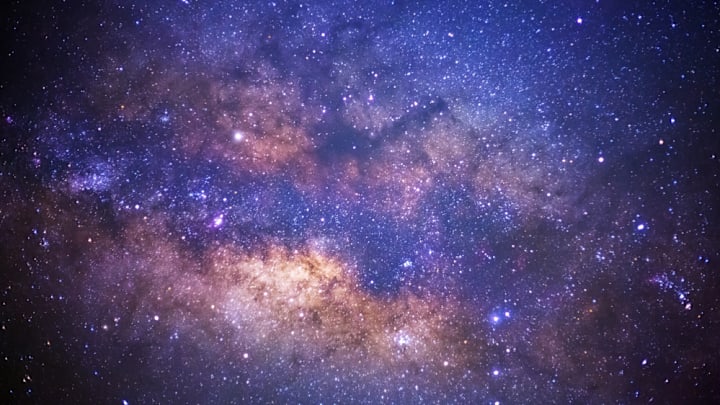
When you think of the word “space,” your mind likely fills up with images of spiral galaxies, stars, colorful planets, and maybe little green men. Many of us grow up thinking about space and dreaming about what might be seen out there—but the vast majority of us probably haven’t even given a single stray thought to what outer space might smell like.
It’s true, though: outer space does have a smell, or rather, many smells. The cosmos isn’t sterile or empty, after all. It’s a quite literally unearthly patchwork of dying stars that shed clouds of pungent soot as well as gases, radiation, and plasma blown about by comets that whiz by at mind-blowing speeds.
All of this, unsurprisingly, comes together to form quite the collision of odors. Much of what scientists believe that space smells like is based on how some of the materials found in space smell on Earth. But there’s one scent that astronauts overwhelmingly report detecting on their gear after coming home from space time and time again, and it’s a strong one.
What Outer Space Smells Like, According to Astronauts

The main scent that astronauts report smelling upon returning from outer space is a distinctly metallic odor that some have likened to ozone, gunpowder, seared steak, or “sweet-smelling welding fumes,” per NASA. “To me, space smells like a mixture between walnuts and the brake pads of my motorbike,” astronaut Alexander Gerst wrote on Twitter. Many astronauts detect this scent on their suits and equipment following a jaunt in the cosmos.
Some space veterans seemed to find this scent quite pleasant. “It is hard to describe this smell; it is definitely not the olfactory equivalent of describing the palate sensations of some new food that ‘tastes like chicken.’ The best description I can come up with is metallic; a rather pleasant sweet metallic sensation,” astronaut Don Pettit wrote. “It reminded me of my college summers where I labored for many hours with an arc welding torch repairing heavy equipment for a small logging outfit,” Pettit continued. “It reminded me of pleasant sweet-smelling welding fumes. That is the smell of space.”
Why Does Outer Space Seem to Smell Metallic?

There are two main theories as to why outer space might smell a bit like a mix between a gas station and the local cookout.
According to Dr. Louis Allamandola, former director of the NASA Ames Astrophysics and Astrochemistry Laboratory, one theory holds that this smell may have something to do with polycyclic aromatic hydrocarbons, which are found in many regions of the universe. These hydrocarbons also appear in Earthly materials like burnt toast, charred meat, soot, and car exhaust.
Dying stars, he explained, release carbon that forms a thick, sooty substance quite similar to fossil fuels in its makeup. This soot, which is dense in polycyclic aromatic hydrocarbons, can survive for an extremely long time, and might make its way onto astronauts’ suits and tools when they’re out surveying the universe.
Another theory proposes that the smell is the result of ozone molecules, which are known to have a metallic scent. According to this theory, out in space, ultraviolet radiation may cause oxygen molecules to break into single atoms that can cling to astronauts’ spacesuits. When these atoms are exposed to molecular oxygen, or O2, they combine to form O3, or ozone.
What Else Might Space Smell Like?

In 2014, the European Space Agency's Rosetta spacecraft passed by the Churyumov-Gerasimenko comet and detected a number of molecules that all have wildly different odors. Among them were hydrogen sulfide, which smells like rotten eggs; hydrogen cyanide, which is quite poisonous but often smells a bit sweet, like almonds; urine-scented ammonia; and formaldehyde.
According to Dr. Allamandola, these molecules were likely gathered from space soot and other materials that have coalesced into huge, freezing dust clouds over time—making them the cosmic equivalent of the dust bunnies that collect in the corner of your home. “Here, the space in dark clouds would smell a bit like a crazy ice cream shop with the crisp touch of water ice dominated by a breathtaking, knee-buckling ammonia whiff; in some cases with an additional morgue-like accent due to the formaldehyde,” he said.
Raspberry, Rum, and Rotten Egg-Scented Stars

Scientists have also found that Sagittarius B2—the interstellar molecular dust cloud at the heart of our own Milky Way galaxy—is dense in ethyl formate, which is the same compound that helps to give raspberries their distinctive flavor.
Ethyl formate is created by a reaction between a kind of alcohol and an acid known to emit an odor similar to rum—meaning that it’s possible that part of our Milky Way could be slightly raspberry-rum-punch-scented, which bodes well for future space parties if we ever make it that far out. Of course, Sagittarius B2 also contains high concentrations of deadly propyl cyanide, so that would have to be dealt with before planning any future space-based gatherings.
Additionally, parts of space likely emit strong rotten-egg scents thanks to concentrations of sulfur found there. “In dark pockets of our galaxy and galaxies far, far away, molecular clouds full of tiny dust particles host a veritable smorgasbord of odors, from wafts of sweet sugar and rum to the rotten-egg stench of sulfur, and they float around for millions of years appearing in comets, meteors and space dust,” summarized Scott Sandford, a senior research scientist in the Ames Science Directorate, per NASA.
What Particular Planets and Celestial Bodies Might Smell Like

No one is precisely certain of what the planets of our solar system smell like, but scientists have some ideas. Venus and Uranus almost certainly smell strongly of rotten eggs thanks to the sulfur dioxide and hydrogen sulfide in their atmospheres. Meanwhile, Mars has an atmosphere made mostly of carbon dioxide, but it also contains traces of acids and sulfur, meaning this planet would likely smell vaguely acidic and desert-like.
Then there's Saturn’s largest moon, Titan, which has an atmosphere that contains traces of benzene, which would likely make it smell a lot like gasoline. And Jupiter might get some of its colors from ammonia and phosphorus, which may give it a scent that hovers somewhere between garlic and petrol.
Is It Possible to Smell Space on Earth?

Most likely, at this point, you may be feeling a new appreciation for our home planet’s mix of fragrant smells. Space’s collection of harsh odors just can’t rival the scent of rain on moss, spring flowers, and the ocean, after all.
But if you are feeling called to douse yourself in the scent of the galaxy, you’re in luck. In 2008, NASA commissioned chemist Steve Pearce to create a particular space-scented blend designed to help astronauts prepare for what they might smell upon returning from a jaunt through the solar system. In 2020, after an extended Kickstarter campaign, what he concocted was released as a perfume called, fittingly, Eau de Space.