%20%20--%3E%0A%3Csvg%20version%3D%221.1%22%20id%3D%22Layer_1%22%20xmlns%3D%22http%3A%2F%2Fwww.w3.org%2F2000%2Fsvg%22%20xmlns%3Axlink%3D%22http%3A%2F%2Fwww.w3.org%2F1999%2Fxlink%22%20x%3D%220px%22%20y%3D%220px%22%0A%09%20viewBox%3D%220%200%20684.6%2068.1%22%20style%3D%22enable-background%3Anew%200%200%20684.6%2068.1%3B%22%20xml%3Aspace%3D%22preserve%22%3E%0A%3Cg%3E%0A%09%3Cpath%20d%3D%22M444.1%2C29.3h-17.4v14.5h17.4V29.3z%20M36.4%2C68.1l29.3-50.8V0H50.4L32.9%2C36.8L15.5%2C0H0v68.1h16.7V45.8l12.4%2C22.3H36.4z%0A%09%09%20M49.1%2C68.1h16.6V23.4L49.1%2C52.1V68.1z%20M76.6%2C68.1h45V53.8H93.3V41.6h21V27.1h-21V14.8h28.3V0.1h-45V68.1z%20M175.6%2C68.1h17.3v-68%0A%09%09h-16.5v40.3L150%2C0.1h-17.6v68h16.7V27.7L175.6%2C68.1z%20M235.8%2C14.8h15.4V0.1h-47.4v14.7H219v53.2h16.8V14.8z%20M290.3%2C45.9h-17.1%0A%09%09l7.5-15.6h2L290.3%2C45.9z%20M298.7%2C68.1h18l-32.2-68h-5.7l-32%2C68h18l3.3-7.1h27.1L298.7%2C68.1z%20M325.2%2C68.1h46.2V53.8h-29.6V0.1h-16.7%0A%09%09V68.1z%20M423.7%2C14.8h27.2V0.1H407v68h16.7V14.8z%20M462%2C68.1h46.2V53.8h-29.6V0.1H462V68.1z%20M564.8%2C34.1c0%2C10.7-7.2%2C19.2-18.5%2C19.2%0A%09%09c-11.4%2C0-18.5-8.5-18.5-19.2s7.1-19.2%2C18.5-19.2C557.6%2C14.9%2C564.8%2C23.4%2C564.8%2C34.1%20M580.6%2C34.1c0-19-14.2-34-34.3-34%0A%09%09c-20.2%2C0-34.3%2C15-34.3%2C34c0%2C19%2C14.1%2C34%2C34.3%2C34C566.4%2C68.1%2C580.6%2C53.1%2C580.6%2C34.1%20M604.8%2C20.5c0-4.1%2C3.3-6.2%2C6.7-6.2%0A%09%09c4.4%2C0%2C6.6%2C3%2C6.6%2C6.6h14.7C631.8%2C9.1%2C625.1%2C0.1%2C611%2C0.1c-12%2C0-21.7%2C9.3-21.7%2C20.6c0%2C10.9%2C5.9%2C15.9%2C16.7%2C19.8%0A%09%09c5.2%2C1.8%2C11.5%2C3.2%2C11.5%2C8c0%2C3.3-2.4%2C5.5-6.4%2C5.5c-3.6%2C0-6.6-3-6.6-6.7h-15.2c0%2C11.5%2C7.9%2C20.8%2C21.8%2C20.8c12%2C0%2C21.6-9.3%2C21.6-20.6%0A%09%09c0-10-5.3-16.4-16.7-19.8C610.6%2C26.1%2C604.8%2C25.3%2C604.8%2C20.5%20M670%2C20.9h14.7C683.8%2C9.1%2C677.1%2C0.1%2C663%2C0.1c-12%2C0-21.7%2C9.3-21.7%2C20.6%0A%09%09c0%2C10.9%2C5.9%2C15.9%2C16.7%2C19.8c5.2%2C1.8%2C11.5%2C3.2%2C11.5%2C8c0%2C3.3-2.4%2C5.5-6.4%2C5.5c-3.6%2C0-6.6-3-6.6-6.7h-15.2c0%2C11.5%2C7.9%2C20.8%2C21.8%2C20.8%0A%09%09c12%2C0%2C21.6-9.3%2C21.6-20.6c0-10-5.3-16.4-16.7-19.8c-5.4-1.6-11.3-2.4-11.3-7.2c0-4.1%2C3.3-6.2%2C6.7-6.2C667.7%2C14.4%2C670%2C17.3%2C670%2C20.9%0A%09%09%22%2F%3E%0A%3C%2Fg%3E%0A%3C%2Fsvg%3E%0A)

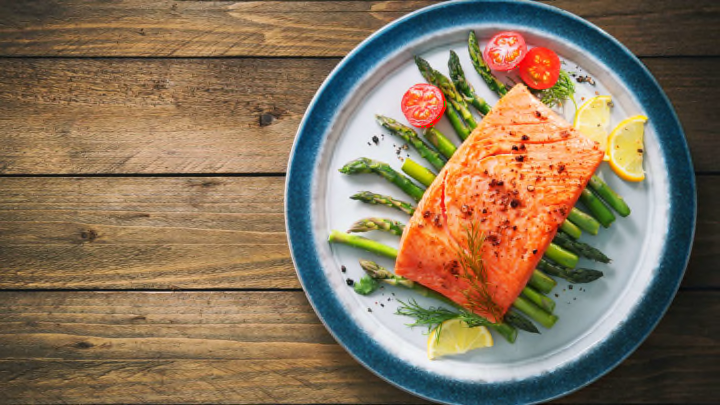
For six Fridays each spring, Catholics observing Lent skip sirloin in favor of fish sticks and swap Big Macs for Filet-O-Fish. Why?
Legend has it that centuries ago a medieval pope with connections to Europe's fishing business banned red meat on Fridays to give his buddies' industry a boost. But that story isn't true. Sunday school teachers have a more theological answer: Jesus fasted for 40 days and died on a Friday. Catholics honor both occasions by making a small sacrifice: avoiding animal flesh one day out of the week. That explanation is dandy for a homily, but it doesn't explain why only red meat and poultry are targeted and seafood is fine.
For centuries, the reason evolved with the fast. In the beginning, some worshippers only ate bread. But by the Middle Ages, they were avoiding meat, eggs, and dairy. By the 13th century, the meat-fish divide was firmly established—and Saint Thomas Aquinas gave a lovely answer explaining why: sex, simplicity, and farts.
In Part II of his Summa Theologica, Aquinas wrote:
"Fasting was instituted by the Church in order to bridle the concupiscences of the flesh, which regard pleasures of touch in connection with food and sex. Wherefore the Church forbade those who fast to partake of those foods which both afford most pleasure to the palate, and besides are a very great incentive to lust. Such are the flesh of animals that take their rest on the earth, and of those that breathe the air and their products."
Put differently, Aquinas thought fellow Catholics should abstain from eating land-locked animals because they were too darn tasty. Lent was a time for simplicity, and he suggested that everyone tone it down. It makes sense. In the 1200s, meat was a luxury. Eating something as decadent as beef was no way to celebrate a holiday centered on modesty. But Aquinas had another reason, too: He believed meat made you horny.
"For, since such like animals are more like man in body, they afford greater pleasure as food, and greater nourishment to the human body, so that from their consumption there results a greater surplus available for seminal matter, which when abundant becomes a great incentive to lust. Hence the Church has bidden those who fast to abstain especially from these foods."
There you have it. You can now blame those impure thoughts on a beef patty. (Aquinas might have had it backwards though. According to the American Dietetic Association, red meat doesn't boost "seminal matter." Men trying to increase their sperm count are generally advised to cut back on meat. However, red meat does improve testosterone levels, so it's give-and-take.)
Aquinas gave a third reason to avoid meat: it won't give you gas. "Those who fast," Aquinas wrote, "are forbidden the use of flesh meat rather than of wine or vegetables, which are flatulent foods." Aquinas argued that "flatulent foods" gave your "vital spirit" a quick pick-me-up. Meat, on the other hand, boosts the body's long-lasting, lustful humors—a religious no-no.
But why isn't fish considered meat?
The reason is foggy. Saint Paul's first letter to the Corinthians, for one, has been used to justify fasting rules. Paul wrote, " … There is one kind of flesh of men, another flesh of beasts, another of fish, and another of birds" (15:39). That distinction was possibly taken from Judaism's own dietary restrictions, which separates fleishig (which includes land-locked mammals and fowl) from pareve (which includes fish). Neither the Torah, Talmud, or New Testament clearly explains the rationale behind the divide.
It's arbitrary, anyway. In the 17th century, the Bishop of Quebec ruled that beavers were fish. In Latin America, it's OK to eat capybara, as the largest living rodent is apparently also a fish on Lenten Fridays. Churchgoers around Detroit can guiltlessly munch on muskrat every Friday. And in 2010, the Archbishop of New Orleans gave alligator the thumbs up when he declared, “Alligator is considered in the fish family."
Thanks to King Henry VIII and Martin Luther, Protestants don't have to worry about their diet. When Henry ruled, fish was one of England's most popular dishes. But when the Church refused to grant the King a divorce, he broke from the Church. Consuming fish became a pro-Catholic political statement. Anglicans and the King's sympathizers made it a point to eat meat on Fridays. Around that same time, Martin Luther declared that fasting was up to the individual, not the Church. Those attitudes hurt England's fishing industry so much that, in 1547, Henry's son King Edward VI—who was just 10 at the time—tried to reinstate the fast to improve the country's fishing economy. Some Anglicans picked the practice back up, but Protestants—who were strongest in Continental Europe—didn't need to take the bait.
Have you got a Big Question you'd like us to answer? If so, let us know by emailing us at bigquestions@mentalfloss.com.
This story has been updated for 2021.