%20%20--%3E%0A%3Csvg%20version%3D%221.1%22%20id%3D%22Layer_1%22%20xmlns%3D%22http%3A%2F%2Fwww.w3.org%2F2000%2Fsvg%22%20xmlns%3Axlink%3D%22http%3A%2F%2Fwww.w3.org%2F1999%2Fxlink%22%20x%3D%220px%22%20y%3D%220px%22%0A%09%20viewBox%3D%220%200%20684.6%2068.1%22%20style%3D%22enable-background%3Anew%200%200%20684.6%2068.1%3B%22%20xml%3Aspace%3D%22preserve%22%3E%0A%3Cg%3E%0A%09%3Cpath%20d%3D%22M444.1%2C29.3h-17.4v14.5h17.4V29.3z%20M36.4%2C68.1l29.3-50.8V0H50.4L32.9%2C36.8L15.5%2C0H0v68.1h16.7V45.8l12.4%2C22.3H36.4z%0A%09%09%20M49.1%2C68.1h16.6V23.4L49.1%2C52.1V68.1z%20M76.6%2C68.1h45V53.8H93.3V41.6h21V27.1h-21V14.8h28.3V0.1h-45V68.1z%20M175.6%2C68.1h17.3v-68%0A%09%09h-16.5v40.3L150%2C0.1h-17.6v68h16.7V27.7L175.6%2C68.1z%20M235.8%2C14.8h15.4V0.1h-47.4v14.7H219v53.2h16.8V14.8z%20M290.3%2C45.9h-17.1%0A%09%09l7.5-15.6h2L290.3%2C45.9z%20M298.7%2C68.1h18l-32.2-68h-5.7l-32%2C68h18l3.3-7.1h27.1L298.7%2C68.1z%20M325.2%2C68.1h46.2V53.8h-29.6V0.1h-16.7%0A%09%09V68.1z%20M423.7%2C14.8h27.2V0.1H407v68h16.7V14.8z%20M462%2C68.1h46.2V53.8h-29.6V0.1H462V68.1z%20M564.8%2C34.1c0%2C10.7-7.2%2C19.2-18.5%2C19.2%0A%09%09c-11.4%2C0-18.5-8.5-18.5-19.2s7.1-19.2%2C18.5-19.2C557.6%2C14.9%2C564.8%2C23.4%2C564.8%2C34.1%20M580.6%2C34.1c0-19-14.2-34-34.3-34%0A%09%09c-20.2%2C0-34.3%2C15-34.3%2C34c0%2C19%2C14.1%2C34%2C34.3%2C34C566.4%2C68.1%2C580.6%2C53.1%2C580.6%2C34.1%20M604.8%2C20.5c0-4.1%2C3.3-6.2%2C6.7-6.2%0A%09%09c4.4%2C0%2C6.6%2C3%2C6.6%2C6.6h14.7C631.8%2C9.1%2C625.1%2C0.1%2C611%2C0.1c-12%2C0-21.7%2C9.3-21.7%2C20.6c0%2C10.9%2C5.9%2C15.9%2C16.7%2C19.8%0A%09%09c5.2%2C1.8%2C11.5%2C3.2%2C11.5%2C8c0%2C3.3-2.4%2C5.5-6.4%2C5.5c-3.6%2C0-6.6-3-6.6-6.7h-15.2c0%2C11.5%2C7.9%2C20.8%2C21.8%2C20.8c12%2C0%2C21.6-9.3%2C21.6-20.6%0A%09%09c0-10-5.3-16.4-16.7-19.8C610.6%2C26.1%2C604.8%2C25.3%2C604.8%2C20.5%20M670%2C20.9h14.7C683.8%2C9.1%2C677.1%2C0.1%2C663%2C0.1c-12%2C0-21.7%2C9.3-21.7%2C20.6%0A%09%09c0%2C10.9%2C5.9%2C15.9%2C16.7%2C19.8c5.2%2C1.8%2C11.5%2C3.2%2C11.5%2C8c0%2C3.3-2.4%2C5.5-6.4%2C5.5c-3.6%2C0-6.6-3-6.6-6.7h-15.2c0%2C11.5%2C7.9%2C20.8%2C21.8%2C20.8%0A%09%09c12%2C0%2C21.6-9.3%2C21.6-20.6c0-10-5.3-16.4-16.7-19.8c-5.4-1.6-11.3-2.4-11.3-7.2c0-4.1%2C3.3-6.2%2C6.7-6.2C667.7%2C14.4%2C670%2C17.3%2C670%2C20.9%0A%09%09%22%2F%3E%0A%3C%2Fg%3E%0A%3C%2Fsvg%3E%0A)

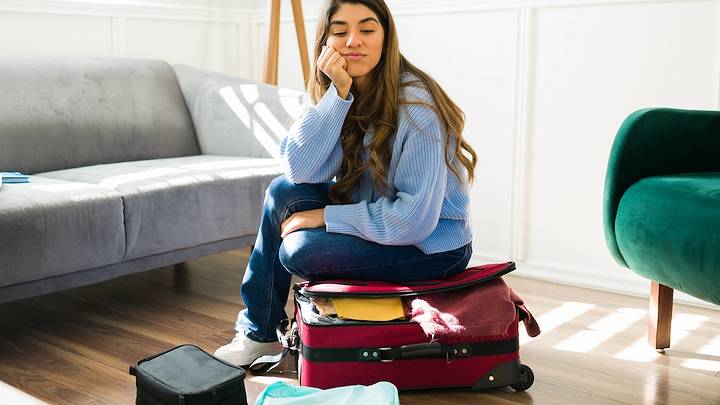
You’re more likely to get struck by lightning than get in a plane crash. And yet, travelers all around the world still jump through hoops—or sit on suitcases, throw water, and wield garlic—to ensure a safe journey.
From your neighbor's front door to the Far East, people stick to age-old travel superstitions in hopes of clear skies, smooth connections, and overall good fortune. Whether it's taking a mindful pause before leaving for the airport or gripping onto a lucky charm, these habits offer a sense of control in a situation where we otherwise have none. For anxious flyers and seasoned travelers alike, a little peace of mind while you're 30,000 feet in the sky is worth a seemingly odd ritual.
Every country has its own travel superstitions: some are rooted in ancient folklore, while others are merely psychological. Here are eight peculiar travel-related superstitions people around the world still practice today.
- Stashing Garlic in Your Suitcase
- "Spitting" Over Your Shoulder
- Sitting on Your Suitcase
- Throwing Water Behind a Traveler
- Avoiding Numbers 4, 13, and 17
- Putting the Broom Down
- Tapping the Plane Before Boarding
- Skipping Friday Flights
Stashing Garlic in Your Suitcase

Garlic isn't just for warding off vampires or making pasta—at least not in the Balkans. Residents in countries like Bosnia and Herzegovina, Greece, and Italy have long believed that sticking a clove of raw garlic in your bag can keep bad travel luck—particularly at border control—at bay. The superstition stems from ancient folk traditions that say the allium protects against negative energy or the "evil eye". So, if you're okay with risking your clothes smelling like an Italian restaurant, consider adding a clove or two to your packing list before your next trip.
"Spitting" Over Your Shoulder
"Protective curse" might sound like an oxymoron, but in Norway, it’s a time-tested way to send a traveler off safely. Similar to the English phrase "break a leg," locals sometimes bid farewell with "Tvi tvi," an onomatopoeia for spitting. The simple sound, as well as the act of spitting three times over your shoulder, is a Scandinavian custom designed to repel malevolent spirits and bad luck. Although it's technically a curse, it's effectively an Uno reverse card for bad karma. Superstition says the spitting sound signals you've already had your share of bad luck, causing evil spirits to look elsewhere.
Sitting on Your Suitcase

For chronic overpackers, sitting on your suitcase before leaving for a trip is already a built-in travel ritual. But Slavic superstition says popping a squat on your luggage does much more than just compress your clothing. The Pagan-born tradition of taking a silent pause before heading out is said to clear bad energy and ward off evil spirits. So next time you find yourself wrestling with an overstuffed bag on departure day, remember you aren't just packing—you're securing a safe journey.
Throwing Water Behind a Traveler
If you’ve ever had the urge to dramatically throw a glass of water at an unruly houseguest upon their departure, consider moving to Serbia. There, as well as across the Balkans and the Middle East, tossing water behind someone as they leave is actually a blessing. Water represents ease and flow, so splashing some on the ground is meant to ensure their trip goes as smoothly as running water. Think of it as the regional equivalent of wishing someone "smooth sailing" before they head for the airport.
Avoiding Numbers 4, 13, and 17

You've probably heard of "angel numbers" like 222 and 1111, but how about their unlucky counterparts? From 13 in the West to four in East Asia, there are numerous digits different cultures steer clear of while traveling. The fear of 13 even has a mouthful of a name—triskaidekaphobia—so it's no surprise that many airlines and hotels forgo row and floor 13 altogether.
As for four, its bad reputation in China, Japan, and Korea stems from how eerily similar it sounds to the word for "death." This fear—known as tetraphobia—causes four to be avoided in East Asia much like 13 is in Western countries. Over in Italy, Friday the 13th isn't the day to watch out for—it's Friday the 17th. In fact, the number 17 is considered so unlucky that some Italian airlines even skip row 17. The superstition goes back to its Roman numeral form (XVII), which can be rearranged to spell VIXI—Latin for "My life is over."
Putting the Broom Down
Planning to tidy up your place post-hosting? You might want to leave the broom in the closet. In Bulgaria, sweeping the house right after someone leaves is believed to "sweep away" their good luck—or worse, their life. It's the perfect excuse to put off all that housework for another day.
Tapping the Plane Before Boarding

Travel anxiety can make you do some weird things, including touching the outside of the plane on your way to 14B. Pay attention next time you're stuck in the jetbridge queue, and you'll notice plenty of people giving the plane's outer shell a pat. Superstition-wise, it's a quick pre-boarding blessing. Psychologically, touching the cold metal just helps ground nervous flyers before giving up total control to the pilots.
Skipping Friday Flights
If you work a standard 40-hour week, Friday night is prime time to kick off a trip. Yet for centuries, European travelers have avoided the Friday departure like the plague. Like many Western superstitions, this bad luck omen is rooted in Christianity, due to Friday being the day Jesus was crucified.
Maritime tradition has also led sailors to stick to dry land on Fridays, with the King of Poland famously refusing to set sail on Mondays and Fridays in 1533. The superstition eventually evolved into skipping Friday flights, which might have something to do with why it can be one of the surprisingly cheapest days of the week to fly. So, if a good deal is enough to quell your fears, booking that Friday ticket might just be the luckiest move you make.