%20%20--%3E%0A%3Csvg%20version%3D%221.1%22%20id%3D%22Layer_1%22%20xmlns%3D%22http%3A%2F%2Fwww.w3.org%2F2000%2Fsvg%22%20xmlns%3Axlink%3D%22http%3A%2F%2Fwww.w3.org%2F1999%2Fxlink%22%20x%3D%220px%22%20y%3D%220px%22%0A%09%20viewBox%3D%220%200%20684.6%2068.1%22%20style%3D%22enable-background%3Anew%200%200%20684.6%2068.1%3B%22%20xml%3Aspace%3D%22preserve%22%3E%0A%3Cg%3E%0A%09%3Cpath%20d%3D%22M444.1%2C29.3h-17.4v14.5h17.4V29.3z%20M36.4%2C68.1l29.3-50.8V0H50.4L32.9%2C36.8L15.5%2C0H0v68.1h16.7V45.8l12.4%2C22.3H36.4z%0A%09%09%20M49.1%2C68.1h16.6V23.4L49.1%2C52.1V68.1z%20M76.6%2C68.1h45V53.8H93.3V41.6h21V27.1h-21V14.8h28.3V0.1h-45V68.1z%20M175.6%2C68.1h17.3v-68%0A%09%09h-16.5v40.3L150%2C0.1h-17.6v68h16.7V27.7L175.6%2C68.1z%20M235.8%2C14.8h15.4V0.1h-47.4v14.7H219v53.2h16.8V14.8z%20M290.3%2C45.9h-17.1%0A%09%09l7.5-15.6h2L290.3%2C45.9z%20M298.7%2C68.1h18l-32.2-68h-5.7l-32%2C68h18l3.3-7.1h27.1L298.7%2C68.1z%20M325.2%2C68.1h46.2V53.8h-29.6V0.1h-16.7%0A%09%09V68.1z%20M423.7%2C14.8h27.2V0.1H407v68h16.7V14.8z%20M462%2C68.1h46.2V53.8h-29.6V0.1H462V68.1z%20M564.8%2C34.1c0%2C10.7-7.2%2C19.2-18.5%2C19.2%0A%09%09c-11.4%2C0-18.5-8.5-18.5-19.2s7.1-19.2%2C18.5-19.2C557.6%2C14.9%2C564.8%2C23.4%2C564.8%2C34.1%20M580.6%2C34.1c0-19-14.2-34-34.3-34%0A%09%09c-20.2%2C0-34.3%2C15-34.3%2C34c0%2C19%2C14.1%2C34%2C34.3%2C34C566.4%2C68.1%2C580.6%2C53.1%2C580.6%2C34.1%20M604.8%2C20.5c0-4.1%2C3.3-6.2%2C6.7-6.2%0A%09%09c4.4%2C0%2C6.6%2C3%2C6.6%2C6.6h14.7C631.8%2C9.1%2C625.1%2C0.1%2C611%2C0.1c-12%2C0-21.7%2C9.3-21.7%2C20.6c0%2C10.9%2C5.9%2C15.9%2C16.7%2C19.8%0A%09%09c5.2%2C1.8%2C11.5%2C3.2%2C11.5%2C8c0%2C3.3-2.4%2C5.5-6.4%2C5.5c-3.6%2C0-6.6-3-6.6-6.7h-15.2c0%2C11.5%2C7.9%2C20.8%2C21.8%2C20.8c12%2C0%2C21.6-9.3%2C21.6-20.6%0A%09%09c0-10-5.3-16.4-16.7-19.8C610.6%2C26.1%2C604.8%2C25.3%2C604.8%2C20.5%20M670%2C20.9h14.7C683.8%2C9.1%2C677.1%2C0.1%2C663%2C0.1c-12%2C0-21.7%2C9.3-21.7%2C20.6%0A%09%09c0%2C10.9%2C5.9%2C15.9%2C16.7%2C19.8c5.2%2C1.8%2C11.5%2C3.2%2C11.5%2C8c0%2C3.3-2.4%2C5.5-6.4%2C5.5c-3.6%2C0-6.6-3-6.6-6.7h-15.2c0%2C11.5%2C7.9%2C20.8%2C21.8%2C20.8%0A%09%09c12%2C0%2C21.6-9.3%2C21.6-20.6c0-10-5.3-16.4-16.7-19.8c-5.4-1.6-11.3-2.4-11.3-7.2c0-4.1%2C3.3-6.2%2C6.7-6.2C667.7%2C14.4%2C670%2C17.3%2C670%2C20.9%0A%09%09%22%2F%3E%0A%3C%2Fg%3E%0A%3C%2Fsvg%3E%0A)

The 1980s were probably the goriest decade in the history of horror. Studios were throwing money at slashers (which was understandable given their success), while indie filmmakers were experimenting with body horror and gore, and great practical effects artists became more important than ever.
You can really feel that when you go back and watch these movies now. Everything looks and feels real and tangible. Low budgets also often pushed filmmakers into getting creative, and even the bigger studio horror films from this decade still had a handmade quality to them.
And body horror absolutely exploded during this time. David Cronenberg alone had a big impact on the genre, and horror during this time wasn’t subtle very often, which was part of the appeal. So here are the highlights of ‘80s horror.
- The Shining (1980)
- The Evil Dead (1981)
- The Thing (1982)
- Videodrome (1983)
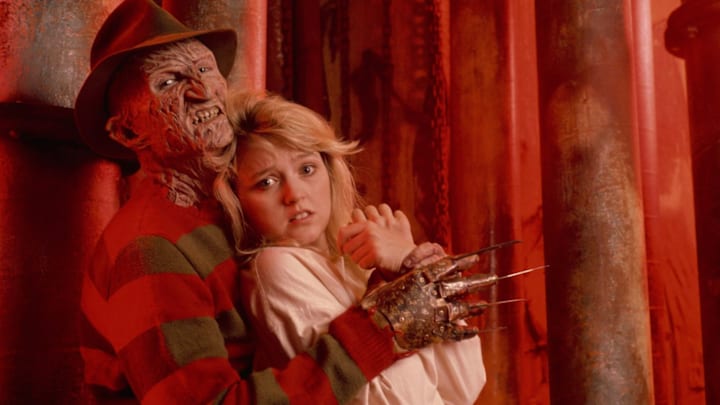
- A Nightmare on Elm Street (1984)
- Return of the Living Dead (1985)
- The Fly (1986)
- Hellraiser (1987)
- They Live (1988)
- Tetsuo: The Iron Man (1989)
The Shining (1980)
From the second the Torrance family arrives at the Overlook Hotel in The Shining, something feels off even before anything actually scary happens. The hotel is too large, too empty, and too brightly lit. Huge sections of the movie are lit like a normal daytime drama, which somehow makes it more unsettling.
The layout of the hotel doesn’t make much sense either. Rooms seem to connect impossibly, and windows appear where they shouldn’t exist. The performances by both Shelley Duvall and Jack Nicholson are stellar, but what really lingers is the atmosphere around them.
The Evil Dead (1981)
While making The Evil Dead, Sam Raimi and his friends were pretty much just young filmmakers figuring things out as they went. They threw together effects with almost no money and somehow created one of the most fun horror movies of the decade.
The camera work is probably the first thing people notice here. Half the movie feels like the camera itself is possessed. Bruce Campbell also gets absolutely tortured in this thing. Ash isn’t really the confident, chainsaw-wielding hero yet. Here, he’s scared and covered in blood for most of the runtime, and constantly watches his friends turn into monsters.
The Thing (1982)
Nobody trusts anybody in The Thing, and the unending paranoia carries the entire movie. The story follows a group of researchers isolated in Antarctica who discover an alien organism that can perfectly imitate people. That’s a scary enough premise already, but what makes the film great is how quickly everyone starts looking at each other differently afterward. Even calm scenes feel intense because someone in the room might not actually be human anymore.
Meanwhile, the practical effects and creature work are still disgusting in ways modern CGI seldom manages to achieve. Ennio Morricone’s score is surprisingly minimal, too. Musically, a lot of scenes happen in silence except for that slow theme quietly building dread underneath.
Videodrome (1983)
Videodrome feels as much like watching a movie as it does like having a weird nightmare about television.
James Woods plays Max Renn, a cable TV programmer who comes across a broadcast filled with torture and violence. The deeper he gets into it, the more reality itself starts breaking apart around him.
David Cronenberg made this at a time when people were already worrying about television corrupting culture, but the movie ended up predicting modern media addiction decades early. Things like endless entertainment consumption, people becoming numb to disturbing content, and technology reshaping human behavior all feel as relevant now as they did in 1983.
And then there's Cronenberg’s signature body horror elements. Nobody did flesh-and-machine imagery quite like him.
A Nightmare on Elm Street (1984)
Before Freddy Krueger, most slasher villains were pretty much silent, like Michael Myers or Jason Voorhees. But Freddy Krueger talked. A lot.
The movie understands that dreams are already naturally unsettling because normal logic doesn’t exist within them. So instead of building horror around realism, A Nightmare on Elm Street leans fully into the stuff of nightmares.
Robert Englund also deserves credit for making Freddy memorable without turning him into pure comedy, yet (if you ignore the many sequels). He’s sarcastic and theatrical, sure, but still genuinely creepy in this first movie.
The concept itself is brilliant, too. Sleep becomes dangerous. Everyone has to sleep eventually, so there’s no real escape.
Return of the Living Dead (1985)
Most zombie movies before Return of the Living Dead treated the zombies as slow and shambling corpses that could barely fight back or do anything clever. This movie looked at that idea and went—what if they were smarter and way more annoying?
The zombies here run, talk, use tools, and call for help on radios. This big change permanently left a mark on zombie culture afterward. The tone is what really makes the movie special, though. It’s horror-comedy, but not in a family-friendly way.
And then there's the fact that the zombies are genuinely disturbing. Shooting them in the head doesn’t work, and chopping them apart barely helps because the body parts still move around independently.
The Fly (1986)
The Fly is another great body horror movie directed by David Cronenberg. In this one, Jeff Goldblum plays Seth Brundle, a brilliant but awkward scientist who accidentally merges his DNA with a fly during a teleportation experiment. At first, the transformation almost seems positive, since he becomes stronger and more confident.
Then things start getting bad as his teeth fall out and his skin changes. His body slowly stops belonging to him. And because Goldblum plays Brundle with so much humanity, the movie becomes genuinely sad. That’s the key difference between this and a lot of other creature horror movies from the time.
Hellraiser (1987)
A lot of ‘80s horror villains chased people with knives or other sharp weapons, but Hellraiser feels completely different in this genre. The highlight of the movie—The Cenobites—aren’t really slasher villains or monsters in the normal sense. They’re more like horrifying priests from another dimension.
Pinhead became an icon from this series, obviously, but he’s actually used pretty sparingly in the first film. The real horror mostly comes from Julia and Frank, two awful people dragging each other deeper into obsession and murder. The atmosphere also feels very different from most American horror of the decade with its gothic vibes.
They Live (1988)
John Carpenter casting a professional wrestler (Roddy Piper) as the lead in They Live was a smart move in hindsight. Piper doesn’t feel polished or traditionally heroic; instead, he feels like an actual working-class person dropped into an insane situation.
And that situation is pretty interesting. In the movie, special sunglasses reveal that aliens secretly control society through advertising, media, and consumer culture. Television broadcasts hide subliminal commands, and the rich elites are literally inhuman parasites. The movie is not subtle here at all, which is part of the fun.
Tetsuo: The Iron Man (1989)
Tetsuo: The Iron Man is far from a normal movie. The plot follows a man who begins transforming into metal in increasingly grotesque ways while reality around him completely unravels.
Shinya Tsukamoto directed it, produced it, edited it, co-wrote it, and even acted in it, which explains why the movie feels so personal and chaotic. The editing is probably the biggest thing viewers will remember. There are plenty of rapid-fire cuts, scenes slam into each other, and the whole film can feel unnerving at times. Combined with the harsh industrial soundtrack, it becomes overwhelming in places.
And visually, it’s filthy in the best way possible. The low-budget 16mm look helps give everything this rough underground texture.