%20%20--%3E%0A%3Csvg%20version%3D%221.1%22%20id%3D%22Layer_1%22%20xmlns%3D%22http%3A%2F%2Fwww.w3.org%2F2000%2Fsvg%22%20xmlns%3Axlink%3D%22http%3A%2F%2Fwww.w3.org%2F1999%2Fxlink%22%20x%3D%220px%22%20y%3D%220px%22%0A%09%20viewBox%3D%220%200%20684.6%2068.1%22%20style%3D%22enable-background%3Anew%200%200%20684.6%2068.1%3B%22%20xml%3Aspace%3D%22preserve%22%3E%0A%3Cg%3E%0A%09%3Cpath%20d%3D%22M444.1%2C29.3h-17.4v14.5h17.4V29.3z%20M36.4%2C68.1l29.3-50.8V0H50.4L32.9%2C36.8L15.5%2C0H0v68.1h16.7V45.8l12.4%2C22.3H36.4z%0A%09%09%20M49.1%2C68.1h16.6V23.4L49.1%2C52.1V68.1z%20M76.6%2C68.1h45V53.8H93.3V41.6h21V27.1h-21V14.8h28.3V0.1h-45V68.1z%20M175.6%2C68.1h17.3v-68%0A%09%09h-16.5v40.3L150%2C0.1h-17.6v68h16.7V27.7L175.6%2C68.1z%20M235.8%2C14.8h15.4V0.1h-47.4v14.7H219v53.2h16.8V14.8z%20M290.3%2C45.9h-17.1%0A%09%09l7.5-15.6h2L290.3%2C45.9z%20M298.7%2C68.1h18l-32.2-68h-5.7l-32%2C68h18l3.3-7.1h27.1L298.7%2C68.1z%20M325.2%2C68.1h46.2V53.8h-29.6V0.1h-16.7%0A%09%09V68.1z%20M423.7%2C14.8h27.2V0.1H407v68h16.7V14.8z%20M462%2C68.1h46.2V53.8h-29.6V0.1H462V68.1z%20M564.8%2C34.1c0%2C10.7-7.2%2C19.2-18.5%2C19.2%0A%09%09c-11.4%2C0-18.5-8.5-18.5-19.2s7.1-19.2%2C18.5-19.2C557.6%2C14.9%2C564.8%2C23.4%2C564.8%2C34.1%20M580.6%2C34.1c0-19-14.2-34-34.3-34%0A%09%09c-20.2%2C0-34.3%2C15-34.3%2C34c0%2C19%2C14.1%2C34%2C34.3%2C34C566.4%2C68.1%2C580.6%2C53.1%2C580.6%2C34.1%20M604.8%2C20.5c0-4.1%2C3.3-6.2%2C6.7-6.2%0A%09%09c4.4%2C0%2C6.6%2C3%2C6.6%2C6.6h14.7C631.8%2C9.1%2C625.1%2C0.1%2C611%2C0.1c-12%2C0-21.7%2C9.3-21.7%2C20.6c0%2C10.9%2C5.9%2C15.9%2C16.7%2C19.8%0A%09%09c5.2%2C1.8%2C11.5%2C3.2%2C11.5%2C8c0%2C3.3-2.4%2C5.5-6.4%2C5.5c-3.6%2C0-6.6-3-6.6-6.7h-15.2c0%2C11.5%2C7.9%2C20.8%2C21.8%2C20.8c12%2C0%2C21.6-9.3%2C21.6-20.6%0A%09%09c0-10-5.3-16.4-16.7-19.8C610.6%2C26.1%2C604.8%2C25.3%2C604.8%2C20.5%20M670%2C20.9h14.7C683.8%2C9.1%2C677.1%2C0.1%2C663%2C0.1c-12%2C0-21.7%2C9.3-21.7%2C20.6%0A%09%09c0%2C10.9%2C5.9%2C15.9%2C16.7%2C19.8c5.2%2C1.8%2C11.5%2C3.2%2C11.5%2C8c0%2C3.3-2.4%2C5.5-6.4%2C5.5c-3.6%2C0-6.6-3-6.6-6.7h-15.2c0%2C11.5%2C7.9%2C20.8%2C21.8%2C20.8%0A%09%09c12%2C0%2C21.6-9.3%2C21.6-20.6c0-10-5.3-16.4-16.7-19.8c-5.4-1.6-11.3-2.4-11.3-7.2c0-4.1%2C3.3-6.2%2C6.7-6.2C667.7%2C14.4%2C670%2C17.3%2C670%2C20.9%0A%09%09%22%2F%3E%0A%3C%2Fg%3E%0A%3C%2Fsvg%3E%0A)

When you think about the science-fiction genre, unchecked human ambition and “what-if” scenarios usually play a role. Way back in 1927, Fritz Lang’s Metropolis made an everlasting name for itself in sci-fi cinema history with its futuristic setting and the class-war dystopia at the center of it, one that still leads to conversations almost a century later.
Flash forward a few decades, and classics like Alien, 2001: A Space Odyssey, and Blade Runner (just to name a few) explored many different aspects of this genre and showed just how ambitious it can be. Then came the 2010s—a decade where technological leaps in filmmaking, CGI, cinematography, and narrative ambition have allowed directors to greatly stretch the complexity of both their stories and their characters.
This list highlights the standout sci-fi flick from each year of the last decade, and each one fully delivered on its bold ideas and high-level concepts.
Inception (2010)
· Runner Up - Monsters
Christopher Nolan’s Inception is a heist movie built entirely inside the folds of the subconscious. Dom Cobb (Leonardo DiCaprio) gets one last chance at redemption by implanting an idea in someone's mind through a dream instead of stealing one, and the result is a maze of nested realities and storytelling.
Nolan’s direction here blends sharp focus with some pretty head-scrambling creativity. While Nolan's earlier film, The Prestige, had some sci-fi elements, Inception was a full-on embrace of the genre. The best thing about the movie is not just its intricate puzzle-box plot, but also how it grounds its high-concept sci-fi ideas in Cobb’s personal emotional journey.
X-Men: First Class (2011)
· Runner Up - Super 8
On the surface, X-Men: First Class might look like another well-done comic book movie, but it’s also a really thoughtful period piece about mutant identity. Set against the backdrop of the Cold War, James McAvoy’s Charles Xavier and Michael Fassbender’s Erik Lehnsherr start as friends before certain events push them to opposite ideological sides. The movie can also be construed as a coming-of-age story for these two characters.
Instead of one-note antagonists, the movie invests in a decent bit of nuance. And the film’s ’60s flair, combined with a few period set pieces, gives it a good amount of depth and uniqueness not seen as much in most superhero films before (or since).
Cloud Atlas (2012)
· Runner Up - Looper
Imagine a movie that hops between six interwoven stories set in vastly different time periods, ranging from two hundred years in the past up to three hundred years in the future—and it not only keeps them concise, but also makes each of them resonate emotionally.
That’s Cloud Atlas, an ambitious and sprawling adaptation of David Mitchell’s novel directed by Lana and Lilly Wachowski and Tom Tykwer.
What sets this apart is how actors like Tom Hanks, Hugo Weaving, Ben Whishaw, and Halle Berry play multiple characters across time periods, sometimes even of different genders and ethnicities. In most films, that could feel gimmicky, but here it works thanks to its outstanding makeup and costume team. You won’t even recognize some of these actors when they play different characters on the first watch.
Snowpiercer (2013)
· Runner Up - Gravity
Bong Joon Ho’s first English-language feature, Snowpiercer, takes place on a confined and endlessly moving train, which is humanity's last refuge after Earth has frozen over after a climate experiment gone wrong. Every car holds a layer of society, and the claustrophobic nature of the storytelling makes it very thrilling to watch.
Here, Chris Evans leads a revolt that takes him from the grimy tail cars and the end to the main engine at the front, where the rich and privileged live. The train is a microcosm of real-world inequality, and the struggle between the various compartments resonates greatly. The set design for each car is very distinct, too.
Interstellar (2014)
· Runner Up - Predestination
Christopher Nolan doubled down on sci-fi in 2014 with Interstellar, a space epic that’s very much the grandest of its genre in scope. While many space movies would rush to get their characters off-planet, the movie spends the first third of the film on a dying Earth, setting up both the big stakes and the personal relationships of its characters.
Importantly, we get to know Cooper (Matthew McConaughey) and his deep bond with his daughter. This is crucial because when Cooper finally leaves on his desperate mission to find a new home for humanity, we are as invested as we can possibly be.
Mad Max: Fury Road (2015)
· Runner Up - Ex Machina
With Mad Max: Fury Road, George Miller returned to the franchise he created thirty years earlier. The earlier Mad Max films are cult classics, but in comparison to Fury Road, they can feel like brilliantly executed concepts of what Mad Max can actually be like.
Fury Road (and later, Furiosa) is the fully realized version of that concept. A relentless two-hour chase with barely a word of dialogue wasted, it tells its story almost entirely through intense action and stunning visuals.
Arrival (2016)
· Runner Up - 10 Cloverfield Lane
Denis Villeneuve’s Arrival doesn’t give you aliens to fear, but rather aliens to understand. Here, linguist Louise Banks (played by Amy Adams) is recruited to communicate with extraterrestrials whose language literally reshapes thought.
As Louise works with the seven-limbed "Heptapods" inside their ship and tries to decode their non-linear written language of "logograms," she discovers that their language actually changes how she experiences time. The direction is very patient without ever feeling slow or boring. Arrival subverts everyone’s expectations, as this is an alien movie that has empathy as a big theme.
Blade Runner 2049 (2017)
· Runner Up - Okja
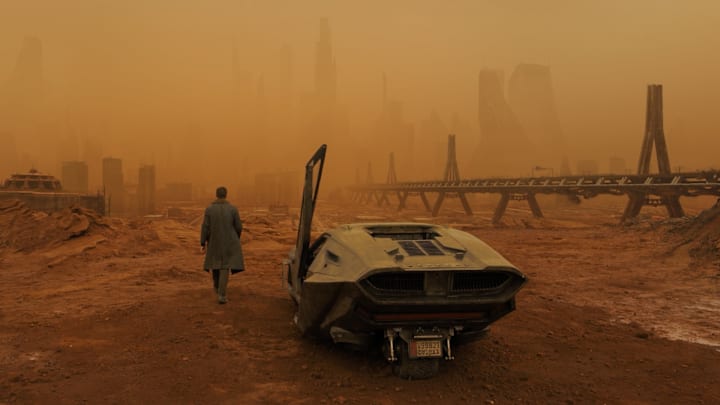
The idea of a sequel to Blade Runner (1982) was met with almost universal skepticism. The original film is such a big part of sci-fi cinema, and is particularly famous for its moody and noir-drenched depiction of a future Los Angeles. How could anything possibly recapture that magic? Against all odds, Denis Villeneuve delivered a sequel that is just as good as the original, and even better in more than a few ways.
It respects the first film's themes and aesthetic while expanding its world and asking new and equally profound questions. Roger Deakins’ cinematography here is jaw-dropping, with each shot composing light and shadow in absolutely stunning ways.
Sorry to Bother You (2018)
· Runner Up - Upgrade
Sorry to Bother You feels like an offbeat social satire at first, but then it escalates into a surreal science-fiction critique of capitalism and race. The film’s increasing absurdity is genuinely funny, with some bizarre storytelling moments you can’t help but feel impressed by.
This movie is the directorial debut of Boots Riley, of the political hip-hop group The Coup. It juggles many different genres across its subplots, even adding a bit of body horror at the end.
Ad Astra (2019)
· Runner Up - High Life
Toward the end of the decade, Ad Astra arrived in theaters almost quietly (and remained under the radar), but that quiet nature is deliberate. Here, James Gray’s slow-burning space drama uses the vacuum of space to reflect emotional distance and longing. In the movie, Brad Pitt plays Roy McBride, who’s an astronaut traversing the solar system in search of his father.
This movie is very different from your usual space sci-fi flick. It’s more contemplative and lonely, with gorgeous visuals that make space feel isolating but also very beautiful. The production values are top-tier, and so is the sound design.