%20%20--%3E%0A%3Csvg%20version%3D%221.1%22%20id%3D%22Layer_1%22%20xmlns%3D%22http%3A%2F%2Fwww.w3.org%2F2000%2Fsvg%22%20xmlns%3Axlink%3D%22http%3A%2F%2Fwww.w3.org%2F1999%2Fxlink%22%20x%3D%220px%22%20y%3D%220px%22%0A%09%20viewBox%3D%220%200%20684.6%2068.1%22%20style%3D%22enable-background%3Anew%200%200%20684.6%2068.1%3B%22%20xml%3Aspace%3D%22preserve%22%3E%0A%3Cg%3E%0A%09%3Cpath%20d%3D%22M444.1%2C29.3h-17.4v14.5h17.4V29.3z%20M36.4%2C68.1l29.3-50.8V0H50.4L32.9%2C36.8L15.5%2C0H0v68.1h16.7V45.8l12.4%2C22.3H36.4z%0A%09%09%20M49.1%2C68.1h16.6V23.4L49.1%2C52.1V68.1z%20M76.6%2C68.1h45V53.8H93.3V41.6h21V27.1h-21V14.8h28.3V0.1h-45V68.1z%20M175.6%2C68.1h17.3v-68%0A%09%09h-16.5v40.3L150%2C0.1h-17.6v68h16.7V27.7L175.6%2C68.1z%20M235.8%2C14.8h15.4V0.1h-47.4v14.7H219v53.2h16.8V14.8z%20M290.3%2C45.9h-17.1%0A%09%09l7.5-15.6h2L290.3%2C45.9z%20M298.7%2C68.1h18l-32.2-68h-5.7l-32%2C68h18l3.3-7.1h27.1L298.7%2C68.1z%20M325.2%2C68.1h46.2V53.8h-29.6V0.1h-16.7%0A%09%09V68.1z%20M423.7%2C14.8h27.2V0.1H407v68h16.7V14.8z%20M462%2C68.1h46.2V53.8h-29.6V0.1H462V68.1z%20M564.8%2C34.1c0%2C10.7-7.2%2C19.2-18.5%2C19.2%0A%09%09c-11.4%2C0-18.5-8.5-18.5-19.2s7.1-19.2%2C18.5-19.2C557.6%2C14.9%2C564.8%2C23.4%2C564.8%2C34.1%20M580.6%2C34.1c0-19-14.2-34-34.3-34%0A%09%09c-20.2%2C0-34.3%2C15-34.3%2C34c0%2C19%2C14.1%2C34%2C34.3%2C34C566.4%2C68.1%2C580.6%2C53.1%2C580.6%2C34.1%20M604.8%2C20.5c0-4.1%2C3.3-6.2%2C6.7-6.2%0A%09%09c4.4%2C0%2C6.6%2C3%2C6.6%2C6.6h14.7C631.8%2C9.1%2C625.1%2C0.1%2C611%2C0.1c-12%2C0-21.7%2C9.3-21.7%2C20.6c0%2C10.9%2C5.9%2C15.9%2C16.7%2C19.8%0A%09%09c5.2%2C1.8%2C11.5%2C3.2%2C11.5%2C8c0%2C3.3-2.4%2C5.5-6.4%2C5.5c-3.6%2C0-6.6-3-6.6-6.7h-15.2c0%2C11.5%2C7.9%2C20.8%2C21.8%2C20.8c12%2C0%2C21.6-9.3%2C21.6-20.6%0A%09%09c0-10-5.3-16.4-16.7-19.8C610.6%2C26.1%2C604.8%2C25.3%2C604.8%2C20.5%20M670%2C20.9h14.7C683.8%2C9.1%2C677.1%2C0.1%2C663%2C0.1c-12%2C0-21.7%2C9.3-21.7%2C20.6%0A%09%09c0%2C10.9%2C5.9%2C15.9%2C16.7%2C19.8c5.2%2C1.8%2C11.5%2C3.2%2C11.5%2C8c0%2C3.3-2.4%2C5.5-6.4%2C5.5c-3.6%2C0-6.6-3-6.6-6.7h-15.2c0%2C11.5%2C7.9%2C20.8%2C21.8%2C20.8%0A%09%09c12%2C0%2C21.6-9.3%2C21.6-20.6c0-10-5.3-16.4-16.7-19.8c-5.4-1.6-11.3-2.4-11.3-7.2c0-4.1%2C3.3-6.2%2C6.7-6.2C667.7%2C14.4%2C670%2C17.3%2C670%2C20.9%0A%09%09%22%2F%3E%0A%3C%2Fg%3E%0A%3C%2Fsvg%3E%0A)

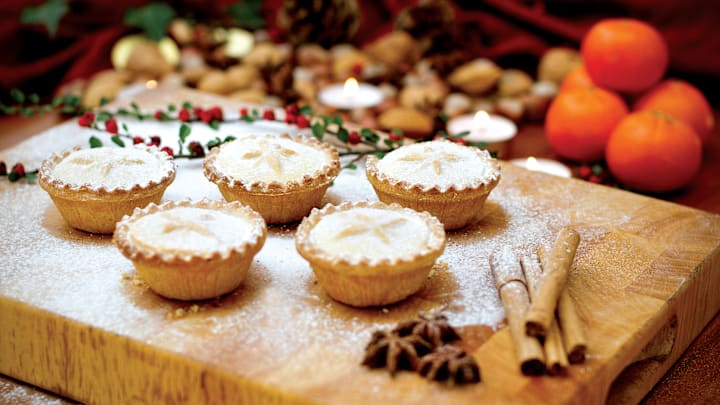
The holidays in the United Kingdom mean unique flavors in dishes you might not find on your table in the United States. Take, for example, the mincemeat pie, which—in case you weren’t sure—does not actually always have meat in it. The semi-confusing name doesn’t stop the British from making sure it’s added to their Christmas table. In fact, Brits buy around 370 million mincemeat pies each December.
This delicacy has been around for much longer than you might expect.
Where Mincemeat Pie Came From

The small pastries have a rich history from their origins to the tables of millions of Brits for the holiday season.
The first mince pies showed up in the 11th century as Crusaders were returning from the Holy Land with spices they picked up on their travels. These spices included cinnamon, cloves, and nutmeg that would be mixed with dried fruit and suet, which is a form of animal fat.
A few centuries later, during the Tudor period that included King Henry VIII and his daughter Elizabeth I, these mince pies began to take on festive holiday symbolism that would turn them into a holiday mainstay.
The pies were rectangular in shape to look like the manger that the baby Jesus was in when he was born. The pies themselves would be made of 13 ingredients to represent Jesus and the 12 apostles. The ingredients were also symbolic, with food like lamb representing the Shepards and three spices representing the Wise Men. It wouldn’t be until later that the pies would become round in shape.
The Evolution of the Holiday Dish

Not everyone was fond of mince pies over the centuries, with Oliver Cromwell’s Puritan Council banning the celebration of Christmas in the 1650s because he viewed it as a pagan holiday. Cooking Christmas foods, including mincemeat pies, was not allowed. The plan was also adopted by residents of the American British Colonies, which banned mincemeat pies and other Christmas traditions in the mid-to-late 1600s.
But the mince pie made a resurgence in England in the 1840s thanks to a recipe by Eliza Acton, with two versions for the pastry: one with meat and one without it. The latter version is the one many Brits are now familiar with.
So what’s in a mincemeat pie? Today, the pies have largely lost their connection to meat, with most relying now on dried fruits like apples, spices, and alcohol like brandy, rum, or whiskey in the small pastry pie to give it a special holiday flavor. Even animal-based suet has been pushed aside, with vegetarian options becoming a mainstay for mince pies in the past decade or so.
You May Also Like:
Add Mental Floss as a preferred news source!