%20%20--%3E%0A%3Csvg%20version%3D%221.1%22%20id%3D%22Layer_1%22%20xmlns%3D%22http%3A%2F%2Fwww.w3.org%2F2000%2Fsvg%22%20xmlns%3Axlink%3D%22http%3A%2F%2Fwww.w3.org%2F1999%2Fxlink%22%20x%3D%220px%22%20y%3D%220px%22%0A%09%20viewBox%3D%220%200%20684.6%2068.1%22%20style%3D%22enable-background%3Anew%200%200%20684.6%2068.1%3B%22%20xml%3Aspace%3D%22preserve%22%3E%0A%3Cg%3E%0A%09%3Cpath%20d%3D%22M444.1%2C29.3h-17.4v14.5h17.4V29.3z%20M36.4%2C68.1l29.3-50.8V0H50.4L32.9%2C36.8L15.5%2C0H0v68.1h16.7V45.8l12.4%2C22.3H36.4z%0A%09%09%20M49.1%2C68.1h16.6V23.4L49.1%2C52.1V68.1z%20M76.6%2C68.1h45V53.8H93.3V41.6h21V27.1h-21V14.8h28.3V0.1h-45V68.1z%20M175.6%2C68.1h17.3v-68%0A%09%09h-16.5v40.3L150%2C0.1h-17.6v68h16.7V27.7L175.6%2C68.1z%20M235.8%2C14.8h15.4V0.1h-47.4v14.7H219v53.2h16.8V14.8z%20M290.3%2C45.9h-17.1%0A%09%09l7.5-15.6h2L290.3%2C45.9z%20M298.7%2C68.1h18l-32.2-68h-5.7l-32%2C68h18l3.3-7.1h27.1L298.7%2C68.1z%20M325.2%2C68.1h46.2V53.8h-29.6V0.1h-16.7%0A%09%09V68.1z%20M423.7%2C14.8h27.2V0.1H407v68h16.7V14.8z%20M462%2C68.1h46.2V53.8h-29.6V0.1H462V68.1z%20M564.8%2C34.1c0%2C10.7-7.2%2C19.2-18.5%2C19.2%0A%09%09c-11.4%2C0-18.5-8.5-18.5-19.2s7.1-19.2%2C18.5-19.2C557.6%2C14.9%2C564.8%2C23.4%2C564.8%2C34.1%20M580.6%2C34.1c0-19-14.2-34-34.3-34%0A%09%09c-20.2%2C0-34.3%2C15-34.3%2C34c0%2C19%2C14.1%2C34%2C34.3%2C34C566.4%2C68.1%2C580.6%2C53.1%2C580.6%2C34.1%20M604.8%2C20.5c0-4.1%2C3.3-6.2%2C6.7-6.2%0A%09%09c4.4%2C0%2C6.6%2C3%2C6.6%2C6.6h14.7C631.8%2C9.1%2C625.1%2C0.1%2C611%2C0.1c-12%2C0-21.7%2C9.3-21.7%2C20.6c0%2C10.9%2C5.9%2C15.9%2C16.7%2C19.8%0A%09%09c5.2%2C1.8%2C11.5%2C3.2%2C11.5%2C8c0%2C3.3-2.4%2C5.5-6.4%2C5.5c-3.6%2C0-6.6-3-6.6-6.7h-15.2c0%2C11.5%2C7.9%2C20.8%2C21.8%2C20.8c12%2C0%2C21.6-9.3%2C21.6-20.6%0A%09%09c0-10-5.3-16.4-16.7-19.8C610.6%2C26.1%2C604.8%2C25.3%2C604.8%2C20.5%20M670%2C20.9h14.7C683.8%2C9.1%2C677.1%2C0.1%2C663%2C0.1c-12%2C0-21.7%2C9.3-21.7%2C20.6%0A%09%09c0%2C10.9%2C5.9%2C15.9%2C16.7%2C19.8c5.2%2C1.8%2C11.5%2C3.2%2C11.5%2C8c0%2C3.3-2.4%2C5.5-6.4%2C5.5c-3.6%2C0-6.6-3-6.6-6.7h-15.2c0%2C11.5%2C7.9%2C20.8%2C21.8%2C20.8%0A%09%09c12%2C0%2C21.6-9.3%2C21.6-20.6c0-10-5.3-16.4-16.7-19.8c-5.4-1.6-11.3-2.4-11.3-7.2c0-4.1%2C3.3-6.2%2C6.7-6.2C667.7%2C14.4%2C670%2C17.3%2C670%2C20.9%0A%09%09%22%2F%3E%0A%3C%2Fg%3E%0A%3C%2Fsvg%3E%0A)

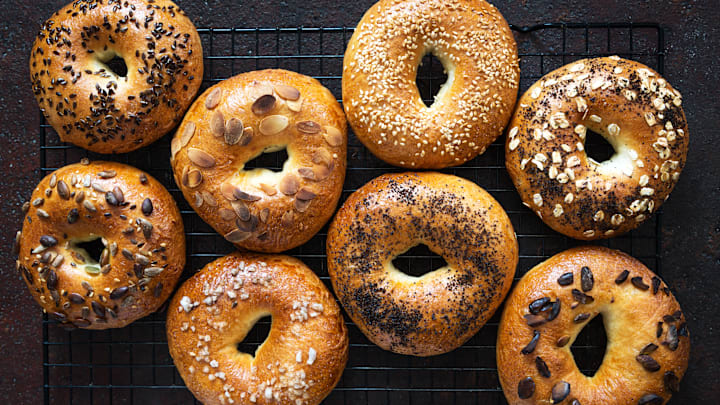
The toughest bagel question might seem like what cream cheese to choose, but there’s a bigger mystery baked right in: Why the hole? It can feel like wasted real estate; prime carb territory that could easily hold more dough—or at least stop your toppings from falling through.
As it turns out, that empty center isn’t an accident, and it’s not just a stylistic flourish. The bagel hole has been linked to medieval monarchs, religious restrictions, and some surprisingly practical kitchen science. In other words, there’s a lot more to that little circle than meets the eye.
History of the Hole
Marie Antoinette may not have actually said “Let them eat cake,” but Queen Jadwiga, a powerful Polish monarch, might well have said something like “Let them eat bagels.” Jadwiga, whose reign shifted the balance of power in 14th-century Europe, is credited with popularizing obwarzanek—a traditional Polish ring-shaped bread and the precursor to today’s bagel. The story goes that she chose this simple bread over decadent pastries during Lent, and her people followed suit.
Another possible origin story takes place in 17th-century Poland, but with different key players. The country was a cultural melting pot, and Jewish immigrants faced restrictions, including bans on making bread, a holy Christian food. Once legally allowed to bake again, Jewish bakers had to find a way to distinguish their loaves from Christian bread. Their solution? Boil the dough and put a hole in the middle.
Some historians link the bagel’s name to this tradition, tracing it to the Yiddish word beigen, meaning “to bend.” The distinctive round bread with a hole soon became unmistakable, marking both a culinary innovation and a clever way to navigate cultural and legal restrictions.
A third theory traces the bagel back to another Polish monarch, a few centuries later. In 1683, John III Sobieski led a massive army that turned back the Turks at Vienna. To celebrate his victory, a local Viennese baker supposedly created a round bread shaped like a stirrup—called beugel in German—in honor of the king’s cavalry. Over time, that name and shape evolved into something remarkably close to the modern bagel we know today.
A Practical Purpose

Why bother balancing rolls when you can simply stack them on a pole? That was the mindset of many bagel merchants throughout history, from medieval Europe to retro New York City. In the 14th century, German bagel sellers made the great bagel migration easier by threading the baked goods onto dowels for display and transport between towns. Being a bagel vendor was often a one-person operation—no shiny storefronts or food trucks—so the portable bagel pole was a game-changer.
When bagels crossed the Atlantic with European Jews in the 19th century, New York bakeries kept the tradition alive, stringing bagels on ropes to deliver them to delis and markets—at least until stricter food-handling rules arrived in the 1970s.
All that said, while bagel holes were certainly handy for stacking and selling, that wasn’t actually why they were created, just a convenient coincidence.
Baking Benefits
The holes in bagels aren't just for show—or even for selling. Long before they hit the display case, they make things much easier in the kitchen. It turns out that a tiny hole makes a big difference in how bagels cook.
Even before they're loaded with schmear, bagel dough is very thick, which can lead to an undercooked center. The hole helps even heat distribution so the bagel cooks uniformly, and it increases the bagel's surface area, which produces that iconic chewy crust.
Plus, it doesn't hurt that the hole serves as an extra pocket for even more cream cheese and toppings.