%20%20--%3E%0A%3Csvg%20version%3D%221.1%22%20id%3D%22Layer_1%22%20xmlns%3D%22http%3A%2F%2Fwww.w3.org%2F2000%2Fsvg%22%20xmlns%3Axlink%3D%22http%3A%2F%2Fwww.w3.org%2F1999%2Fxlink%22%20x%3D%220px%22%20y%3D%220px%22%0A%09%20viewBox%3D%220%200%20684.6%2068.1%22%20style%3D%22enable-background%3Anew%200%200%20684.6%2068.1%3B%22%20xml%3Aspace%3D%22preserve%22%3E%0A%3Cg%3E%0A%09%3Cpath%20d%3D%22M444.1%2C29.3h-17.4v14.5h17.4V29.3z%20M36.4%2C68.1l29.3-50.8V0H50.4L32.9%2C36.8L15.5%2C0H0v68.1h16.7V45.8l12.4%2C22.3H36.4z%0A%09%09%20M49.1%2C68.1h16.6V23.4L49.1%2C52.1V68.1z%20M76.6%2C68.1h45V53.8H93.3V41.6h21V27.1h-21V14.8h28.3V0.1h-45V68.1z%20M175.6%2C68.1h17.3v-68%0A%09%09h-16.5v40.3L150%2C0.1h-17.6v68h16.7V27.7L175.6%2C68.1z%20M235.8%2C14.8h15.4V0.1h-47.4v14.7H219v53.2h16.8V14.8z%20M290.3%2C45.9h-17.1%0A%09%09l7.5-15.6h2L290.3%2C45.9z%20M298.7%2C68.1h18l-32.2-68h-5.7l-32%2C68h18l3.3-7.1h27.1L298.7%2C68.1z%20M325.2%2C68.1h46.2V53.8h-29.6V0.1h-16.7%0A%09%09V68.1z%20M423.7%2C14.8h27.2V0.1H407v68h16.7V14.8z%20M462%2C68.1h46.2V53.8h-29.6V0.1H462V68.1z%20M564.8%2C34.1c0%2C10.7-7.2%2C19.2-18.5%2C19.2%0A%09%09c-11.4%2C0-18.5-8.5-18.5-19.2s7.1-19.2%2C18.5-19.2C557.6%2C14.9%2C564.8%2C23.4%2C564.8%2C34.1%20M580.6%2C34.1c0-19-14.2-34-34.3-34%0A%09%09c-20.2%2C0-34.3%2C15-34.3%2C34c0%2C19%2C14.1%2C34%2C34.3%2C34C566.4%2C68.1%2C580.6%2C53.1%2C580.6%2C34.1%20M604.8%2C20.5c0-4.1%2C3.3-6.2%2C6.7-6.2%0A%09%09c4.4%2C0%2C6.6%2C3%2C6.6%2C6.6h14.7C631.8%2C9.1%2C625.1%2C0.1%2C611%2C0.1c-12%2C0-21.7%2C9.3-21.7%2C20.6c0%2C10.9%2C5.9%2C15.9%2C16.7%2C19.8%0A%09%09c5.2%2C1.8%2C11.5%2C3.2%2C11.5%2C8c0%2C3.3-2.4%2C5.5-6.4%2C5.5c-3.6%2C0-6.6-3-6.6-6.7h-15.2c0%2C11.5%2C7.9%2C20.8%2C21.8%2C20.8c12%2C0%2C21.6-9.3%2C21.6-20.6%0A%09%09c0-10-5.3-16.4-16.7-19.8C610.6%2C26.1%2C604.8%2C25.3%2C604.8%2C20.5%20M670%2C20.9h14.7C683.8%2C9.1%2C677.1%2C0.1%2C663%2C0.1c-12%2C0-21.7%2C9.3-21.7%2C20.6%0A%09%09c0%2C10.9%2C5.9%2C15.9%2C16.7%2C19.8c5.2%2C1.8%2C11.5%2C3.2%2C11.5%2C8c0%2C3.3-2.4%2C5.5-6.4%2C5.5c-3.6%2C0-6.6-3-6.6-6.7h-15.2c0%2C11.5%2C7.9%2C20.8%2C21.8%2C20.8%0A%09%09c12%2C0%2C21.6-9.3%2C21.6-20.6c0-10-5.3-16.4-16.7-19.8c-5.4-1.6-11.3-2.4-11.3-7.2c0-4.1%2C3.3-6.2%2C6.7-6.2C667.7%2C14.4%2C670%2C17.3%2C670%2C20.9%0A%09%09%22%2F%3E%0A%3C%2Fg%3E%0A%3C%2Fsvg%3E%0A)

Fast food may be synonymous with burgers and fries, but history shows that menus weren’t always so streamlined. Today, we associate chains like McDonald’s with Big Macs and Taco Bell with Crunchwraps, but would you believe they once sold everything from pizza to waffles?
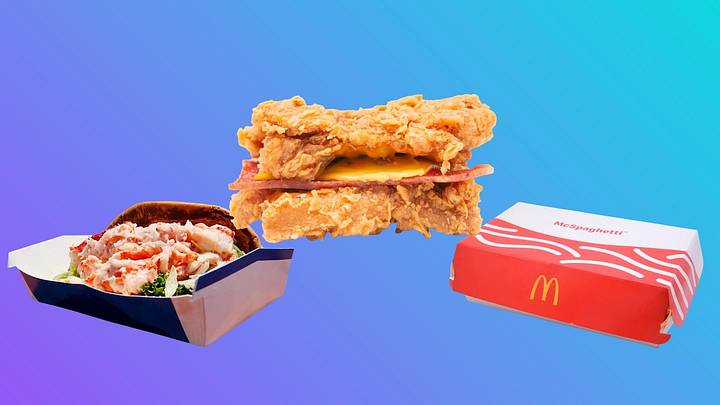
While McDonald’s serving up spaghetti might sound more like a fever dream than a real menu item, the McSpaghetti did in fact hit drive-thrus across the country—and it’s far from the oddest offering. Self-serve salad bars at Wendy's, bacon sundaes at Burger King, and lobster rolls at select New England McDonald's are just a few other examples.
From bizarre mashups to limited-run regional tests, major chains have rolled out some truly unexpected creations over the years—many of which disappeared just as quickly as they arrived. Let’s sink our teeth into 20 of the worst discontinued fast-food items we still can't believe actually existed.
McDonald’s Pizza
Before you could eat a slice of pizza and a crunchy taco in tandem at a combination Pizza Hut/Taco Bell, you could eat a burger and a pie under the same roof at McDonald's. The home of the Golden Arches tried to capitalize on the success of big pizza chains in the late 1980s, experimenting with pizza pockets and even a specialized high-speed oven to cook frozen pies in a flash.
In 1989, McDonald's began pushing its pizza agenda by rolling out the McPizza in 24 locations across the country. That meant expanding drive-thru windows to accommodate full-size or personal pizzas with toppings like pepperoni, sausage, and veggies. Alas, the time it took to cook a pie and customers' fast-food expectations didn't align, and the McPizza was retired by the new millennium—except for two locations in West Virginia and Ohio that served them until 2017, and the World’s Largest Entertainment McDonald’s in Orlando that still does to this day.
Taco Bell’s Seafood Salad
The '80s brought us a lot of good, from MTV to personal computers, but the decade also had its fair share of bad, epitomized by Taco Bell's highly suspicious Seafood Salad. At a more trustworthy seafood establishment, the dish made of bay shrimp, snow crab, white fish, and veggies in a tortilla bowl sounds like a refreshing, flavorful lunch. But even the biggest Taco Bell fanatics just couldn't get on board with the Mexican fast-food chain's attempt to counter McDonald's Filet-O-Fish. The commercial even called out the Seafood Salad's competitor with the snarky line, "Why order fish if it ends up looking like a burger?"
Apparently, Americans could think of a lot of reasons why. While Taco Bell's Seafood Salad was pulled off all menus by 1990, McDonald's fish sandwich still has die-hards to this day.
Burger King’s Bacon Sundae
Bacon was arguably the buzziest ingredient of the 2010s, expanding its reach beyond breakfast to doughnuts, candles, and even ice cream. Burger King's Bacon Sundae, launched in Nashville, Tennessee, in 2012, was a natural development of the trend. The inventive dessert featured creamy vanilla soft serve topped with caramel, fudge, and real bacon—both crumbles and a full strip for garnish. Reviews were mixed, and the limited-time creation quickly melted off menus by the end of the summer.
Wendy’s Frescata
Wendy's Frescata sandwiches may have sounded fancy, but how they actually tasted was another story. To compete with Subway's "Eat Fresh" campaign launched in the early 2000s, Wendy's came out with its own deli-style sandwich line marketed as having high-quality bread and meats. But instead of providing a fresher, artisanal alternative to the chain's square hamburgers, customers claimed the Frescata sandwiches were lacking in flavor, quality, and consistency.
At the end of the day—or rather, year and a half they existed—Wendy's deli sandwiches, which ranged from the Frescata Club to the Roasted Turkey and Basil Pesto Frescata, failed to compete with fast-food sandwich pioneers like Subway. The Frescata sandwiches were axed from Wendy's menus by December 2007.
Pizza Hut’s Priazzo
You would think there are only so many riffs on pizza, from thin to stuffed crust and plain cheese to deluxe. In 1985, Pizza Hut sought to prove pizza purists wrong with the Priazzo. While its name may scream Italy, the actual pizza had Chicago written all over it, resembling a deep-dish pizza but with two crusts.
All four flavors of pies, from the meat-heavy Roma to the vegetarian Napoli, were filled with various ingredients, then topped with a layer of dough, tomato sauce, and cheese before being baked. The result was an overstuffed pizza concoction that took longer to cook than the rest of the Pizza Hut menu—and cost more. While some pizza lovers gave the Priazzo a chance, its 20- to 30-minute prep time—which contributed to all-around slow service—caused it to vanish by 1991.
McDonald’s McAfrika
As far as failed fast-food items go, the McAfrika might take the cake for being not only undesirable, but insensitive. The "authentic African recipe" featuring beef, cheese, and tomatoes sandwiched between pita bread was released in Norway and Denmark in 2002, around the same time a famine hit southern Africa. From the problematic promotional campaign to the burger's "exotic African sauce," the backlash that ensued was fast and powerful. However, it wasn't enough for McDonald's to pull it off the menu early, keeping it available until September of that year.
Burger King’s Satisfries
Burger King's attempt at a lighter fry in 2013 backfired, with fast-food fans going so far as to call the Satisfries the "saddest fries." For just $1.89—30 cents more than a regular order—you could get your Whopper with a side of "healthier" fries. With only 70 fewer calories and 4 grams less fat, customers just didn't buy into the Satisfries, prompting their removal from the menu before a year had passed.
Panera's Charged Lemonade
Many extinct fast-food items are offensive, but not dangerous. Panera's Charged Lemonade, first introduced in 2022, was a major exception. The intentions behind the fruity iced beverage were good—to give coffee-averse customers a sweeter, caffeinated alternative—but the execution proved fatal.
Originally advertised as a refreshing drink that came in three flavors (Strawberry Lemon Mint, Fuji Apple Cranberry, and Mango Yuzu Citrus), a large Charged Lemonade contained 390 milligrams of caffeine—almost four times as much as a standard cup of coffee. And yet, customers guzzled the "plant-based" beverages like regular juice. It's no surprise, then, that Panera faced four lawsuits, two of which blamed the café's lemonade for causing consumer deaths.
While Panera tried to remedy the situation by adding warning labels and removing the self-serve option, the flak it received never died down, and the drink was discontinued in May 2024.
Chick-fil-A's Cauliflower Sandwich
In an attempt to tap into the plant-based gap in the fast-food world, Chick-fil-A pivoted from chicken to cauliflower with the Cauliflower Sandwich in February 2023. Like the classic chicken sandwich, it featured a classic buttery bun and dill pickle chips, swapping fried cauliflower for the usual protein.
Because the batter coating the cauliflower slab contained milk and eggs, the sandwich couldn't be considered vegan—or even strictly vegetarian. It was also fried using the same oil as the restaurant's chicken dishes, changing its classification from plant-based to "plant-forward" and further narrowing the customer base that could eat it. Mixed feedback led Chick-fil-A to call it a wrap after the sandwich's trial run ended just a few months later in May.
McDonald’s Mighty Wings
America's love for chicken wings is no secret. Neither is the fact that much of the country practically runs on McDonald's. So when the restaurant added the popular game-day snack to menus in 2013, you'd think it would be a smash hit.
McDonald's Mighty Wings were branded as a higher-end option compared to other chicken items like McNuggets, and the price reflected that. At $1 per wing, it was more akin to full-fledged sports bar pricing than the fast-food chain's own Dollar Menu. Customers also complained that the bone-in wings were too spicy and messy for a drive-thru meal, resulting in 10 million pounds of Mighty Wings sitting unsold in freezers. McDonald's tried to get rid of the excess by selling them at a discount, but the rollout ultimately ended in a massive financial loss.
Burger King's Halloween Whopper
Burger King took spooky season a little too far in 2015 with its Halloween Whopper, a limited-edition burger featuring a foreboding black bun. Of course, the bun didn't get its coloring from something natural like squid ink (often used in Japan) or a trending health ingredient like activated charcoal, but from a potent mix of chemical food colorings.
Science did its thing, and Burger King customers found themselves faced with a horrifying green surprise in the toilet after eating the burger—an effect of the artificial blue dye that inspired the viral hashtag #greenpoop on social media. While the burger's effect on the human body was harmless, it never made its way back onto the BK menu for future Halloweens.
McDonald’s Fish McBites
From classic chicken to onion nuggets, McDonald's has done it all when it comes to deep-fried finger foods. But what many Mickey D's devotees don't know is that the fast-food restaurant sold fish bites in 2013 for the 50th anniversary of the Filet-O-Fish. Like the famous fish sandwich, the seafood nuggets featured breaded pieces of white fish made for dunking in sauce, just without the bun. Americans seemingly couldn't look past their skepticism of another aquatic product from McDonald's, and Fish McBites were discontinued after just a few months due to low sales.
Pizza Hut’s Hot Dog Bites Pizza
In another possible case of test-kitchen indecision, Pizza Hut's Hot Dog Bites Pizza turned out to be too much for the American public to handle in 2015. The creation featured dozens of mini hot dogs baked directly into the crust of a regular pie, and it appeared on menus in the UK, Asia, Australia, and Canada before finally arriving in the U.S. Between the "larvae" look of the sausages—as some tasters ungenerously noted—and the sheer heaviness of the pie, it was axed from the Hut by 2016.
KFC's Double Down
Only in America would the idea of replacing bread in a sandwich with fried chicken become reality. You can thank KFC for that: the chain leaned into protein maxxing as early as 2010 with its Double Down “sandwich.”
Instead of a bun, two pieces of fried chicken held together bacon, cheese, and sauce, creating a bunless mashup that quickly became infamous for its indulgent approach. First introduced as a limited-time item, it was both criticized and celebrated for its excess before eventually disappearing from KFC menus by 2014.
Taco Bell's Waffle Taco
When Taco Bell expanded into breakfast in 2014, a simple breakfast burrito just didn’t cut it. Instead, the chain leaned into experimentation with the Waffle Taco: a folded waffle “shell” filled with eggs and sausage, served alongside a cup of syrup. While other breakfast items like the A.M. Crunchwrap managed to stick around, the Waffle Taco was retired in 2015, leaving behind one of Taco Bell’s more unconventional attempts at morning fare.
McDonald's Hula Burger
Pineapple has become a fairly common pizza topping, but burgers are a different story—though McDonald’s once tried to challenge that assumption. Before the Filet-O-Fish became a permanent fixture, the chain tested the Hula Burger as a meatless alternative for Lent in 1962.
Instead of fish, it featured a grilled pineapple slice topped with cheese on a bun. The sweet, savory, and ultimately soggy idea never caught on and was quickly overshadowed by its seafood competitor, leading to its removal from McDonald’s menu within the year.
McDonald's McLobster
Steamed lobster may have started as prison food, but that doesn’t mean the shellfish dish ever belonged at McDonald’s. Still, for a limited time, the chain tested exactly that with the McLobster Roll in 1993.
Offered in select New England and Eastern Canada locations, the sandwich featured chilled lobster meat mixed with mayo and shredded lettuce, served in a split-top bun, leaning into regional coastal flavors as a seasonal experiment. McDonald’s later tried expanding the McLobster beyond its initial test markets, but supply challenges and limited profitability led to it being pulled from most menus. It would occasionally resurface in select New England locations over the years, but after its last seasonal return in 2017, it quietly disappeared once again.
Wendy's SuperBar
Pasta or tacos? At Wendy’s, neither is the only correct answer. For some reason, the fast food chain thought it was a good idea to introduce a self-serve, all-you-can-eat buffet option in the late 1980s and early 1990s. Surprisingly, Wendy’s loyalists agreed: the SuperBar was a hit, and hungry patrons flocked to the $2.99 deal to eat their fill of tacos, pastas, salads, and even desserts like pudding.
Sounds good in theory, right? Not so much for Wendy’s employees, who struggled to keep up with everything from stocking it to cleaning it, ultimately leading to its shutdown in 1998. Since then, Wendy’s has stuck to a far simpler menu of sandwiches, nuggets, and sides.
McDonald's McSpaghetti
Even McDonald’s took a trip to Italy to find itself, surprisingly adding not only the McPizza in the 1980s but the McSpaghetti to its menu in the 1970s. The McSpaghetti featured pasta topped with marinara sauce, meatballs, and cheese, served in a fast food container rather than a bowl.
While it was eventually phased out in most U.S. locations by the 1990s, it found a longer life in international markets—most notably in the Philippines, where it’s still served today. Designed as an attempt to expand into dinner-style offerings, it never gained lasting traction in the United States but remains one of McDonald’s more unexpected menu experiments.
Burger King's Mac n’ Cheetos
Chicken Fries aren’t the only deep-fried, stick-shaped snacks under Burger King’s belt. In 2016, the chain leaned less into Whoppers and more into Cheetos, rolling out the infamous Mac ’n Cheetos: deep-fried sticks of macaroni and cheese coated in Cheetos seasoning.
Released as a limited-time item, it leaned (perhaps a bit too) heavily into comfort food and novelty rather than practicality. While it gained attention for its creative concept—and even returned in 2017 for a second limited release with a Flamin’ Hot version—the Mac ’n Cheetos ultimately remained a short-lived experiment, saving the fates of toilets across the country.