%20%20--%3E%0A%3Csvg%20version%3D%221.1%22%20id%3D%22Layer_1%22%20xmlns%3D%22http%3A%2F%2Fwww.w3.org%2F2000%2Fsvg%22%20xmlns%3Axlink%3D%22http%3A%2F%2Fwww.w3.org%2F1999%2Fxlink%22%20x%3D%220px%22%20y%3D%220px%22%0A%09%20viewBox%3D%220%200%20684.6%2068.1%22%20style%3D%22enable-background%3Anew%200%200%20684.6%2068.1%3B%22%20xml%3Aspace%3D%22preserve%22%3E%0A%3Cg%3E%0A%09%3Cpath%20d%3D%22M444.1%2C29.3h-17.4v14.5h17.4V29.3z%20M36.4%2C68.1l29.3-50.8V0H50.4L32.9%2C36.8L15.5%2C0H0v68.1h16.7V45.8l12.4%2C22.3H36.4z%0A%09%09%20M49.1%2C68.1h16.6V23.4L49.1%2C52.1V68.1z%20M76.6%2C68.1h45V53.8H93.3V41.6h21V27.1h-21V14.8h28.3V0.1h-45V68.1z%20M175.6%2C68.1h17.3v-68%0A%09%09h-16.5v40.3L150%2C0.1h-17.6v68h16.7V27.7L175.6%2C68.1z%20M235.8%2C14.8h15.4V0.1h-47.4v14.7H219v53.2h16.8V14.8z%20M290.3%2C45.9h-17.1%0A%09%09l7.5-15.6h2L290.3%2C45.9z%20M298.7%2C68.1h18l-32.2-68h-5.7l-32%2C68h18l3.3-7.1h27.1L298.7%2C68.1z%20M325.2%2C68.1h46.2V53.8h-29.6V0.1h-16.7%0A%09%09V68.1z%20M423.7%2C14.8h27.2V0.1H407v68h16.7V14.8z%20M462%2C68.1h46.2V53.8h-29.6V0.1H462V68.1z%20M564.8%2C34.1c0%2C10.7-7.2%2C19.2-18.5%2C19.2%0A%09%09c-11.4%2C0-18.5-8.5-18.5-19.2s7.1-19.2%2C18.5-19.2C557.6%2C14.9%2C564.8%2C23.4%2C564.8%2C34.1%20M580.6%2C34.1c0-19-14.2-34-34.3-34%0A%09%09c-20.2%2C0-34.3%2C15-34.3%2C34c0%2C19%2C14.1%2C34%2C34.3%2C34C566.4%2C68.1%2C580.6%2C53.1%2C580.6%2C34.1%20M604.8%2C20.5c0-4.1%2C3.3-6.2%2C6.7-6.2%0A%09%09c4.4%2C0%2C6.6%2C3%2C6.6%2C6.6h14.7C631.8%2C9.1%2C625.1%2C0.1%2C611%2C0.1c-12%2C0-21.7%2C9.3-21.7%2C20.6c0%2C10.9%2C5.9%2C15.9%2C16.7%2C19.8%0A%09%09c5.2%2C1.8%2C11.5%2C3.2%2C11.5%2C8c0%2C3.3-2.4%2C5.5-6.4%2C5.5c-3.6%2C0-6.6-3-6.6-6.7h-15.2c0%2C11.5%2C7.9%2C20.8%2C21.8%2C20.8c12%2C0%2C21.6-9.3%2C21.6-20.6%0A%09%09c0-10-5.3-16.4-16.7-19.8C610.6%2C26.1%2C604.8%2C25.3%2C604.8%2C20.5%20M670%2C20.9h14.7C683.8%2C9.1%2C677.1%2C0.1%2C663%2C0.1c-12%2C0-21.7%2C9.3-21.7%2C20.6%0A%09%09c0%2C10.9%2C5.9%2C15.9%2C16.7%2C19.8c5.2%2C1.8%2C11.5%2C3.2%2C11.5%2C8c0%2C3.3-2.4%2C5.5-6.4%2C5.5c-3.6%2C0-6.6-3-6.6-6.7h-15.2c0%2C11.5%2C7.9%2C20.8%2C21.8%2C20.8%0A%09%09c12%2C0%2C21.6-9.3%2C21.6-20.6c0-10-5.3-16.4-16.7-19.8c-5.4-1.6-11.3-2.4-11.3-7.2c0-4.1%2C3.3-6.2%2C6.7-6.2C667.7%2C14.4%2C670%2C17.3%2C670%2C20.9%0A%09%09%22%2F%3E%0A%3C%2Fg%3E%0A%3C%2Fsvg%3E%0A)

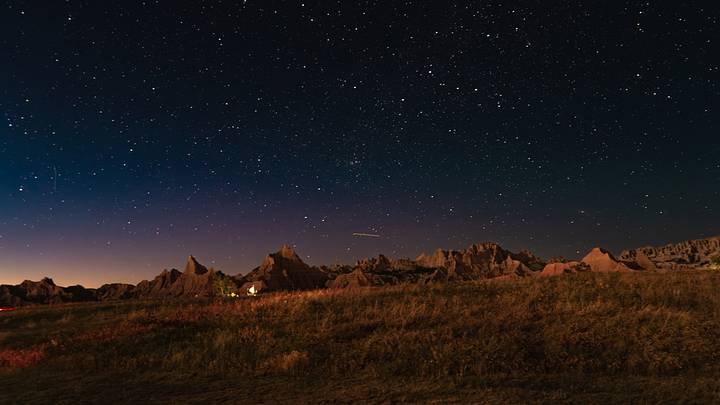
We may be living in the golden age of television, but the night sky is still the best show in town. While our days are dominated by endless feeds and glowing screens, our collective nighttime curiosity is shifting outward and upward, towards the cosmos.
But to see the galaxy’s greatest hits with the naked eye, you have to know where to look—after all, roughly 80% of North Americans live under light-polluted skies. By evaluating regional cloud cover and mapping light pollution using the Bortle scale, a new study by Live Casinos reveals exactly which U.S. states offer a front-row seat to the stars.
South Dakota Is the Best State for Staring at Stars, Study Says

Driven by a striking 5,000% spike in recent search interest, stargazing is having a major moment right now. For anyone looking for a sky-watching spot where city lights won't block the view, the data says South Dakota is your best bet.
Boasting an almost-flawless star visibility score of 7.79 out of 10, the state offers the highest odds in the country for a perfect night under the stars. Over half of its territory sits comfortably within a Bortle scale classification of 1 to 3. Most impressively, nearly a tenth of the state falls into Bortle Class 1—the absolute lowest level of light pollution possible—beating out every single other state in the nation.
South Dakota also benefits from crisp, dry skies, with an average cloud cover of just 11.65% per year—giving it a 0.75% clarity advantage over its northern neighbor, North Dakota. While iconic spots like Badlands National Park offer world-class viewing, the study uncovered a sanctuary for star-seeking travelers: Sanborn County officially claims the state's highest individual clarity rating with a spectacular 8.78 out of 10, thanks to the entire county sitting in total dark-sky territory.
The Full List of Stargazing Spots

While South Dakota walks away with the crown, the rest of the top five is a razor-thin race for the country's clearest skies. Unsurprisingly, the American West and the far north dominate the list because they actually have the elevation and the empty space that create the ideal natural canvas for the constellations.
Wyoming takes second place with a 7.65 score. It's one of the few locations that has active laws against light pollution, keeping half the state pitch-black at night—and Hot Springs County is the clear standout of the state’s many remote corners. Alaska lands in third with not only stellar views of the night sky, but great northern lights viewing from August to April—just don't bother going during the midsummer "midnight sun." Montana's empty plains take fourth, and Arizona rounds out the top five, absolutely crushing the weather category with a nation-best 6.7% average cloud cover.
To build the leaderboard, researchers weighed each state's annual cloud cover against its ideal dark-sky zones. Here’s how the top 10 shakes out:
Rank | State | Avg. Cloud Cover | Star Visibility Score |
|---|---|---|---|
1 | South Dakota | 11.65% | 7.79 |
2 | Wyoming | 11.4% | 7.65 |
3 | Alaska | 11.3% | 7.64 |
4 | Montana | 12.3% | 7.51 |
5 | Arizona | 6.7% | 7.37 |
6 | Nevada | 8.95% | 7.34 |
7 | North Dakota | 12.4% | 7.27 |
8 | New Mexico | 7.87% | 7.10 |
9 | Nebraska | 11.81% | 7.10 |
10 | Oregon | 12.31% | 6.97 |
The numbers confirm what campers and road-trippers already know: the less crowded the state, the better the view. Finding a truly dark sky in the U.S. has mostly become a game of heading out to the empty spaces of the West. If you’re planning a trip to any of these spots, just make sure to check the moon phases before you book your campsites—the darker the night, the better the show.