%20%20--%3E%0A%3Csvg%20version%3D%221.1%22%20id%3D%22Layer_1%22%20xmlns%3D%22http%3A%2F%2Fwww.w3.org%2F2000%2Fsvg%22%20xmlns%3Axlink%3D%22http%3A%2F%2Fwww.w3.org%2F1999%2Fxlink%22%20x%3D%220px%22%20y%3D%220px%22%0A%09%20viewBox%3D%220%200%20684.6%2068.1%22%20style%3D%22enable-background%3Anew%200%200%20684.6%2068.1%3B%22%20xml%3Aspace%3D%22preserve%22%3E%0A%3Cg%3E%0A%09%3Cpath%20d%3D%22M444.1%2C29.3h-17.4v14.5h17.4V29.3z%20M36.4%2C68.1l29.3-50.8V0H50.4L32.9%2C36.8L15.5%2C0H0v68.1h16.7V45.8l12.4%2C22.3H36.4z%0A%09%09%20M49.1%2C68.1h16.6V23.4L49.1%2C52.1V68.1z%20M76.6%2C68.1h45V53.8H93.3V41.6h21V27.1h-21V14.8h28.3V0.1h-45V68.1z%20M175.6%2C68.1h17.3v-68%0A%09%09h-16.5v40.3L150%2C0.1h-17.6v68h16.7V27.7L175.6%2C68.1z%20M235.8%2C14.8h15.4V0.1h-47.4v14.7H219v53.2h16.8V14.8z%20M290.3%2C45.9h-17.1%0A%09%09l7.5-15.6h2L290.3%2C45.9z%20M298.7%2C68.1h18l-32.2-68h-5.7l-32%2C68h18l3.3-7.1h27.1L298.7%2C68.1z%20M325.2%2C68.1h46.2V53.8h-29.6V0.1h-16.7%0A%09%09V68.1z%20M423.7%2C14.8h27.2V0.1H407v68h16.7V14.8z%20M462%2C68.1h46.2V53.8h-29.6V0.1H462V68.1z%20M564.8%2C34.1c0%2C10.7-7.2%2C19.2-18.5%2C19.2%0A%09%09c-11.4%2C0-18.5-8.5-18.5-19.2s7.1-19.2%2C18.5-19.2C557.6%2C14.9%2C564.8%2C23.4%2C564.8%2C34.1%20M580.6%2C34.1c0-19-14.2-34-34.3-34%0A%09%09c-20.2%2C0-34.3%2C15-34.3%2C34c0%2C19%2C14.1%2C34%2C34.3%2C34C566.4%2C68.1%2C580.6%2C53.1%2C580.6%2C34.1%20M604.8%2C20.5c0-4.1%2C3.3-6.2%2C6.7-6.2%0A%09%09c4.4%2C0%2C6.6%2C3%2C6.6%2C6.6h14.7C631.8%2C9.1%2C625.1%2C0.1%2C611%2C0.1c-12%2C0-21.7%2C9.3-21.7%2C20.6c0%2C10.9%2C5.9%2C15.9%2C16.7%2C19.8%0A%09%09c5.2%2C1.8%2C11.5%2C3.2%2C11.5%2C8c0%2C3.3-2.4%2C5.5-6.4%2C5.5c-3.6%2C0-6.6-3-6.6-6.7h-15.2c0%2C11.5%2C7.9%2C20.8%2C21.8%2C20.8c12%2C0%2C21.6-9.3%2C21.6-20.6%0A%09%09c0-10-5.3-16.4-16.7-19.8C610.6%2C26.1%2C604.8%2C25.3%2C604.8%2C20.5%20M670%2C20.9h14.7C683.8%2C9.1%2C677.1%2C0.1%2C663%2C0.1c-12%2C0-21.7%2C9.3-21.7%2C20.6%0A%09%09c0%2C10.9%2C5.9%2C15.9%2C16.7%2C19.8c5.2%2C1.8%2C11.5%2C3.2%2C11.5%2C8c0%2C3.3-2.4%2C5.5-6.4%2C5.5c-3.6%2C0-6.6-3-6.6-6.7h-15.2c0%2C11.5%2C7.9%2C20.8%2C21.8%2C20.8%0A%09%09c12%2C0%2C21.6-9.3%2C21.6-20.6c0-10-5.3-16.4-16.7-19.8c-5.4-1.6-11.3-2.4-11.3-7.2c0-4.1%2C3.3-6.2%2C6.7-6.2C667.7%2C14.4%2C670%2C17.3%2C670%2C20.9%0A%09%09%22%2F%3E%0A%3C%2Fg%3E%0A%3C%2Fsvg%3E%0A)

History books are filled with the same familiar faces. But for every famous leader or inventor you’ll read about over and over again, there are countless other people from the past who tend to fly under the radar.
From the Irish pirate queen to the angel of prisons, we’re covering some fascinating historical figures you probably didn’t learn about in school, as adapted from the above episode of The List Show on YouTube.
- Grace O’Malley
- John Dee
- Agnes Sampson
- Carlos Finlay
- Elizabeth Freeman
- Chien-Shiung Wu
- Sargon II
- Elizabeth Fry
- Joseph Laroche
- Jeanne Baret
- Eliza Carpenter
- Bessie Coleman
- Ed Lowe
Grace O’Malley

If you were an English sailor in the 1500s, you did not want to encounter Grace O’Malley. The Irish “Pirate Queen” was a force to be reckoned with.
O’Malley’s family was influential in 16th-century Ireland: Her family ruled a large amount of Ireland’s west coast, and her family of merchants also collected taxes from those who fished along their territory’s shores. Their defensive fortresses, which dotted the coast of County Mayo, were crucial at a time when the English kept encroaching on Ireland.
O’Malley followed in the family footsteps. She ran a trade network to the Iberian peninsula and raided ships that entered her territory. She married young—and was widowed young. After her first husband was murdered, she moved to Clare Island, where she soon amassed her own faithful followers and continued leading raids. O’Malley attacked English ships, pilfering their cargo and even taking the vessels themselves. She was able to fend off an English fleet that attempted to shut her down, and after Crown forces imprisoned her son, she successfully negotiated his release with Queen Elizabeth I.
You May Also Like ...
- 10 Ancient Kings Who Were Too Dramatic For Your History Books
- 20 Unsung Heroes from History
- 7 Historical Figures You Probably Didn’t Know Were Spies
Add Mental Floss as a preferred news source!
John Dee

The Elizabethan era also gave us John Dee, the queen’s court astrologer. Astrology had actually gotten Dee in a bit of trouble—he was arrested for preparing a horoscope of Queen Mary I. But he was exonerated, and later went on to serve in her sister’s court. It was his astrological calculations that set Queen Elizabeth I’s coronation date; she also turned to him for advice regarding everything from geography and navigation to math and chemistry.
But Dee also had some impractical ideas, among them that he could talk to angels. Dee used numerology and divination, and consulted with mediums in his efforts to communicate with the divine beings. He held seances with the medium Edward Kelley. Angels supposedly spoke to Kelley in a strange, unknown language that only Dee could decipher. At one point, Kelley insisted that a spirit named Madimi ordered the two men to swap wives.
Dee’s royal influence ended with the reign of James VI and I, a king who was notoriously anti-witchcraft.
Agnes Sampson

We can’t mention James VI and I and witches and not talk about Agnes Sampson. Her story is not a happy one. Sampson, a widow with children, was a respected healer and midwife in Scotland. That changed after Geillis Duncan—a name Outlander fans will recognize—“outed” Sampson as a fellow witch.
Sampson initially denied the charges. But after being held captive and tortured, she confessed to using witchcraft to plot against King James VI and I. She told of how she and other “witches” consorted with the devil, and even confessed to using black magic to try to kill the king. Sampson claimed she and other witches drowned a baptized cat as part of a hex to summon major storms that nearly wrecked James’s ships.
Sampson was ultimately strangled and then burned at the stake. She was far from the only witch arrested and executed for such crimes, as James VI and I famously oversaw a wave of witch hunts in Scotland.
Carlos Finlay

You’ve probably heard of yellow fever, a nasty virus that’s spread by mosquitoes. But we’re willing to bet you probably haven’t heard of Carlos Finlay. Finlay was a 19th-century epidemiologist from Cuba who made waves when he discovered that mosquitoes transmitted yellow fever.
The waves he made, unfortunately, were not positive ones. His peers mocked and ridiculed his research. That didn’t deter Finlay, though. He spent decades breeding mosquitoes to prove the link between the insects and the spread of yellow fever. The U.S. Army Yellow Fever Board, led by Walter Reed, finally accepted his theory in 1900; Finlay went on to serve as Cuba’s chief sanitation officer.
Elizabeth Freeman

Elizabeth “Mum Bett” Freeman was born into enslavement in the mid-18th century. She wound up working for the cruel Ashley family, where she was forced to do domestic labor and, at times, undergo physical abuse. But the Constitution of the Commonwealth of Massachusetts would change that.
Freeman heard the news about the new constitution while out in the public square. The part about all men being born free and equal particularly piqued her interest and prompted her to work with a local lawyer named Theodore Sedgwick to sue the Commonwealth of Massachusetts on the grounds that the constitution prohibited slavery. The Ashley family refused to release Freeman, despite Sedgwick obtaining a court order that mandated they do so. The case then moved up to the County Court of Common Pleas of Great Barrington, which ruled in Freeman’s favor. She was successfully able to sue for her freedom—not just from the cruel Ashley family, but from all enslavement. She owned her own home and land by the time she died in 1829.
Chien-Shiung Wu

Chien-Shiung Wu has been dubbed “The First Lady of Physics.” Her work was a key component to the success of the Manhattan Project—and years later she was excluded from the spotlight when her colleagues won the 1957 Nobel Prize in Physics.
Wu, who grew up in China, moved to the U.S. in 1936. She earned her Ph.D. from the University of California Berkeley and went on to work on the Manhattan Project while based out of Columbia University. She became an expert in beta decay, a form of radioactive decay. In the 1950s, two physicists named Tsung-Dao Lee and Chen Ning Yang asked her to create an experiment that would prove their own theories about beta decay. The two men received a Nobel Prize for the study.
Sargon II

If you’ve never heard of Sargon II, you definitely aren’t the only one. In fact, historians once thought his legacy was pure myth. But Sargon II really did exist: He was king of the Middle Eastern empire of Assyria in the 8th century BCE. Sargon II was an effective ruler who was able to pillage riches, raid foreign cities, and even take the throne of Babylon.
Unfortunately for him, though, he died in battle, and the Assyrians were unable to reclaim his body and give him a royal burial. His people believed Sargon II’s lack of a royal burial was due to the gods abandoning him for doing something terrible. Even his own son, Sennacherib, refused to ever speak his name. Sennacherib moved his palace to the city of Nineveh, and Sargon II’s former royal palace—and the capital city he founded—remained forgotten until French archaeologists found its ruins in the 19th century.
Elizabeth Fry

Prison conditions in early 19th-century England were far from ideal. Elizabeth Fry, a.k.a. the “angel of prisons,” set out to change that. After hearing an American Quaker give a speech about those in need, she was inspired to take action in her own country. Fry visited London’s Newgate Prison in 1813 and was appalled by what she saw. Women and children lived in overcrowded conditions without safe drinking water and sanitary toilets. She later went back to Newgate with clothes and straw for those who were imprisoned and began campaigning to make the justice system fairer.
Fry founded the Ladies' Association for the Reformation of the Female Prisoners in Newgate and opened a school for children incarcerated with their moms. Her work influenced the Gaol Act, which made prison conditions more humane and separated men from women. She also advocated for better conditions on ships carrying incarcerated people.
Joseph Laroche

The Titanic had people from across the economic spectrum as passengers when it set sail in April of 1912. But of the 2240 people aboard, Joseph Laroche was the only known Black man.
Laroche was born in Haiti but moved to France, where he married Juliette Lafargue. The pair had two daughters, one of whom had required extensive—and expensive—medical care. But the racism Joseph faced in France made it difficult for him to find a job.
Joseph and his family decided to head to Haiti, where his uncle—who happened to be the country’s president—is thought to have guaranteed him a job. The Laroches secured a second-class ticket on the Titanic, planning to first sail to New York and then continue their journey to Haiti. Juliette and the children were able to grab spots on the vessel’s limited lifeboats after disaster struck, but Joseph, like so many others aboard the Titanic, went down with the ship. His wife and children survived and returned to France.
Jeanne Baret

Jeanne Baret was a peasant “herb woman” in 18th-century France. And though she was not born into any sort of privilege, she wound up going farther than any woman before her—peasant or not—had.
Baret was the first woman to circumnavigate the globe. She set sail with her colleague and lover, Philibert Commerson, who was hired as a botanist on a French Naval expedition. Baret’s ability to join Commerson did not come easy: She had to disguise herself as a man, as women were not allowed aboard the ship. She did this by binding her chest, wearing mens’ clothing, and being careful not to undress or use the bathroom in front of any other crew members.
Her tricks worked—for a while, at least. Baret was able to keep her gender a secret until the expedition made it to the South Pacific. After her true identity was exposed, she and Commerson were left behind at the French colony Mauritius. Baret lived there for years. Commerson died while the two were still in Mauritius, and Baret later married a French soldier. She returned to France with him, and in doing so completed her journey around the world.
Eliza Carpenter

When most people think of jockeys and horse racing, they likely imagine the Kentucky Derby. They probably don’t think much about Eliza Carpenter.
Carpenter was born into slavery in Virginia in the mid-1800s. She moved to Kentucky after the Civil War, where she first began riding Thoroughbreds and learning about racing. Carpenter became a jockey at a time where it was unheard of for a woman to race. And she did more than just compete with her horses: Carpenter eventually owned her own stable in Kansas, and was a savvy bettor who always made sure to collect the money she was owed.
Carpenter later moved to Oklahoma, where she raced in the Cherokee Strip Land Run. This was the largest event of its kind in U.S. history. More than 100,000 people raced to claim the 42,000 parcels of land that were available. After establishing herself in Oklahoma, she became the state’s only Black stable owner and remained active in the racing industry for decades.
Bessie Coleman

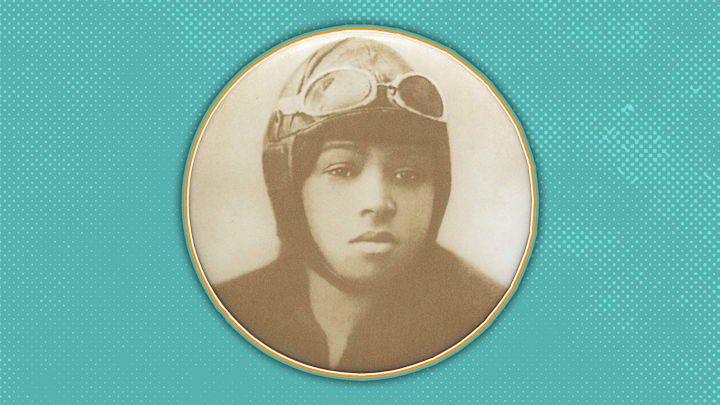
Bessie Coleman took to the skies in the 1920s, a time when women and people of color were not really flying planes. Coleman, who was Black and Native American, traveled from the U.S. to France to earn her pilot’s license. She had no choice but to leave home: Pilot schools in the states refused to enroll women and Black people.
Coleman earned her pilot’s license from the Federation Aéronautique Internationale, giving her the credentials to fly in all countries. She became the first Black woman and the first Native American woman to accomplish such a feat.
Coleman briefly returned to the U.S., but realized she’d need to learn how to perform stunts to actually make a living by flying. She pursued advanced aviation training, again in Europe, before dazzling crowds back home with her various tricks. Coleman tragically died in an aviation accident in 1926, when she was only 34 years old.
Ed Lowe

If you have a cat, you owe a lot to Ed Lowe. He’s the man who gave us kitty litter.
Lowe began working for his father in the 1940s, selling sawdust, industrial absorbents, and ice. A simple request from a neighbor put him on a different path. She asked if Lowe had any sand she could use for her cat. Back then, people with indoor cats would use ashes or sawdust to fill the spots where their cats pooped and peed. But ashes and sawdust weren’t great at masking smells, and they still made a mess. Many cat owners actually opted to keep their cats outside overnight to avoid indoor messes.
Lowe gave his neighbor ground clay instead of sand. He had previously tried to sell the absorbent material as chicken litter, but his neighbor’s request prompted him to turn toward cats. He called the clay product Kitty Litter and worked with a local store to introduce it to the community. Lowe’s business got off to a slow start, but cat owners eventually caught on. His simple Kitty Litter product sparked a booming industry. Lowe continued to innovate his litter products over the decades. He became a multimillionaire, and is even credited with making cats a more popular pet in the 20th century.