%20%20--%3E%0A%3Csvg%20version%3D%221.1%22%20id%3D%22Layer_1%22%20xmlns%3D%22http%3A%2F%2Fwww.w3.org%2F2000%2Fsvg%22%20xmlns%3Axlink%3D%22http%3A%2F%2Fwww.w3.org%2F1999%2Fxlink%22%20x%3D%220px%22%20y%3D%220px%22%0A%09%20viewBox%3D%220%200%20684.6%2068.1%22%20style%3D%22enable-background%3Anew%200%200%20684.6%2068.1%3B%22%20xml%3Aspace%3D%22preserve%22%3E%0A%3Cg%3E%0A%09%3Cpath%20d%3D%22M444.1%2C29.3h-17.4v14.5h17.4V29.3z%20M36.4%2C68.1l29.3-50.8V0H50.4L32.9%2C36.8L15.5%2C0H0v68.1h16.7V45.8l12.4%2C22.3H36.4z%0A%09%09%20M49.1%2C68.1h16.6V23.4L49.1%2C52.1V68.1z%20M76.6%2C68.1h45V53.8H93.3V41.6h21V27.1h-21V14.8h28.3V0.1h-45V68.1z%20M175.6%2C68.1h17.3v-68%0A%09%09h-16.5v40.3L150%2C0.1h-17.6v68h16.7V27.7L175.6%2C68.1z%20M235.8%2C14.8h15.4V0.1h-47.4v14.7H219v53.2h16.8V14.8z%20M290.3%2C45.9h-17.1%0A%09%09l7.5-15.6h2L290.3%2C45.9z%20M298.7%2C68.1h18l-32.2-68h-5.7l-32%2C68h18l3.3-7.1h27.1L298.7%2C68.1z%20M325.2%2C68.1h46.2V53.8h-29.6V0.1h-16.7%0A%09%09V68.1z%20M423.7%2C14.8h27.2V0.1H407v68h16.7V14.8z%20M462%2C68.1h46.2V53.8h-29.6V0.1H462V68.1z%20M564.8%2C34.1c0%2C10.7-7.2%2C19.2-18.5%2C19.2%0A%09%09c-11.4%2C0-18.5-8.5-18.5-19.2s7.1-19.2%2C18.5-19.2C557.6%2C14.9%2C564.8%2C23.4%2C564.8%2C34.1%20M580.6%2C34.1c0-19-14.2-34-34.3-34%0A%09%09c-20.2%2C0-34.3%2C15-34.3%2C34c0%2C19%2C14.1%2C34%2C34.3%2C34C566.4%2C68.1%2C580.6%2C53.1%2C580.6%2C34.1%20M604.8%2C20.5c0-4.1%2C3.3-6.2%2C6.7-6.2%0A%09%09c4.4%2C0%2C6.6%2C3%2C6.6%2C6.6h14.7C631.8%2C9.1%2C625.1%2C0.1%2C611%2C0.1c-12%2C0-21.7%2C9.3-21.7%2C20.6c0%2C10.9%2C5.9%2C15.9%2C16.7%2C19.8%0A%09%09c5.2%2C1.8%2C11.5%2C3.2%2C11.5%2C8c0%2C3.3-2.4%2C5.5-6.4%2C5.5c-3.6%2C0-6.6-3-6.6-6.7h-15.2c0%2C11.5%2C7.9%2C20.8%2C21.8%2C20.8c12%2C0%2C21.6-9.3%2C21.6-20.6%0A%09%09c0-10-5.3-16.4-16.7-19.8C610.6%2C26.1%2C604.8%2C25.3%2C604.8%2C20.5%20M670%2C20.9h14.7C683.8%2C9.1%2C677.1%2C0.1%2C663%2C0.1c-12%2C0-21.7%2C9.3-21.7%2C20.6%0A%09%09c0%2C10.9%2C5.9%2C15.9%2C16.7%2C19.8c5.2%2C1.8%2C11.5%2C3.2%2C11.5%2C8c0%2C3.3-2.4%2C5.5-6.4%2C5.5c-3.6%2C0-6.6-3-6.6-6.7h-15.2c0%2C11.5%2C7.9%2C20.8%2C21.8%2C20.8%0A%09%09c12%2C0%2C21.6-9.3%2C21.6-20.6c0-10-5.3-16.4-16.7-19.8c-5.4-1.6-11.3-2.4-11.3-7.2c0-4.1%2C3.3-6.2%2C6.7-6.2C667.7%2C14.4%2C670%2C17.3%2C670%2C20.9%0A%09%09%22%2F%3E%0A%3C%2Fg%3E%0A%3C%2Fsvg%3E%0A)

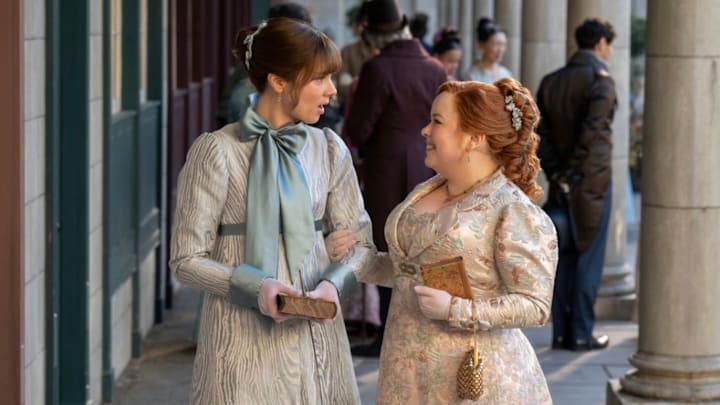
Between lingering glances and subtle courting, Bridgerton convinces viewers that romance peaked long before people of the ton could text each other. When the season ends, the desire to remain in a world of handwritten letters and afternoon tea in the drawing room persists. Fortunately, the original creators of these complex and chaotic romantic tales were writing centuries before streaming services existed.
These classic novels are packed with everything Bridgerton fans crave: witty banter, slow-burn romance, social scandals, and protagonists who spend chapter after chapter resisting their true feelings.
If you’ve fallen under the spell of free-spirited female leads, hushed carriage rides, and men who yearn, you'll want to add these six classic romance novels to your reading list.
Anna Karenina

Written in installments by Leo Tolstoy in the 1870s, Anna Karenina is set in 19th-century imperial Russia, where strict social order influenced love, marriage, and reputation. The novel follows Anna, a respected woman whose passionate affair with officer Count Vronsky isolates her and puts her at odds with society. Meanwhile, Anna’s foil, the landowner Konstantin Levin, embarks on his own journey through love, faith, and the pursuit of a purposeful existence. Through these parallel stories, Tolstoy explores opposing themes of desire and duty, fidelity and betrayal, and destruction and personal growth.
Pride and Prejudice

Pride and Prejudice is an endearing novel by Jane Austen, published in 1813. The story unfolds in rural England in the early 19th century, following the free-spirited and well-educated Elizabeth Bennet as she navigates family pressures, social expectations, and romantic blunders. Her relationship with the proud Mr. Darcy is central to the plot, as his reservations and her quick judgment blur the line between tension and humor. Through the Bennet family and their close acquaintances, Austen analyzes themes of love, marriage, class, and first impressions, showing how both pride and prejudice can be overcome in pursuit of truth and understanding.
Jane Eyre

Jane Eyre, written by Charlotte Brontë and published under the pseudonym Currer Bell in 1847, tells the story of Jane, a strong-willed protagonist who grows up an orphan and faces cruelty at her childhood home and her boarding school. She grows up and becomes a governess at Thornfield Hall, where she meets her employer, Mr. Rochester. Jane and Rochester’s deepening connection is put to the test by hidden truths and societal pressures. The novel points to themes of independence, morality, love, and social class structure following Jane's journey to find personal and emotional fulfillment in a restrictive Victorian world.
Wuthering Heights

The Brontë sisters, or should we say, Bell Brothers, were on a roll in 1847. The same year her sister Charlotte published Jane Eyre, Emily Brontë (Ellis Bell) published her only novel, Wuthering Heights. Set on the wild Yorkshire moors, this Gothic tale unites intense themes of passion, obsession, revenge, and conflict. The story unfolds through multiple narrators, the primary being housekeeper Nelly Dean, as the orphaned Heathcliff grows up with the Earnshaw family and forms a deep and unstable bond with Catherine Earnshaw. After Catherine marries another man, Heathcliff returns rich and ready for revenge, manipulating the Earnshaw and Linton families. With its brooding atmosphere and hints of the supernatural, Brontë’s novel overflows with passion and lingering resentment.
Emma

Emma by Jane Austen is a clever tale set in the idyllic English village of Highbury in the early 19th century. The plot centers on poised Emma Woodhouse, who fancies herself a matchmaking expert and is not afraid to intervene in the romantic lives of her dearest friends, including Harriet Smith. Misguided in her efforts, her enthusiastic involvement in the love lives of others results in satirical misunderstanding, social twists, and very uncomfortable proposals. These mistakes propel Emma towards increased self-awareness and humbleness. As her friendship with Mr. Knightly deepens, she's forced to address her feelings and her imperfections. The tale explores themes of friendship, love, social hierarchy, and personal growth, tracing Emma's transformation from a humorous busybody to a mindful member of Highbury.
Persuasion

Persuasion, the last novel Jane Austen fully completed before her death in 1817, follows introspective Anne Elliot as she copes with love and regret along England’s 19th-century coast. At 19, Anne is convinced to break off her engagement to Frederick Wentworth, whose uncertain prospects make him an unsuitable match. Eight years later, Frederick returns as a wealthy naval captain, only to find the Elliots in financial decline and renting out their home to his sister and brother-in-law. Proximity forces Anne to confront her long-buried feelings as she and Wentworth’s paths cross again. The novel highlights themes of love, marriage, family, personal growth, and the battle between faith and doubt.