%20%20--%3E%0A%3Csvg%20version%3D%221.1%22%20id%3D%22Layer_1%22%20xmlns%3D%22http%3A%2F%2Fwww.w3.org%2F2000%2Fsvg%22%20xmlns%3Axlink%3D%22http%3A%2F%2Fwww.w3.org%2F1999%2Fxlink%22%20x%3D%220px%22%20y%3D%220px%22%0A%09%20viewBox%3D%220%200%20684.6%2068.1%22%20style%3D%22enable-background%3Anew%200%200%20684.6%2068.1%3B%22%20xml%3Aspace%3D%22preserve%22%3E%0A%3Cg%3E%0A%09%3Cpath%20d%3D%22M444.1%2C29.3h-17.4v14.5h17.4V29.3z%20M36.4%2C68.1l29.3-50.8V0H50.4L32.9%2C36.8L15.5%2C0H0v68.1h16.7V45.8l12.4%2C22.3H36.4z%0A%09%09%20M49.1%2C68.1h16.6V23.4L49.1%2C52.1V68.1z%20M76.6%2C68.1h45V53.8H93.3V41.6h21V27.1h-21V14.8h28.3V0.1h-45V68.1z%20M175.6%2C68.1h17.3v-68%0A%09%09h-16.5v40.3L150%2C0.1h-17.6v68h16.7V27.7L175.6%2C68.1z%20M235.8%2C14.8h15.4V0.1h-47.4v14.7H219v53.2h16.8V14.8z%20M290.3%2C45.9h-17.1%0A%09%09l7.5-15.6h2L290.3%2C45.9z%20M298.7%2C68.1h18l-32.2-68h-5.7l-32%2C68h18l3.3-7.1h27.1L298.7%2C68.1z%20M325.2%2C68.1h46.2V53.8h-29.6V0.1h-16.7%0A%09%09V68.1z%20M423.7%2C14.8h27.2V0.1H407v68h16.7V14.8z%20M462%2C68.1h46.2V53.8h-29.6V0.1H462V68.1z%20M564.8%2C34.1c0%2C10.7-7.2%2C19.2-18.5%2C19.2%0A%09%09c-11.4%2C0-18.5-8.5-18.5-19.2s7.1-19.2%2C18.5-19.2C557.6%2C14.9%2C564.8%2C23.4%2C564.8%2C34.1%20M580.6%2C34.1c0-19-14.2-34-34.3-34%0A%09%09c-20.2%2C0-34.3%2C15-34.3%2C34c0%2C19%2C14.1%2C34%2C34.3%2C34C566.4%2C68.1%2C580.6%2C53.1%2C580.6%2C34.1%20M604.8%2C20.5c0-4.1%2C3.3-6.2%2C6.7-6.2%0A%09%09c4.4%2C0%2C6.6%2C3%2C6.6%2C6.6h14.7C631.8%2C9.1%2C625.1%2C0.1%2C611%2C0.1c-12%2C0-21.7%2C9.3-21.7%2C20.6c0%2C10.9%2C5.9%2C15.9%2C16.7%2C19.8%0A%09%09c5.2%2C1.8%2C11.5%2C3.2%2C11.5%2C8c0%2C3.3-2.4%2C5.5-6.4%2C5.5c-3.6%2C0-6.6-3-6.6-6.7h-15.2c0%2C11.5%2C7.9%2C20.8%2C21.8%2C20.8c12%2C0%2C21.6-9.3%2C21.6-20.6%0A%09%09c0-10-5.3-16.4-16.7-19.8C610.6%2C26.1%2C604.8%2C25.3%2C604.8%2C20.5%20M670%2C20.9h14.7C683.8%2C9.1%2C677.1%2C0.1%2C663%2C0.1c-12%2C0-21.7%2C9.3-21.7%2C20.6%0A%09%09c0%2C10.9%2C5.9%2C15.9%2C16.7%2C19.8c5.2%2C1.8%2C11.5%2C3.2%2C11.5%2C8c0%2C3.3-2.4%2C5.5-6.4%2C5.5c-3.6%2C0-6.6-3-6.6-6.7h-15.2c0%2C11.5%2C7.9%2C20.8%2C21.8%2C20.8%0A%09%09c12%2C0%2C21.6-9.3%2C21.6-20.6c0-10-5.3-16.4-16.7-19.8c-5.4-1.6-11.3-2.4-11.3-7.2c0-4.1%2C3.3-6.2%2C6.7-6.2C667.7%2C14.4%2C670%2C17.3%2C670%2C20.9%0A%09%09%22%2F%3E%0A%3C%2Fg%3E%0A%3C%2Fsvg%3E%0A)

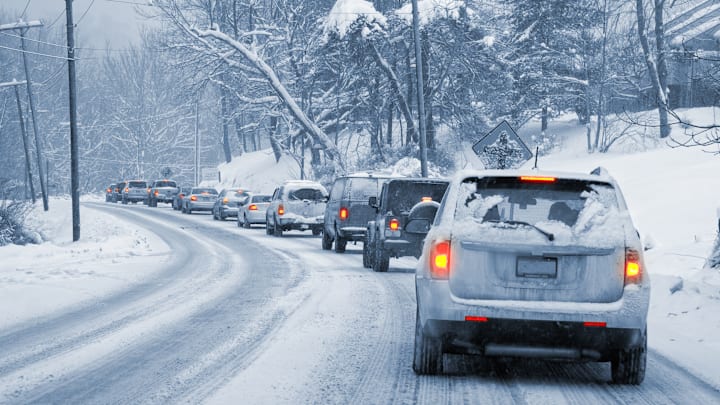
Waking up to a thick, white blanket of snow can be a beautiful sight—that is, until you have to go outside. Maneuvering a massive vehicle becomes far more complicated once snow and ice enter the picture. Snowy roads come with challenges that can catch even experienced drivers off guard, and while some might be tempted to say a quick prayer before pressing the gas pedal, there’s more you can do to make your drive safer.
It’s not just that driving in snow feels harder; it’s measurably riskier. Each year, nearly a quarter of weather-related crashes happen on snowy, slushy, or icy roads, with another 15% occurring during snowfall or sleet. But there are ways to beat the odds. Here are some of the most common mistakes drivers make in the snow and what to do instead.
1. NOT BEING PREPARED

When the weather is frightful, it’s best to skip any spontaneous drives—unless you’ve prepared your car properly. Snowstorm or not, it’s always smart to keep a car safety kit on hand. In the winter, make sure it includes a snow shovel, flashlight, snow scraper, gloves, and a blanket. There are also pre-made safety kits that contain most of these items and can be tucked away in your trunk.
Before hitting the road, keep your gas tank at least half full. While gasoline itself doesn’t freeze under normal conditions, a fuller tank reduces the air space where condensation can form—and ice in the fuel lines can make your car harder to start.
All-season tires handle light snow reasonably well, but their performance drops as tread wears down. Tires with a half-tread depth (around 5/32 to 6/32 of an inch) perform noticeably worse on slick roads, including wet, snowy, or icy surfaces. Drivers with worn all-season tires may be better off waiting until conditions improve or replacing their tires. If you live in a snowier area or drive in winter conditions daily, switching to dedicated winter tires is worth considering.
Tires are the most important part of winter safety, but don’t forget the basics: make sure your antifreeze is topped up, your battery is fully charged, and both your defroster and rear window defogger are working properly.
2. TAILGATING

If you tend to tailgate in traffic, winter is the perfect time to break the habit. Following too closely is especially risky on snow, ice, or wet roads, which can drastically increase stopping distances. Reduced visibility from snow or fog gives you even less time to react. To stay safe, double your usual following distance, leaving eight to 10 seconds between you and the car ahead. This extra space gives you time to respond if the vehicle in front stops suddenly or skids. Gentle braking and staying alert to road conditions will further help prevent rear-end collisions.
3. DRIVING TOO FAST

You should always follow the speed limit—unless snow and slush are in the mix. In those conditions, it’s safer to drive below the posted speed, since slippery roads can reduce travel speed by 30 to 40% and make even familiar routes tricky to navigate. Driving too fast in winter reduces your reaction time, increases the severity of any collision, and makes it harder to respond to sudden hazards.
As for the fast lane, there’s no “safe” highway speed in winter: pay close attention to the road, adjust your speed on untreated roads, and take extra care on turns. Build in a few extra minutes for your journey if you’re worried about being late.
4. FAILING TO CLEAR SNOW AND ICE FROM YOUR CAR

When the snow is falling, and your bed feels extra warm and cozy in the morning, it can be tempting to skip fully clearing your car for a few extra minutes of sleep. But don’t just stop with the windows. Snow and ice on your roof, hood, mirrors, lights, or windshield wipers can blow onto your windshield or other cars, creating dangerous blind spots and hazards. Driving with snow or ice on your car can also be illegal in many states, with fines ranging from $25 to several hundred dollars—and even higher if someone is injured or property is damaged.
Give yourself enough time to clear your car completely. Consider starting the engine a few minutes early to warm it up and turn on the defrosters, but never leave the car running in a garage or enclosed space. A few extra minutes in the morning can prevent accidents and keep you, your passengers, and other drivers safe.
5. BRAKING TOO SUDDENLY

Don’t lose your head when your tires start to lose traction. Your first instinct might be to slam on the brakes when your car skids on snow or ice—but that can lock your wheels and make steering more difficult, leaving you with less control. Instead, ease off the accelerator and let your vehicle slow naturally.
If you need to brake and your car has an anti-lock braking system (ABS), use steady, even pressure; without ABS, gently pump the brakes to maintain traction. Braking distance on snow can be three to four times longer than on dry roads, and on ice it can be five to 10 times longer due to minimal friction, which is why slowing down early, braking gradually, and leaving extra space can make all the difference.