%20%20--%3E%0A%3Csvg%20version%3D%221.1%22%20id%3D%22Layer_1%22%20xmlns%3D%22http%3A%2F%2Fwww.w3.org%2F2000%2Fsvg%22%20xmlns%3Axlink%3D%22http%3A%2F%2Fwww.w3.org%2F1999%2Fxlink%22%20x%3D%220px%22%20y%3D%220px%22%0A%09%20viewBox%3D%220%200%20684.6%2068.1%22%20style%3D%22enable-background%3Anew%200%200%20684.6%2068.1%3B%22%20xml%3Aspace%3D%22preserve%22%3E%0A%3Cg%3E%0A%09%3Cpath%20d%3D%22M444.1%2C29.3h-17.4v14.5h17.4V29.3z%20M36.4%2C68.1l29.3-50.8V0H50.4L32.9%2C36.8L15.5%2C0H0v68.1h16.7V45.8l12.4%2C22.3H36.4z%0A%09%09%20M49.1%2C68.1h16.6V23.4L49.1%2C52.1V68.1z%20M76.6%2C68.1h45V53.8H93.3V41.6h21V27.1h-21V14.8h28.3V0.1h-45V68.1z%20M175.6%2C68.1h17.3v-68%0A%09%09h-16.5v40.3L150%2C0.1h-17.6v68h16.7V27.7L175.6%2C68.1z%20M235.8%2C14.8h15.4V0.1h-47.4v14.7H219v53.2h16.8V14.8z%20M290.3%2C45.9h-17.1%0A%09%09l7.5-15.6h2L290.3%2C45.9z%20M298.7%2C68.1h18l-32.2-68h-5.7l-32%2C68h18l3.3-7.1h27.1L298.7%2C68.1z%20M325.2%2C68.1h46.2V53.8h-29.6V0.1h-16.7%0A%09%09V68.1z%20M423.7%2C14.8h27.2V0.1H407v68h16.7V14.8z%20M462%2C68.1h46.2V53.8h-29.6V0.1H462V68.1z%20M564.8%2C34.1c0%2C10.7-7.2%2C19.2-18.5%2C19.2%0A%09%09c-11.4%2C0-18.5-8.5-18.5-19.2s7.1-19.2%2C18.5-19.2C557.6%2C14.9%2C564.8%2C23.4%2C564.8%2C34.1%20M580.6%2C34.1c0-19-14.2-34-34.3-34%0A%09%09c-20.2%2C0-34.3%2C15-34.3%2C34c0%2C19%2C14.1%2C34%2C34.3%2C34C566.4%2C68.1%2C580.6%2C53.1%2C580.6%2C34.1%20M604.8%2C20.5c0-4.1%2C3.3-6.2%2C6.7-6.2%0A%09%09c4.4%2C0%2C6.6%2C3%2C6.6%2C6.6h14.7C631.8%2C9.1%2C625.1%2C0.1%2C611%2C0.1c-12%2C0-21.7%2C9.3-21.7%2C20.6c0%2C10.9%2C5.9%2C15.9%2C16.7%2C19.8%0A%09%09c5.2%2C1.8%2C11.5%2C3.2%2C11.5%2C8c0%2C3.3-2.4%2C5.5-6.4%2C5.5c-3.6%2C0-6.6-3-6.6-6.7h-15.2c0%2C11.5%2C7.9%2C20.8%2C21.8%2C20.8c12%2C0%2C21.6-9.3%2C21.6-20.6%0A%09%09c0-10-5.3-16.4-16.7-19.8C610.6%2C26.1%2C604.8%2C25.3%2C604.8%2C20.5%20M670%2C20.9h14.7C683.8%2C9.1%2C677.1%2C0.1%2C663%2C0.1c-12%2C0-21.7%2C9.3-21.7%2C20.6%0A%09%09c0%2C10.9%2C5.9%2C15.9%2C16.7%2C19.8c5.2%2C1.8%2C11.5%2C3.2%2C11.5%2C8c0%2C3.3-2.4%2C5.5-6.4%2C5.5c-3.6%2C0-6.6-3-6.6-6.7h-15.2c0%2C11.5%2C7.9%2C20.8%2C21.8%2C20.8%0A%09%09c12%2C0%2C21.6-9.3%2C21.6-20.6c0-10-5.3-16.4-16.7-19.8c-5.4-1.6-11.3-2.4-11.3-7.2c0-4.1%2C3.3-6.2%2C6.7-6.2C667.7%2C14.4%2C670%2C17.3%2C670%2C20.9%0A%09%09%22%2F%3E%0A%3C%2Fg%3E%0A%3C%2Fsvg%3E%0A)

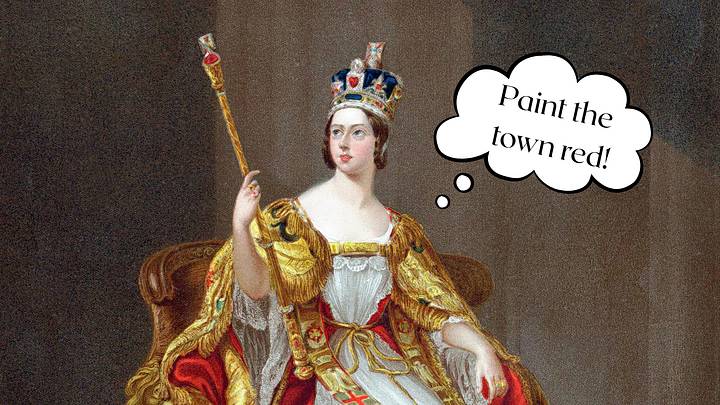
Queen Victoria, who ruled the United Kingdom and the larger British Empire from 1837 until her death in 1901, stands as one of the country's most influential monarchs. People of the time placed great emphasis on standards and personal morality, and her reign saw major advancements in engineering, industry, and science. This was also a particularly rich era for colorful sayings, many of which are still used today. Their origins might surprise you.
- Paint the Town Red
- The Penny Dropped
- At the Drop of a Hat
- Break the Ice
- Steal One’s Thunder
- Mad as a Hatter
- In the Limelight
Paint the Town Red

This phrase is universally taken to mean having a celebratory night out, usually involving drinking. Its origins are still debated, but are thought by many to be connected to Henry de la Poer Beresford, the 3rd Marquis of Waterford. Supposedly, in April 1837, the mischievous Marquis and his merry band became so inebriated over the course of a day that they stole a tin of red paint from a night watchman and ran riot through the town of Melton Mowbray, destroying property and literally painting the town red.
The Penny Dropped

This is one we use all the time without stopping to consider what it originally meant. It's used to describe a moment of clarity when a person understands something for the first time. You might well be learning for the first time that the phrase comes from Victorian-era slot or "penny" machines, which were very popular attractions. Dropping a penny into the slot served as the catalyst for the action to begin.
At the Drop of a Hat

This colorful expression means that a person is willing to undertake a certain action at a moment's notice. In Victorian days, horse races and boxing matches were often started not by a pistol shot or bell, but by a literal hat being dropped. When the headwear hit the ground, it was time to go!
Break the Ice

The Victorian era was one of continued discovery. The race to the North Pole and Arctic exploration in general were in vogue. Ships tough enough to break through polar ice were essential vehicles on any such trip. Victorians would have known that the term referred to a ship that pushed things forward by smashing through ice.
Today, we use this as a metaphor for getting a friendly conversation flowing. This phrase’s meaning evolved over the years, and its first use in a social context has been traced back to Samuel Jackson Pratt’s 1795 work Gleanings Through Wales, Holland and Westphalia.
Steal One’s Thunder

There is a fantastic etymology behind this phrase, which is used to describe a person who takes credit for another's idea or otherwise bests them by copying their actions. Sources trace the saying's origins back to the 1700s—so a bit before the Victorian era—when playwright John Dennis invented a new way of adding storm sound effects to one of his productions. Dennis came up with the idea of using oscillating metal sheets to reproduce the sound of thunder. Allegedly, the theatre that was due to stage his show canceled on him but subsequently used his idea in another production, literally stealing his thunder.
Mad as a Hatter

Many people are aware of the link between this saying and Lewis Carroll's enduring book, Alice's Adventures in Wonderland, in which the character of the Mad Hatter behaves in a wonderfully eccentric manner. Usage of the phrase actually predates Carroll's writing and comes from the hat-making industry, which was a major industry during the Victorian era. Hat-making involved the use of mercury, which, over time, resulted in nasty side effects, including confusion and disorientation.
In the Limelight

If you are performing in public, mentioned in newspaper headlines, or generally the center of attention, then you can be said to be "in the limelight." The straightforward origin of this phrase dates back to Victorian-era stage lighting. Victorians loved going to see a play, and theatres used non-electric illumination called limelight, which was invented in 1816 and first used in 1836. A flame would be applied to a cylinder of quicklime (otherwise known as calcium oxide) to produce light.