%20%20--%3E%0A%3Csvg%20version%3D%221.1%22%20id%3D%22Layer_1%22%20xmlns%3D%22http%3A%2F%2Fwww.w3.org%2F2000%2Fsvg%22%20xmlns%3Axlink%3D%22http%3A%2F%2Fwww.w3.org%2F1999%2Fxlink%22%20x%3D%220px%22%20y%3D%220px%22%0A%09%20viewBox%3D%220%200%20684.6%2068.1%22%20style%3D%22enable-background%3Anew%200%200%20684.6%2068.1%3B%22%20xml%3Aspace%3D%22preserve%22%3E%0A%3Cg%3E%0A%09%3Cpath%20d%3D%22M444.1%2C29.3h-17.4v14.5h17.4V29.3z%20M36.4%2C68.1l29.3-50.8V0H50.4L32.9%2C36.8L15.5%2C0H0v68.1h16.7V45.8l12.4%2C22.3H36.4z%0A%09%09%20M49.1%2C68.1h16.6V23.4L49.1%2C52.1V68.1z%20M76.6%2C68.1h45V53.8H93.3V41.6h21V27.1h-21V14.8h28.3V0.1h-45V68.1z%20M175.6%2C68.1h17.3v-68%0A%09%09h-16.5v40.3L150%2C0.1h-17.6v68h16.7V27.7L175.6%2C68.1z%20M235.8%2C14.8h15.4V0.1h-47.4v14.7H219v53.2h16.8V14.8z%20M290.3%2C45.9h-17.1%0A%09%09l7.5-15.6h2L290.3%2C45.9z%20M298.7%2C68.1h18l-32.2-68h-5.7l-32%2C68h18l3.3-7.1h27.1L298.7%2C68.1z%20M325.2%2C68.1h46.2V53.8h-29.6V0.1h-16.7%0A%09%09V68.1z%20M423.7%2C14.8h27.2V0.1H407v68h16.7V14.8z%20M462%2C68.1h46.2V53.8h-29.6V0.1H462V68.1z%20M564.8%2C34.1c0%2C10.7-7.2%2C19.2-18.5%2C19.2%0A%09%09c-11.4%2C0-18.5-8.5-18.5-19.2s7.1-19.2%2C18.5-19.2C557.6%2C14.9%2C564.8%2C23.4%2C564.8%2C34.1%20M580.6%2C34.1c0-19-14.2-34-34.3-34%0A%09%09c-20.2%2C0-34.3%2C15-34.3%2C34c0%2C19%2C14.1%2C34%2C34.3%2C34C566.4%2C68.1%2C580.6%2C53.1%2C580.6%2C34.1%20M604.8%2C20.5c0-4.1%2C3.3-6.2%2C6.7-6.2%0A%09%09c4.4%2C0%2C6.6%2C3%2C6.6%2C6.6h14.7C631.8%2C9.1%2C625.1%2C0.1%2C611%2C0.1c-12%2C0-21.7%2C9.3-21.7%2C20.6c0%2C10.9%2C5.9%2C15.9%2C16.7%2C19.8%0A%09%09c5.2%2C1.8%2C11.5%2C3.2%2C11.5%2C8c0%2C3.3-2.4%2C5.5-6.4%2C5.5c-3.6%2C0-6.6-3-6.6-6.7h-15.2c0%2C11.5%2C7.9%2C20.8%2C21.8%2C20.8c12%2C0%2C21.6-9.3%2C21.6-20.6%0A%09%09c0-10-5.3-16.4-16.7-19.8C610.6%2C26.1%2C604.8%2C25.3%2C604.8%2C20.5%20M670%2C20.9h14.7C683.8%2C9.1%2C677.1%2C0.1%2C663%2C0.1c-12%2C0-21.7%2C9.3-21.7%2C20.6%0A%09%09c0%2C10.9%2C5.9%2C15.9%2C16.7%2C19.8c5.2%2C1.8%2C11.5%2C3.2%2C11.5%2C8c0%2C3.3-2.4%2C5.5-6.4%2C5.5c-3.6%2C0-6.6-3-6.6-6.7h-15.2c0%2C11.5%2C7.9%2C20.8%2C21.8%2C20.8%0A%09%09c12%2C0%2C21.6-9.3%2C21.6-20.6c0-10-5.3-16.4-16.7-19.8c-5.4-1.6-11.3-2.4-11.3-7.2c0-4.1%2C3.3-6.2%2C6.7-6.2C667.7%2C14.4%2C670%2C17.3%2C670%2C20.9%0A%09%09%22%2F%3E%0A%3C%2Fg%3E%0A%3C%2Fsvg%3E%0A)

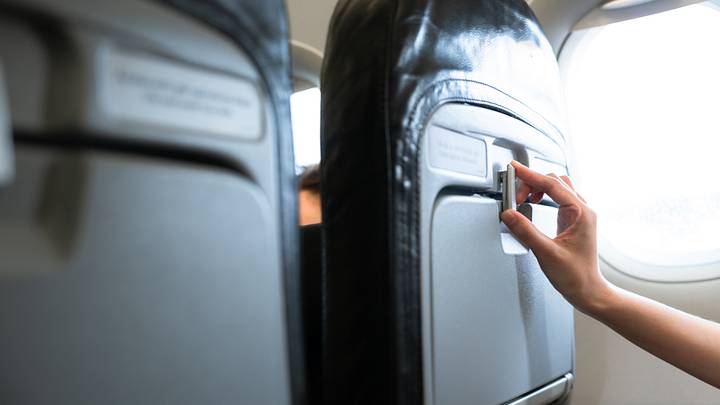
Few modern rituals are as universally synchronized as the final moments before a flight takes off or lands. The cabin lights dim, the window shades go up, and a chorus of plastic latches clicks into place across the cabin.
For the average passenger, being forced to lock your tray table away can feel like a minor, bureaucratic annoyance—especially if you’re midway through a movie on your laptop or trying to squeeze in three more pages of a book. But flight attendants aren’t policing your legroom just to be sticklers for neatness. According to the Federal Aviation Administration (FAA), those little plastic shelves are actually major compliance hurdles that stand between you and a flawless emergency evacuation.
Here’s the real science, math, and physics behind why your tray table has to stay stowed during the most critical moments of a flight.
The 90-Second Rule

To understand the tray table rule, you have to understand the golden standard of aviation survival math: the 90-second rule. The FAA mandates that aircraft manufacturers must prove an entire plane can be completely evacuated in 90 seconds or less using only half of the available emergency exits.
Because nearly half of fatal commercial accidents occur during takeoff and landing, every fraction of a second counts. A single tray table left in the down position instantly turns a row into an obstacle course, potentially trapping everyone behind it if a hasty exit becomes necessary.
The Physics of Flying Shrapnel
There’s also a much more practical safety reason to lock those tables down: impact physics. To get you from point A to point B before your phone battery hits zero, airplanes move incredibly fast, and sudden decelerations generate immense G-forces.
If a plane abruptly brakes, your body will naturally fly forward. A lowered plastic table sits directly at abdomen level, risking severe internal injuries that could be avoided if your body safely met the padded seatback ahead of you. Furthermore, any heavy items resting on that open table—like laptops or metal water bottles—instantly transform into high-velocity projectiles capable of tearing through the cabin.
The Literal Law

While it might feel like a passive-aggressive request from the cabin crew, keeping your tray table stowed is actually a matter of federal law. Under 14 CFR Section 121.577, the FAA explicitly prohibits an airline from moving on the surface, taking off, or landing unless every single food and beverage tray table is securely locked.
If a passenger refuses to comply, the flight attendants legally can’t declare the cabin secure. In extreme cases, a stubborn flyer can cause the captain to taxi back to the gate to have them escorted off the plane by airport police.
Ultimately, it’s much easier to just flip the latch than it is to explain to TSA why you grounded a Boeing 737 over a half-finished crossword puzzle.