%20%20--%3E%0A%3Csvg%20version%3D%221.1%22%20id%3D%22Layer_1%22%20xmlns%3D%22http%3A%2F%2Fwww.w3.org%2F2000%2Fsvg%22%20xmlns%3Axlink%3D%22http%3A%2F%2Fwww.w3.org%2F1999%2Fxlink%22%20x%3D%220px%22%20y%3D%220px%22%0A%09%20viewBox%3D%220%200%20684.6%2068.1%22%20style%3D%22enable-background%3Anew%200%200%20684.6%2068.1%3B%22%20xml%3Aspace%3D%22preserve%22%3E%0A%3Cg%3E%0A%09%3Cpath%20d%3D%22M444.1%2C29.3h-17.4v14.5h17.4V29.3z%20M36.4%2C68.1l29.3-50.8V0H50.4L32.9%2C36.8L15.5%2C0H0v68.1h16.7V45.8l12.4%2C22.3H36.4z%0A%09%09%20M49.1%2C68.1h16.6V23.4L49.1%2C52.1V68.1z%20M76.6%2C68.1h45V53.8H93.3V41.6h21V27.1h-21V14.8h28.3V0.1h-45V68.1z%20M175.6%2C68.1h17.3v-68%0A%09%09h-16.5v40.3L150%2C0.1h-17.6v68h16.7V27.7L175.6%2C68.1z%20M235.8%2C14.8h15.4V0.1h-47.4v14.7H219v53.2h16.8V14.8z%20M290.3%2C45.9h-17.1%0A%09%09l7.5-15.6h2L290.3%2C45.9z%20M298.7%2C68.1h18l-32.2-68h-5.7l-32%2C68h18l3.3-7.1h27.1L298.7%2C68.1z%20M325.2%2C68.1h46.2V53.8h-29.6V0.1h-16.7%0A%09%09V68.1z%20M423.7%2C14.8h27.2V0.1H407v68h16.7V14.8z%20M462%2C68.1h46.2V53.8h-29.6V0.1H462V68.1z%20M564.8%2C34.1c0%2C10.7-7.2%2C19.2-18.5%2C19.2%0A%09%09c-11.4%2C0-18.5-8.5-18.5-19.2s7.1-19.2%2C18.5-19.2C557.6%2C14.9%2C564.8%2C23.4%2C564.8%2C34.1%20M580.6%2C34.1c0-19-14.2-34-34.3-34%0A%09%09c-20.2%2C0-34.3%2C15-34.3%2C34c0%2C19%2C14.1%2C34%2C34.3%2C34C566.4%2C68.1%2C580.6%2C53.1%2C580.6%2C34.1%20M604.8%2C20.5c0-4.1%2C3.3-6.2%2C6.7-6.2%0A%09%09c4.4%2C0%2C6.6%2C3%2C6.6%2C6.6h14.7C631.8%2C9.1%2C625.1%2C0.1%2C611%2C0.1c-12%2C0-21.7%2C9.3-21.7%2C20.6c0%2C10.9%2C5.9%2C15.9%2C16.7%2C19.8%0A%09%09c5.2%2C1.8%2C11.5%2C3.2%2C11.5%2C8c0%2C3.3-2.4%2C5.5-6.4%2C5.5c-3.6%2C0-6.6-3-6.6-6.7h-15.2c0%2C11.5%2C7.9%2C20.8%2C21.8%2C20.8c12%2C0%2C21.6-9.3%2C21.6-20.6%0A%09%09c0-10-5.3-16.4-16.7-19.8C610.6%2C26.1%2C604.8%2C25.3%2C604.8%2C20.5%20M670%2C20.9h14.7C683.8%2C9.1%2C677.1%2C0.1%2C663%2C0.1c-12%2C0-21.7%2C9.3-21.7%2C20.6%0A%09%09c0%2C10.9%2C5.9%2C15.9%2C16.7%2C19.8c5.2%2C1.8%2C11.5%2C3.2%2C11.5%2C8c0%2C3.3-2.4%2C5.5-6.4%2C5.5c-3.6%2C0-6.6-3-6.6-6.7h-15.2c0%2C11.5%2C7.9%2C20.8%2C21.8%2C20.8%0A%09%09c12%2C0%2C21.6-9.3%2C21.6-20.6c0-10-5.3-16.4-16.7-19.8c-5.4-1.6-11.3-2.4-11.3-7.2c0-4.1%2C3.3-6.2%2C6.7-6.2C667.7%2C14.4%2C670%2C17.3%2C670%2C20.9%0A%09%09%22%2F%3E%0A%3C%2Fg%3E%0A%3C%2Fsvg%3E%0A)

Accidents in the kitchen don’t always involve big spills or burned ingredients. Sometimes, a culinary experiment leans more magic than mishap, creating serendipitous bites that make you glad things didn’t go according to plan.
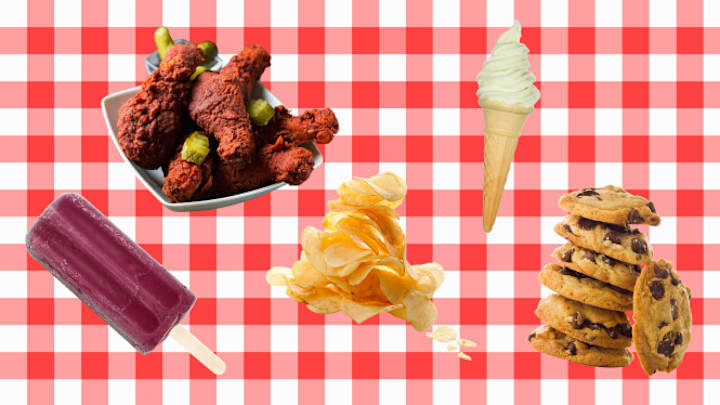
The proof is in the pudding—or in this case, the popsicle—as well as chocolate chip cookies, potato chips, and many other famous foods that were made by accident. Here are the stories behind six accidental food inventions that changed the way we snack forever.
Chocolate Chip Cookies

There might not be a happier accident than the chocolate chip cookie, which was created by Ruth Graves Wakefield in the 1930s, thanks to a simple chocolate swap. While making her signature cookies at the Toll House Inn in Massachusetts, the American chef realized she was fresh out of baker’s chocolate. Her solution was to break up a Nestlé chocolate bar and stir the pieces into the batter, expecting them to melt into chocolate cookies.
But they didn’t melt as planned. Instead, Wakefield ended up with gooey pockets of chocolate throughout each cookie, unintentionally creating the classic chocolate chip cookie we know today.
Nashville Hot Chicken

Every day, people from all around the world flock to Nashville for its famed country music scene—but also its signature hot chicken. The saying might go that revenge is a dish best served cold, but ask Thornton Prince, an infamous local womanizer tied to the dish’s origin story, and he might disagree.
Legend has it that after a long night of debauchery, Prince’s girlfriend wanted to teach him a lesson, which in this case involved plenty of hot peppers and a plate of fried chicken. The plan didn’t work out as intended: Prince ended up enjoying the fiery dish so much that he saved the recipe, shared it with others, and eventually even opened his own hot chicken restaurant.
Popsicles

On a hot summer day, there’s not much you can do to cool off other than A) jump into a refreshing swimming pool or B) indulge in a frozen, fruity popsicle. But believe it or not, the latter wasn’t always an option for dessert. It was actually created by an 11-year-old boy named Frank Epperson in 1905.
The story begins with a glass of water mixed with sugary soda powder—and a classic childhood lapse in memory. After stirring up his concoction, Epperson, like any forgetful kid, turned his attention elsewhere and accidentally left it outside overnight. By morning, the drink had frozen solid into a handheld treat, complete with a wooden stick.
Epperson quickly realized he’d stumbled onto something special. He called them "Epsicles" and began selling them around his neighborhood. As an adult, he eventually patented his invention, which later became known as the Popsicle, inspired by his children’s pronunciation of the frozen treat as "Pop’s sicle."
Potato Chips

Not every generation was lucky enough to experience the joy of binge-watching a TV series on the couch while crunching on a handful of salty potato chips. While they’re most commonly sold in plastic bags at convenience stores today, potato chips supposedly got their start in the kitchen when New York-based chef George Crum was tasked with fixing an unsatisfactory plate of French fries sent back by a customer.
Crum’s solution to the thick, soggy fries was to slice potatoes paper-thin and fry them in hot oil until crisp. Finished with a sprinkle of salt, his "Saratoga Chips" were born that same night in 1853. After becoming a hit at the restaurant, they quickly took off beyond the kitchen, eventually evolving into the iconic snack food we know and crunch on today.
Worcestershire Sauce

You may not be able to pronounce this common condiment, and you probably also don’t know how it got its start. Some say Worcestershire sauce came to fruition as a result of a case of culinary nostalgia. When Lord Sandys returned to Worcester, England, following a governing stint in Bengal, India, he developed an intense craving for his favorite Indian sauce.
Unable to stay separated from the flavor any longer, Lord Sandys turned to chemists John Lea and William Perrins to recreate it for him. The duo made a large batch—more than enough for their client—but soon stashed it in the cellar of their shop due to the mixture’s overwhelmingly strong, fishy smell.
Two years later, in 1837, Lea and Perrins rediscovered the forgotten sauce, which had surprisingly mellowed and aged into something far more appealing. They began selling it to customers, who quickly snapped it up, sparking a worldwide Worcestershire sauce craze that continues to this day.
Ice Cream Cones

Another summer staple that was invented unintentionally is the ice cream cone: the ultimate vessel for a creamy, frozen treat that some argue is best enjoyed by the pint. Of course, ice cream cone inventor Ernest Hamwi might have disagreed.
While there are several origin stories, one of the most popular credits Hamwi, a Syrian immigrant, who worked as a wafer pastry maker at the St. Louis World’s Fair in 1904. The idea may have come together thanks to a neighboring ice cream vendor—when Hamwi saw ice cream and his zalabia wafers side by side, he had the idea to shape his pastry into a cone that could hold a scoop.
As the story goes, the improvised cone quickly became a hit at the fair, and Hamwi later helped popularize the idea further by opening the Missouri Cone Company in 1910. Even if the ice cream cone didn’t strictly originate at the World’s Fair, the event played a major role in popularizing it as a practical—and portable—way to serve ice cream, helping shape the familiar cone we know today.