%20%20--%3E%0A%3Csvg%20version%3D%221.1%22%20id%3D%22Layer_1%22%20xmlns%3D%22http%3A%2F%2Fwww.w3.org%2F2000%2Fsvg%22%20xmlns%3Axlink%3D%22http%3A%2F%2Fwww.w3.org%2F1999%2Fxlink%22%20x%3D%220px%22%20y%3D%220px%22%0A%09%20viewBox%3D%220%200%20684.6%2068.1%22%20style%3D%22enable-background%3Anew%200%200%20684.6%2068.1%3B%22%20xml%3Aspace%3D%22preserve%22%3E%0A%3Cg%3E%0A%09%3Cpath%20d%3D%22M444.1%2C29.3h-17.4v14.5h17.4V29.3z%20M36.4%2C68.1l29.3-50.8V0H50.4L32.9%2C36.8L15.5%2C0H0v68.1h16.7V45.8l12.4%2C22.3H36.4z%0A%09%09%20M49.1%2C68.1h16.6V23.4L49.1%2C52.1V68.1z%20M76.6%2C68.1h45V53.8H93.3V41.6h21V27.1h-21V14.8h28.3V0.1h-45V68.1z%20M175.6%2C68.1h17.3v-68%0A%09%09h-16.5v40.3L150%2C0.1h-17.6v68h16.7V27.7L175.6%2C68.1z%20M235.8%2C14.8h15.4V0.1h-47.4v14.7H219v53.2h16.8V14.8z%20M290.3%2C45.9h-17.1%0A%09%09l7.5-15.6h2L290.3%2C45.9z%20M298.7%2C68.1h18l-32.2-68h-5.7l-32%2C68h18l3.3-7.1h27.1L298.7%2C68.1z%20M325.2%2C68.1h46.2V53.8h-29.6V0.1h-16.7%0A%09%09V68.1z%20M423.7%2C14.8h27.2V0.1H407v68h16.7V14.8z%20M462%2C68.1h46.2V53.8h-29.6V0.1H462V68.1z%20M564.8%2C34.1c0%2C10.7-7.2%2C19.2-18.5%2C19.2%0A%09%09c-11.4%2C0-18.5-8.5-18.5-19.2s7.1-19.2%2C18.5-19.2C557.6%2C14.9%2C564.8%2C23.4%2C564.8%2C34.1%20M580.6%2C34.1c0-19-14.2-34-34.3-34%0A%09%09c-20.2%2C0-34.3%2C15-34.3%2C34c0%2C19%2C14.1%2C34%2C34.3%2C34C566.4%2C68.1%2C580.6%2C53.1%2C580.6%2C34.1%20M604.8%2C20.5c0-4.1%2C3.3-6.2%2C6.7-6.2%0A%09%09c4.4%2C0%2C6.6%2C3%2C6.6%2C6.6h14.7C631.8%2C9.1%2C625.1%2C0.1%2C611%2C0.1c-12%2C0-21.7%2C9.3-21.7%2C20.6c0%2C10.9%2C5.9%2C15.9%2C16.7%2C19.8%0A%09%09c5.2%2C1.8%2C11.5%2C3.2%2C11.5%2C8c0%2C3.3-2.4%2C5.5-6.4%2C5.5c-3.6%2C0-6.6-3-6.6-6.7h-15.2c0%2C11.5%2C7.9%2C20.8%2C21.8%2C20.8c12%2C0%2C21.6-9.3%2C21.6-20.6%0A%09%09c0-10-5.3-16.4-16.7-19.8C610.6%2C26.1%2C604.8%2C25.3%2C604.8%2C20.5%20M670%2C20.9h14.7C683.8%2C9.1%2C677.1%2C0.1%2C663%2C0.1c-12%2C0-21.7%2C9.3-21.7%2C20.6%0A%09%09c0%2C10.9%2C5.9%2C15.9%2C16.7%2C19.8c5.2%2C1.8%2C11.5%2C3.2%2C11.5%2C8c0%2C3.3-2.4%2C5.5-6.4%2C5.5c-3.6%2C0-6.6-3-6.6-6.7h-15.2c0%2C11.5%2C7.9%2C20.8%2C21.8%2C20.8%0A%09%09c12%2C0%2C21.6-9.3%2C21.6-20.6c0-10-5.3-16.4-16.7-19.8c-5.4-1.6-11.3-2.4-11.3-7.2c0-4.1%2C3.3-6.2%2C6.7-6.2C667.7%2C14.4%2C670%2C17.3%2C670%2C20.9%0A%09%09%22%2F%3E%0A%3C%2Fg%3E%0A%3C%2Fsvg%3E%0A)

When it comes to drama, Shakespeare reigns king. The truth is in the tropes, especially the dramatic ones found in the Bard’s most beloved works, from Hamlet to The Taming of the Shrew. While Shakespeare’s influence is often credited to language and the quotes we still use today, his bigger impact is baked into how stories are structured.
From cross-dressing disguises and fatal flaws to witches and warnings, Shakespeare helped shape the narrative building blocks behind some of today’s most gripping pop culture plotlines. What we now recognize as familiar tropes in TV and movies were often refined on his stage, where comedy, tragedy, and chaos were tightly controlled for maximum effect. Here are some of the most enduring dramatic tropes that stem from Shakespeare himself—though you’ve probably seen them in modern movies and media more times than you realize.
Mistaken Identity

From rom-com mix-ups to sitcoms built on disguises and deception, mistaken identity is one of storytelling’s most reliable engines of chaos and confusion. Shakespeare didn’t invent it, but he helped turn the trope into a dramatic staple, drawing on older comedic traditions and sharpening it for the stage. Part of the appeal is simple: the audience knows more than the characters do, which means we get to watch everything spiral out of control in real time.
That’s the case in The Comedy of Errors, where two sets of identical twins turn an ordinary city into a chain of mistaken encounters, and As You Like It, where Rosalind slips into disguise as Ganymede and moves through courtship and court life unnoticed.
In Twelfth Night, Viola survives a shipwreck and disguises herself as Cesario, placing herself at the center of a love triangle with Olivia and Orsino, all while unable to reveal who she really is. The more she tries to manage the situation, the more it unravels, and her identity starts to slip.
The trope still shows up everywhere today. The 2006 teen comedy She’s the Man reimagines Twelfth Night on a high school soccer field, with Viola posing as her twin brother to join the boys’ team, updating Shakespeare’s web of romantic confusion for a modern audience.
Play Within a Play

Long before meta became a buzzword in modern media, Shakespeare was already experimenting with it through his play-within-a-play structure. From mystery films to fourth-wall-breaking TV, stories within stories are often used to expose hidden truths rather than simply entertain.
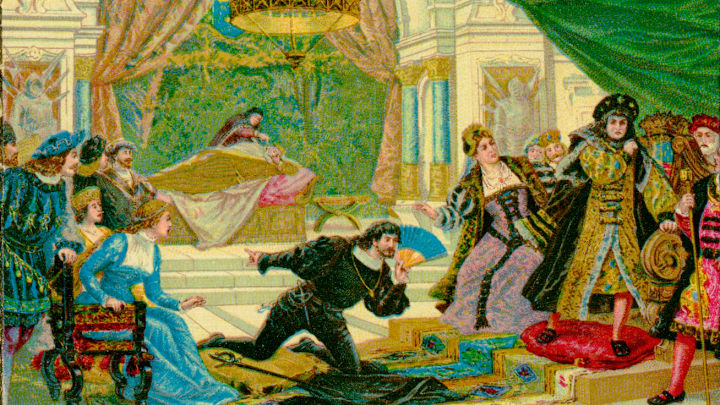
The idea wasn’t entirely new on the stage. Earlier plays, including Thomas Kyd’s The Spanish Tragedy (1587), used the device to heighten suspense and move the plot forward, helping popularize it in Elizabethan theatre. Shakespeare put his own spin on it in works like The Taming of the Shrew and A Midsummer Night’s Dream, where a group of amateur actors stages the tragic story of Pyramus and Thisbe—only for it to land as unintentional comedy. In Hamlet, though, the device takes on a much darker purpose.
The prince stages “The Mousetrap,” a play meant to mirror his father’s murder and gauge King Claudius’s reaction. What starts as a performance quickly becomes a test, with the play itself serving as evidence. The result is a layered moment where watching and being watched begin to blur.
Dramatic Irony

Secrets aren’t fun—unless you’re the one watching them unfold from the audience.
That’s the tension at the heart of dramatic irony: the audience knows something the characters don’t, and that changes how every moment lands. A line of dialogue, a choice, a misunderstanding, everything carries extra weight because we can already see where it’s headed.
In Toy Story, Buzz Lightyear’s belief that he’s a real space ranger (while everyone else knows he’s a toy) turns even simple interactions into comedy built on that gap between belief and reality.
Shakespeare popularized that very trope in his plays, but pushed it even further. By keeping the audience one step ahead of his characters, he turns small misreadings into moments that feel unavoidable, whether they lead to humor or tragedy.
In Romeo and Juliet, that tension peaks in the final act. Romeo finds Juliet in the Capulet tomb and believes she’s dead. The audience, however, knows she has taken a sleeping potion and will soon wake. His decision to take his own life becomes devastating precisely because it’s based on incomplete knowledge, one of Shakespeare’s most memorable uses of dramatic irony.
Tragic Hero

Some characters don’t fall because of fate alone, but because of something inside them they can’t quite overcome. That fatal flaw has a name in classical drama: hamartia. In practice, it’s what defines the tragic hero: a figure who's noble, complex, and ultimately undone by a weakness that shapes everything they do.
From Hamlet to Macbeth, Shakespeare helped solidify this kind of character in his most well-known works, giving it a psychological depth that still shapes modern storytelling. Instead of relying on outside forces, his tragedies build around pressure that comes from deep within the characters themselves.
For Hamlet, that flaw is hesitation: overthinking and delay that stall action until it’s too late. Meanwhile, Macbeth struggles with ambition, which drives the once-respected nobleman into paranoia, violence, and collapse. In both cases, the downfall feels less like sudden, karmic punishment and more like something steadily building from within.
The Supernatural

Ghosts, witches, and prophecies have long been used in storytelling to represent forces beyond human understanding, from ancient myth to modern fantasy series like Stranger Things. Whether signaling fate, fear, or psychological breakdown, the supernatural trope often acts as a trigger for human action, pushing characters into decisions they wouldn’t otherwise make.
The Bard doesn’t use the supernatural for atmosphere alone; he builds it directly into the movement of the plot. His spirits and sorceresses don’t just appear; they interrupt decisions, redirect choices, and shape how situations play out on stage.
In Macbeth, the Three Witches set the tragedy in motion through prophecy, planting ideas that Macbeth then acts on with catastrophic consequences. Alongside them, hallucinations and visions mirror his growing paranoia, blurring the line between ambition and guilt. In Hamlet, the ghost of the murdered king sets the revenge plot in motion, confronting Hamlet with a demand that destabilizes everything he believes about truth, morality, and justice. Across both plays, the supernatural is less a backdrop than a catalyst, steering every major turn in the story.